
Why Stainless Steel Fasteners Corrode in Service — and What the Specification Often Misses
Stainless steel fasteners are commonly selected for corrosion resistance, but “stainless” does not mean immune to corrosion. A fastener can be made from the specified alloy and still perform poorly when the actual service conditions have not been fully considered. Chloride exposure is important, but temperature, stagnant moisture, wet-and-dry cycling, crevice geometry, deposits, contact with other metals, surface contamination and installation practices can also influence the behavior of the completed joint. These factors may create local conditions that are very different from the open surface visible during inspection. This is why specifying only “304 stainless steel” or “316 stainless steel” may not be enough for a corrosion-sensitive application. The material grade remains essential, but it is only one part of the system. This article reviews the service, design, surface and installation information that is often missing from a purchase specification and explains why the complete assembly must be evaluated before material selection is treated as final.
Overview
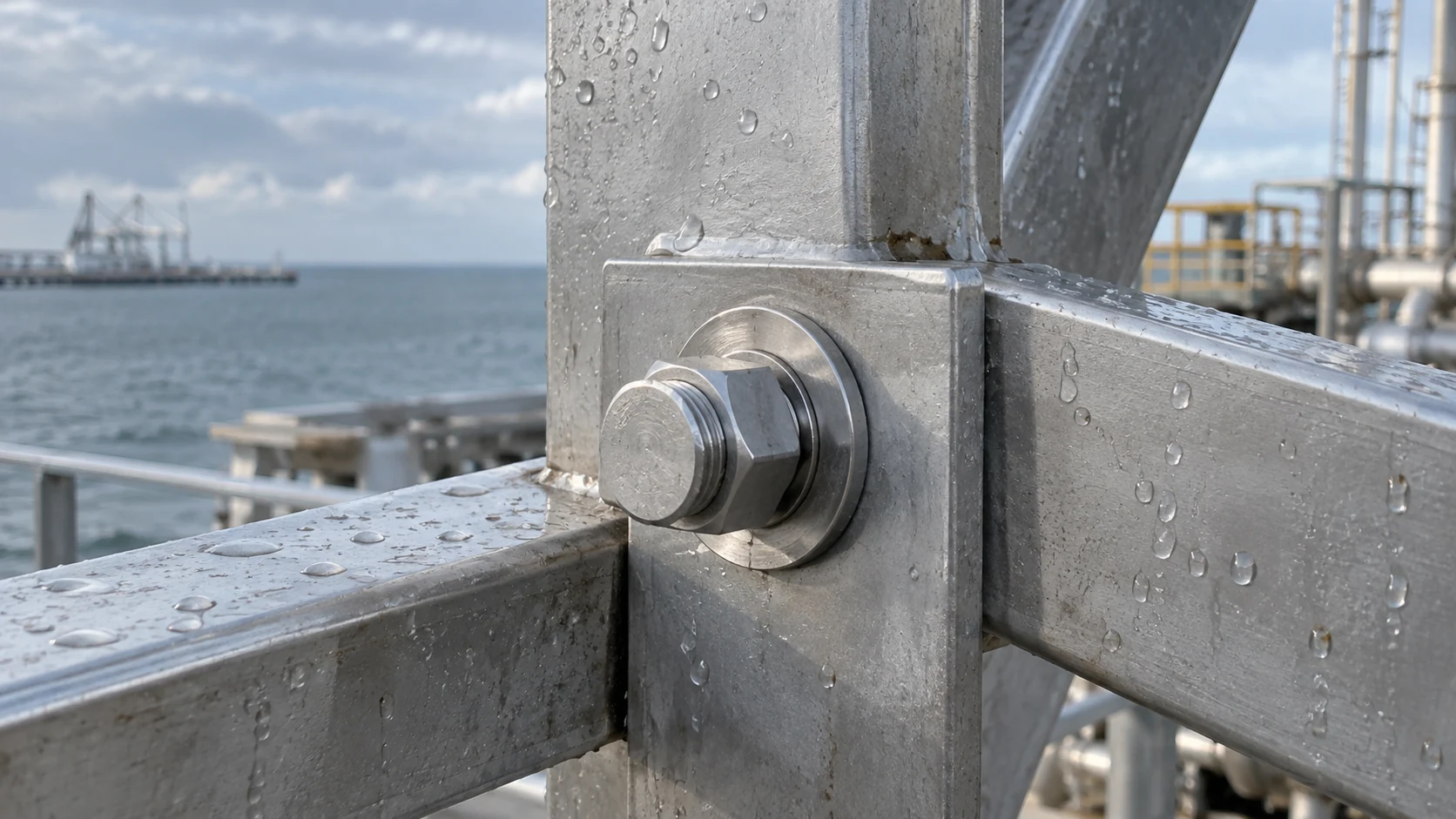
Stainless steel depends on a stable chromium-rich passive surface film for corrosion resistance. That passive condition performs well in many environments, but it can be challenged by chloride exposure, stagnant moisture, crevices, contamination, unsuitable metal combinations, chemical exposure, elevated temperature and poor installation conditions. Corrosion should therefore be reviewed as a system involving the material, joint geometry, surface condition, mating materials, installation and service environment—not as a single-material problem.
If corrosion resistance is critical to the project, the service environment should be specified along with the alloy grade. A material name alone does not describe the complete corrosion condition.
Key Takeaways
- Stainless steel is corrosion resistant, not corrosion proof.
- 316 may outperform 304 in many chloride-containing environments, but material grade alone does not guarantee trouble-free service.
- Crevices under washers, bolt heads, nuts and joint interfaces can create more aggressive local conditions than exposed surfaces.
- Contact with other metals can change the corrosion behavior of the complete assembly.
- Surface contamination can create red rust even when the stainless steel alloy itself is correct.
- Passivation improves surface condition but cannot turn an unsuitable alloy into the correct material for a severe environment.
1. Stainless Does Not Mean Corrosion-Proof
Stainless steels resist corrosion because chromium in the alloy supports formation of a thin passive film on the surface. This protection is highly effective in suitable environments, but it is not absolute. Local damage, deposits or conditions that destabilize the passive surface can permit pitting, crevice corrosion, galvanic interaction, contamination-related rust or more general surface attack in an unsuitable chemical environment.
For purchasing and application decisions, the issue is not whether an unused part looks bright. The important question is whether the selected grade and finished joint remain suitable throughout the actual exposure.
The correct question is not: “Will stainless steel rust?” The better question is: “Is this stainless grade suitable for this joint geometry and service environment?”
2. Chlorides Are Only Part of the Exposure
Material selection is sometimes simplified to “no salt means 304” and “salt means 316.” This may be a useful first prompt, but it is not a complete specification. Wet-and-dry cycling, temperature, deposits, stagnant moisture, splash exposure, evaporation that concentrates contaminants, cleaning chemicals, ventilation and maintenance frequency can all change the local condition.
A coastal installation several kilometers from direct seawater may still receive chloride deposition. Conversely, not every outdoor project has the same exposure or requires the same material upgrade. The environment should be described in practical terms without relying on a universal chloride threshold.
When corrosion risk matters, describe the environment rather than relying only on terms such as “outdoor” or “marine.”
3. Crevices Can Be More Critical Than Open Surfaces
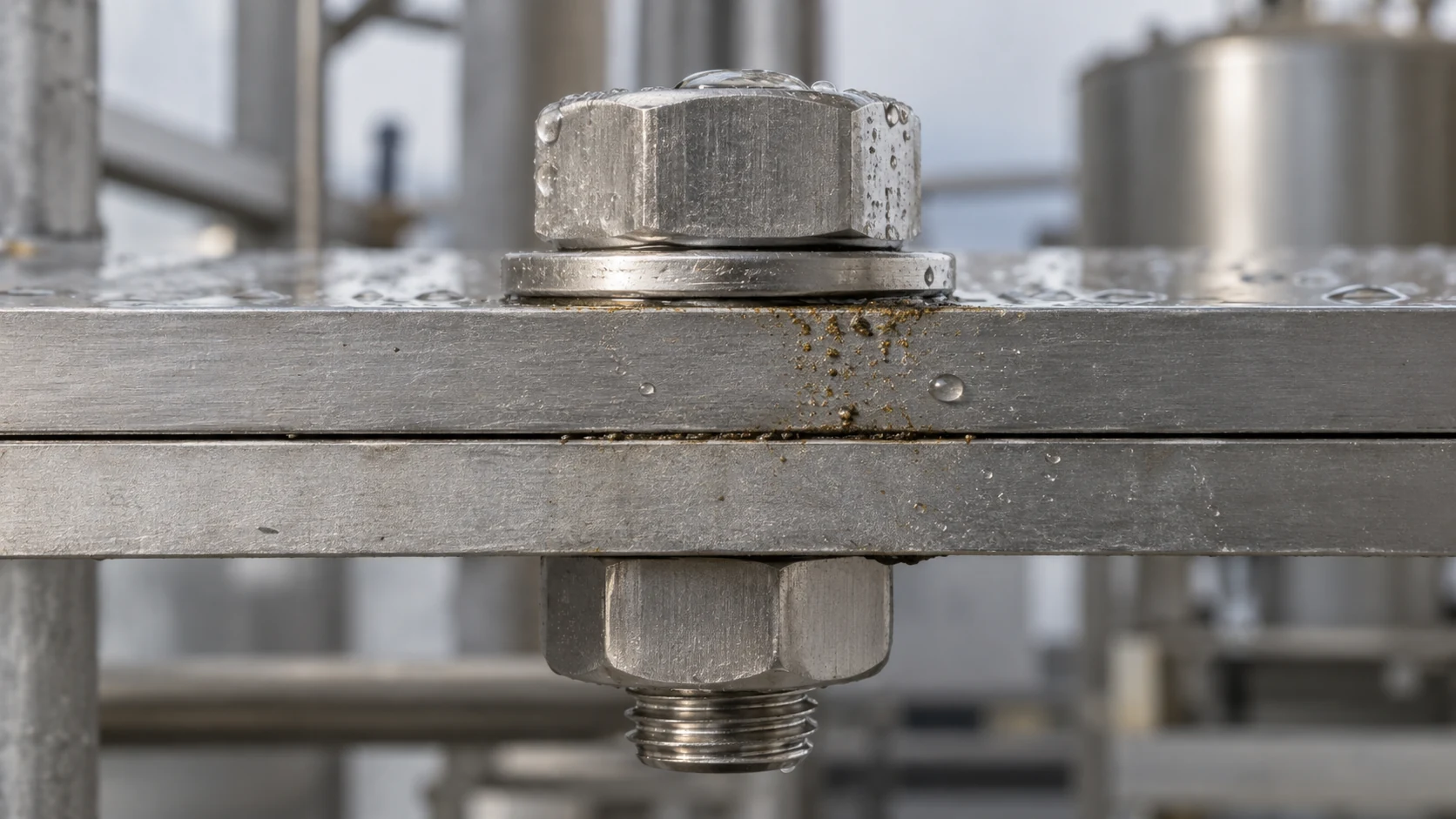
The exposed surface of a fastener may remain visually clean while local corrosion develops inside a restricted interface. Potential crevice locations include under bolt heads, under washers, between a washer and plate, under nuts, inside blind holes, around gaskets, between overlapping plates and anywhere water or deposits remain trapped.
Restricted oxygen exchange and retained contaminants can create local conditions that are more aggressive than the surrounding open surface. This does not mean every crevice will corrode. It means joint geometry, drainage, deposits and exposure should be considered where local corrosion would be critical.
4. Dissimilar Metals Change the Corrosion System
A stainless fastener may be installed into or against carbon steel, galvanized steel, aluminum, copper-containing alloys or coated steel. When dissimilar metals are electrically connected in the presence of an electrolyte, galvanic effects may influence the complete assembly. The result depends on the metal combination, electrolyte, exposed area ratio, coating condition, drainage and degree of electrical contact.
Stainless steel does not automatically cause failure of another metal, and a universal safe-or-unsafe chart would ignore the geometry and exposure of the real joint.
For mixed-metal assemblies, evaluate the complete joint rather than the fastener material alone.
5. Surface Contamination Can Create Misleading Rust
Iron-containing particles can reach stainless components during grinding, cutting, workshop handling, contact with carbon steel, use of contaminated wire brushes or shared tooling, storage and installation. Free iron or embedded contamination may then produce visible red rust. This can lead to the conclusion that the wrong material was supplied even when the base alloy is correct.
Appropriate controls can include clean handling, dedicated stainless tooling where required, suitable surface cleaning, pickling where specified and passivation where specified. Visible rust should not automatically be attributed to contamination, however; material identity and service conditions should still be reviewed.
6. Passivation Cannot Correct the Wrong Material Choice
Passivation can improve stainless steel surface condition after suitable cleaning and processing. It does not change 304 into 316, alter alloy chemistry, provide unlimited chloride resistance, compensate for unsuitable material selection or repair a fundamentally unsuitable joint design.
Passivation improves the surface condition of the alloy that is already there. It does not create the corrosion resistance of a higher-alloy stainless steel.
Review Surface Treatment & Finishing when cleaning, passivation, pickling or another defined process is part of the requirement.
7. Installation Can Change the Condition of the Joint
A fastener can leave production in good condition while installation introduces contaminated tools, scratching, trapped debris, damage to adjacent coatings, poor drainage, unintended metal-to-metal contact or assembly geometry that retains water. These are joint-condition issues rather than reasons to assign blame to installers.
The practical point is that corrosion performance is governed by the finished assembly. Inspection should consider the installed interface and surrounding materials, not only the appearance of the unused fastener.
8. Material Grade Alone Is Not Enough Information
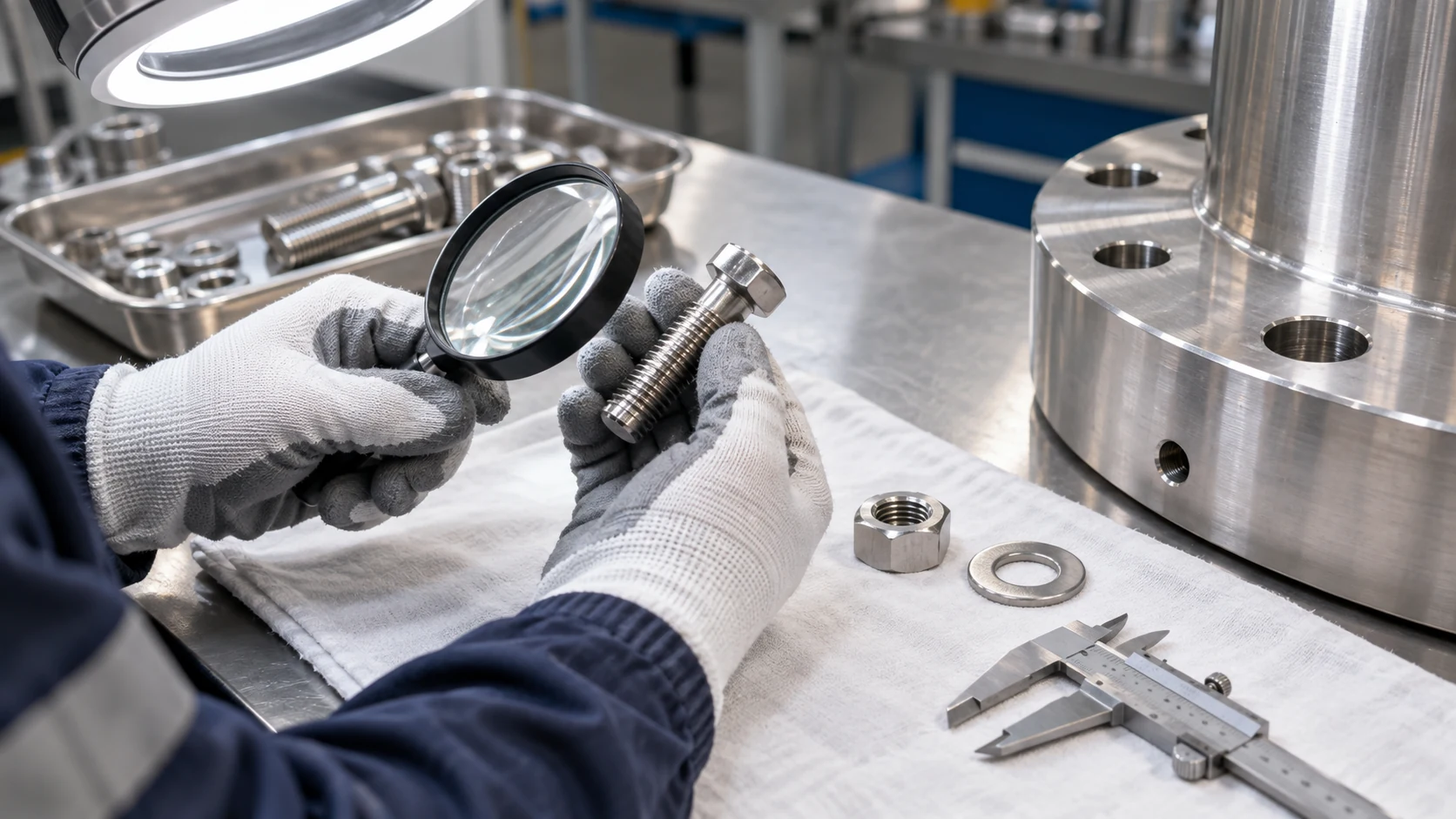
An inquiry such as “M12 × 80, 316 stainless steel” defines size and material but only part of the corrosion requirement. For sensitive applications, useful additional information may include indoor or outdoor service, coastal or inland location, direct seawater, splash or atmospheric exposure, temperature, chemical exposure, continuous or intermittent wetting, mating materials, cleaning chemicals, drainage and maintenance expectations.
Ordinary orders do not require every possible environmental detail. The more severe or unusual the service condition, however, the more important this information becomes for material and joint review.
What Buyers Should Review for Corrosion-Sensitive Applications
| Question | Why It Matters |
|---|---|
| What is the actual environment? | Determines whether general atmospheric assumptions are sufficient. |
| Is chloride exposure present? | Important for material selection and local corrosion risk. |
| Will moisture remain trapped? | Relevant to crevice conditions. |
| What metals are joined together? | Relevant to galvanic interaction. |
| Is the joint continuously wet or periodically drying? | Exposure pattern can affect local corrosion conditions. |
| Are cleaning chemicals involved? | Chemical exposure may change material suitability. |
| Will the surface be contaminated during fabrication or installation? | Important for stainless surface condition. |
| Is passivation or another surface process required? | Should be specified according to project requirements. |
| Is 316 enough? | More severe applications may require evaluation of higher-alloy materials. |
This information does not replace engineering design. It helps the supplier and buyer identify where a more detailed material review is necessary.
When 316 May Not Be Enough
Selected severe chloride, seawater, chemical or process environments may require evaluation of 2205 Duplex, 2507 Super Duplex, 904L, 1.4529 / UNS N08926 or C-276 / UNS N10276. These materials are not universally ranked as better for every application. Suitability still depends on the specific environment, product geometry, mechanical requirements and manufacturing feasibility. See Stainless Steel & Special Alloy Materials.
FAQ
Why can 316 stainless steel still corrode?
316 provides improved corrosion resistance compared with 304 in many environments, but it can still be affected by severe chloride exposure, crevices, high temperature, contamination or unsuitable service conditions.
Does red rust mean the stainless steel grade is wrong?
Not necessarily. Red rust can result from surface iron contamination, but the actual alloy grade and service conditions should also be verified before determining the cause.
Can passivation prevent all stainless steel corrosion?
No. Passivation improves surface condition but does not change the alloy composition or make an unsuitable grade resistant to every environment.
Why are washers and bolt heads sometimes corrosion-sensitive areas?
The interfaces under washers, heads and nuts can retain moisture or contaminants and may create local crevice conditions that differ from the exposed surface.
What information should I provide for a corrosion-sensitive fastener application?
Provide the material requirement together with relevant environmental information such as chloride exposure, moisture condition, temperature, chemicals, mating materials and project specification.
Need to Review a Corrosion-Sensitive Fastener Application?
Share the material requirement, service environment and application details with VALTOR for technical review.