Home/Products/Anchors/Stainless Steel Wedge Anchors

Stainless Steel Wedge Anchors

Through-Fixing Expansion Anchors for Concrete & Structural Installations

304 / A2 and 316 / A4 stainless mechanical expansion anchors for fastening steel fixtures, machinery and support components to concrete. A tapered stud engages a short expansion clip as the nut is tightened.

Type
Wedge / Through Bolt Anchor
Base Material
Concrete
Anchor System
Mechanical Expansion
Construction
Stud + Expansion Clip + Nut + Washer
Materials
304 / A2, 316 / A4 Stainless Steel
Common Size Reference
M6–M20; actual configuration and availability require confirmation
Installation
Through-Fixing / Pre-Drilled Hole
Custom Options
Diameter / Length / Thread / Material / Packaging

Request A Quote

Product Overview

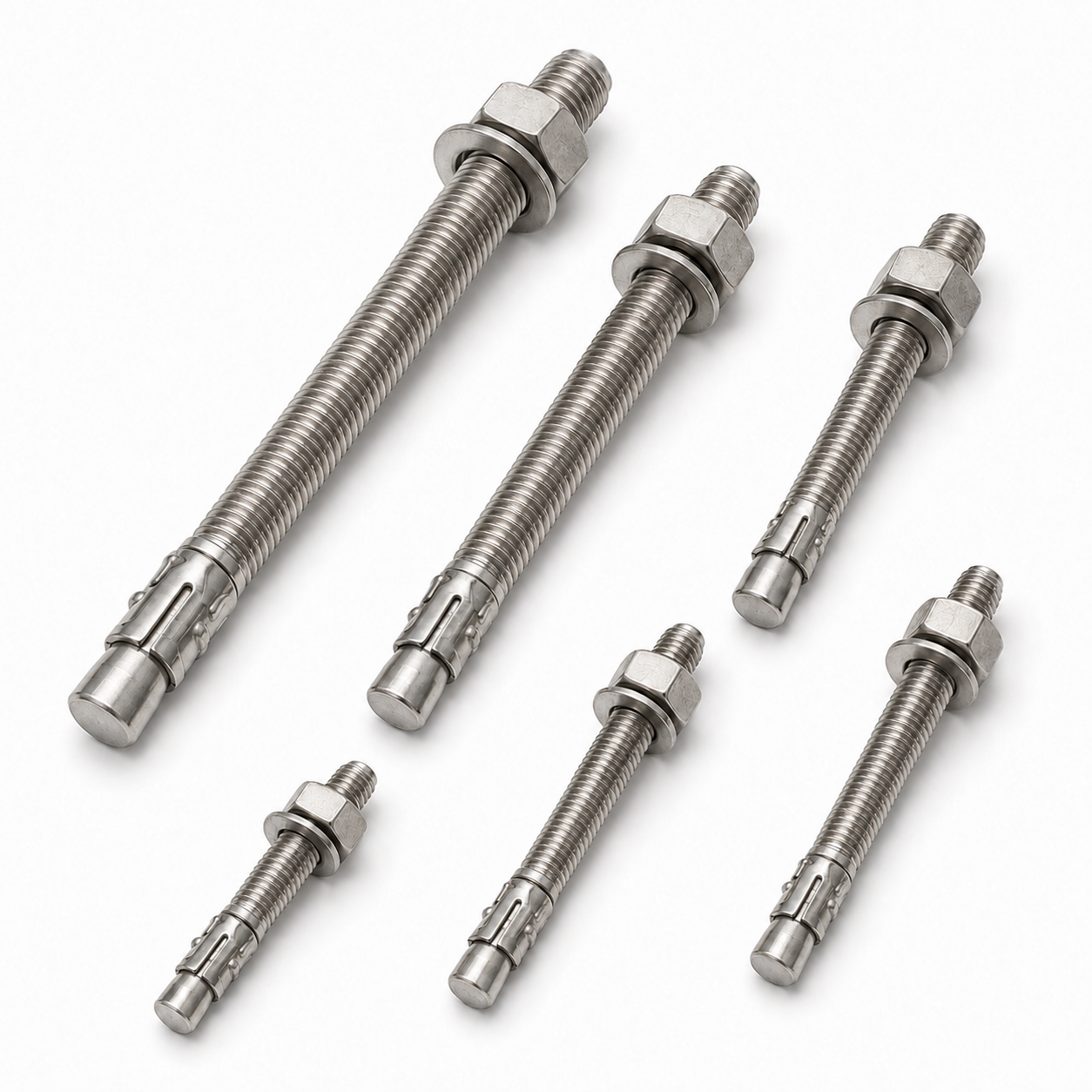
Stainless Steel Wedge Anchors, also purchased as Through Bolt Anchors or Concrete Wedge Anchors, comprise a threaded stud, tapered expansion end, short expansion clip, hex nut and flat washer. The clip is near the embedded end rather than forming a long sleeve around the stud. These are distinct from sleeve anchors, drop-in anchors, chemical anchors and concrete screws.

Through-fixing allows the anchor to pass through a steel fixture into a prepared concrete hole. Tightening the nut moves the tapered stud relative to the clip, expanding the clip against the hole wall. Correct drilling, debris removal, embedment and installation procedure are essential; pre-positioned arrangements may differ according to the exact model and project.

For an RFQ, provide anchor diameter, overall and thread lengths, fixture thickness, required embedment, concrete condition, complete-assembly stainless grade, quantity and project or approval requirements. Include drawings and the installation specification where available so the supplied configuration can be confirmed.

Technical Specifications

Product
Stainless Steel Wedge Anchors
Alternative Names
Through Bolt Anchors / Through Bolts / Concrete Wedge Anchors / Mechanical Expansion Anchors / Concrete Expansion Bolts
Anchor Type
Torque-controlled mechanical expansion anchor; use exact-model installation instructions
Primary Base Material
Concrete; reinforced concrete only where the location and project design permit
Installation Type
Commonly through-fixing into a pre-drilled hole; other arrangements subject to model and design
Construction
Threaded stud with tapered expansion end + short expansion clip + hex nut + flat washer
Expansion Principle
Tapered stud moves relative to clip during tightening; clip bears against drilled-hole wall
Primary Materials
304 / A2 or 316 / A4 stainless steel; specify stud, clip, nut and washer materials
Other Materials
Carbon steel versions may be supplied where required
Common Metric Size Reference
Industry size references: M6, M8, M10, M12, M16 and M20. These do not establish a confirmed VALTOR supply range or availability of every combination.
Lengths / Availability
Actual diameter, length, component configuration and availability are subject to order requirements and confirmation.
Thread
Metric coarse unless otherwise specified; thread length confirmed on order
d / L / Lt
Nominal anchor diameter / overall anchor length / thread length
d0 / Hole Depth
Drilled-hole diameter and minimum hole depth per verified model data; do not assume d0 universally equals d
hnom / hef
Nominal embedment / effective embedment where applicable; distinct quantities defined by the exact model
tfix
Fixture thickness; selected with required embedment, nut/washer allowance and thread projection
Additional Geometry
Nut size and wrench size SW, washer OD and thickness, expansion clip length and tapered-end geometry
Surface Condition
Natural stainless finish; passivation or other surface requirements by agreement
Installation Tools
Rotary hammer, suitable concrete drill bit, specified hole-cleaning equipment, hammer and torque wrench where torque is specified
Typical Applications
Steel base plates, machinery, brackets, handrails, structural supports and outdoor equipment subject to anchor design
Custom Supply
Diameter, overall length, thread length, washer size, nut configuration, stainless grade and packaging to agreed specification
Inspection / Documentation
Material certificate or MTC, dimensional inspection, material verification and third-party inspection where agreed
Approval / Performance
Only verified documentation for the exact supplied anchor model and configuration

For safety-critical structural anchoring, performance must be based on the exact model, concrete condition, embedment and applicable project specification or approval. Cracked/non-cracked concrete, static or seismic loading and fire resistance are not assumed capabilities. Load, torque, spacing, edge distance and concrete thickness requirements must come from verified model data and project design, not generic values.

Expansion Clip, Embedment & Installation Selection

1. Drilled Hole
Position the hole according to the design. Diameter, depth, alignment and concrete condition affect installation. Avoid reinforcement unless the project permits the proposed location.
2. Hole Cleaning
Remove drilling debris using the exact model instructions; one brush/blow sequence is not universal to every anchor system.
3. Insertion
Pass the anchor through the fixture into the prepared concrete hole with the nut and washer arranged according to the specified procedure.
4. Drive / Embedment
Drive to the required depth without damaging threads. Achieve the specified nominal embedment; effective embedment is a separate model-defined quantity where applicable.
5. Tightening
Installation torque must follow the installation instructions for the exact anchor model and configuration. Do not apply torque values from other anchor models or general industry references. The tapered stud moves relative to the short clip during tightening.
6. Clip Engagement
The taper forces the clip outward against the hole wall to develop mechanical anchorage. The clip remains within the concrete.
Fixture Thickness
Select overall length with fixture thickness, embedment, washer/nut geometry and required thread projection. A longer anchor is not automatically stronger.
Edge / Spacing
Concrete edges, adjacent anchors and concrete thickness must meet model-specific and project design requirements; no universal minimum is offered.
Final Selection
Confirm concrete condition, design load, anchor diameter, embedment, fixture thickness, corrosion environment and approval requirements. Hollow brick, hollow block, AAC, soft masonry and drywall require a separately tested suitable anchor system.

Before installation, obtain the instructions for the supplied model and confirm drill-hole diameter, minimum hole depth, cleaning method, nominal / effective embedment as applicable, and tightening requirements. The technical illustration is schematic, not a dimensioned manufacturing drawing or a substitute for these instructions.

304 / 316 Stainless Steel & Anchor Size Options

304 / A2 is an option for many general industrial and outdoor applications depending on exposure. 316 / A4 generally offers better chloride corrosion resistance than 304 / A2, but does not guarantee freedom from corrosion in every marine environment.

A2 and A4 are common stainless steel fastener material-category designations; 304 and 316 are common stainless steel grade designations. They are commonly associated, but A2 is not strictly identical to one particular 304 grade in every case, nor A4 to one particular 316 grade. Confirm composition, mechanical properties and applicable requirements from component documentation and the governing standards. See our 304 vs 316 stainless steel fastener selection guide.

Distinguish general outdoor / coastal atmosphere from salt spray and splash exposure, continuous seawater immersion, and high-chloride or aggressive chemical environments. Selection must consider actual exposure, all component materials, crevice corrosion, dissimilar-metal contact, and project design and maintenance requirements. 316 / A4 is not a universal marine-grade solution.

Confirm material grades separately for the threaded stud, expansion clip, nut and washer in the quotation and component documentation. The stud material alone does not establish the grade of the complete assembly. Concrete exposure, fixture material, galvanic compatibility and project requirements all affect selection; grade should not be selected by strength alone.

Common commercial sizes are referenced for selection. Actual diameter, length, component configuration and availability are subject to order requirements and confirmation. Overall lengths, thread lengths and fixture capacities must be checked for the exact model.

Anchor Length, Fixture Thickness & OEM Supply

Length Selection
Overall length L must accommodate required embedment, fixture thickness tfix, washer/nut geometry and required thread projection. Do not use a universal length formula without model data.
Longer Configurations
Extra length may allow a thicker fixture or different embedment configuration, not increased strength by itself. Performance follows the tested or designed arrangement.
OEM Variables
Diameter, overall length, thread length, washer size, nut configuration, stainless grade and packaging, subject to manufacturing feasibility and applicable verification.
Marking / Packaging
Customer marking on packaging by agreement. Physical anchor logo engraving is not assumed.
RFQ Checklist
Anchor diameter and length, thread length, fixture thickness, required embedment, concrete type/condition, grade of all components, quantity, delivery requirement and drawing/project specification.

Anchor Geometry & Quality Documentation

Dimensional Inspection
Anchor diameter, overall length, thread length and thread quality; nut size/fit, washer dimensions and clip length.
Expansion Geometry
Inspect clip geometry and tapered expansion section, assembly fit and surface condition against agreed specifications.
Material Checks
Verify ordered component grades and available MTC or raw material reports; material verification according to purchase requirements.
Functional Checks
Assembly fit, clip movement, expansion behavior and installation trials where required under an agreed verified procedure.
Testing
Torque or load testing only under a verified procedure for the relevant model and configuration. No generic load table is applied.
Documentation
MTC/raw material report, dimensional, thread and assembly inspection, material verification and third-party testing support may be arranged. Confirm availability before ordering.

Approval numbers, CE marking, ETA or ICC-ES documents and performance certificates are supplied only where genuinely available for the exact product. No approval is implied by the product photographs or material grade.

Applications
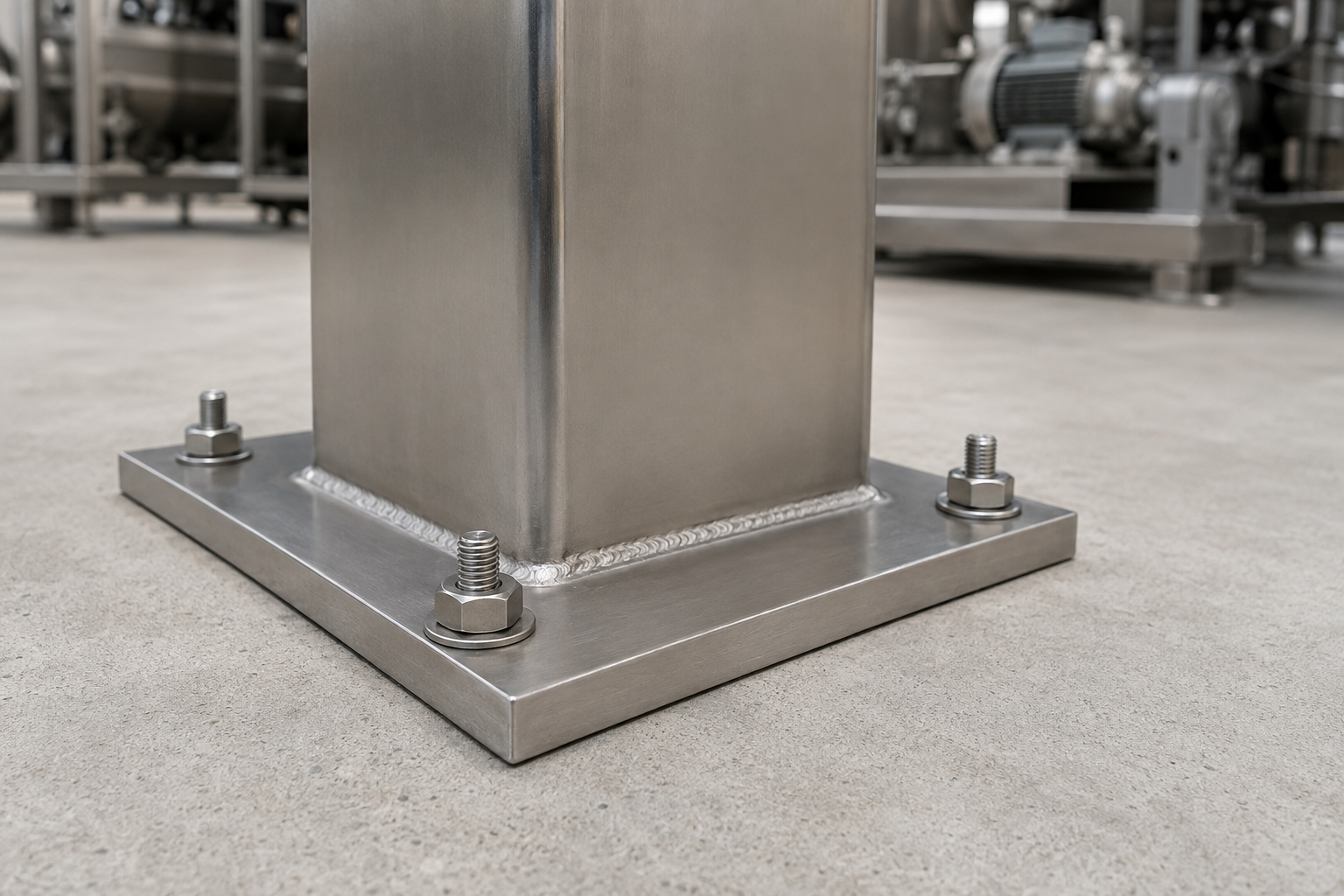
Stainless anchor nuts and washers securing steel base plate to concrete
01

Steel Base Plates to Concrete

Fastening steel plates, frames and support structures to concrete foundations under the appropriate design.

02

Machinery & Equipment Installation

Anchoring equipment feet, machinery bases and industrial supports where the concrete anchor design is specified.

03

Handrails & Guard Systems

Suitable concrete-mounted railings and barriers subject to project design and verified anchor requirements.

04

Outdoor & Coastal Structures

316 / A4 material options for corrosion-sensitive exterior and coastal installations.

05

OEM & Project Anchor Supply

Supply according to anchor diameter, overall length, complete-assembly grade, packaging and project specifications.

Frequently Asked Questions

What is a Wedge Anchor?

A mechanical expansion anchor comprising a threaded stud with tapered end, expansion clip, nut and washer, intended primarily to fasten fixtures to concrete.

What is the difference between a Wedge Anchor and a Sleeve Anchor?

A wedge anchor uses a short expansion clip near its embedded end. A sleeve anchor uses a larger sleeve around part of its body. They are different systems and must not be treated as interchangeable.

Can Stainless Steel Wedge Anchors be used outdoors?

304 / A2 and especially 316 / A4 are options for different outdoor corrosion environments. Select according to actual exposure and the material of the entire assembly, not the stud alone.

How do I select Wedge Anchor length?

Consider required embedment, fixture thickness, nut and washer allowance, thread projection and project specification. Confirm the exact model dimensions; a longer anchor does not automatically carry a greater load.

Can VALTOR provide load data or anchor approvals?

Testing, approval and performance documentation can only be supplied where available for the exact anchor model and specification. Confirm requirements at enquiry; do not transfer generic load values or approvals from another anchor.

Related Products

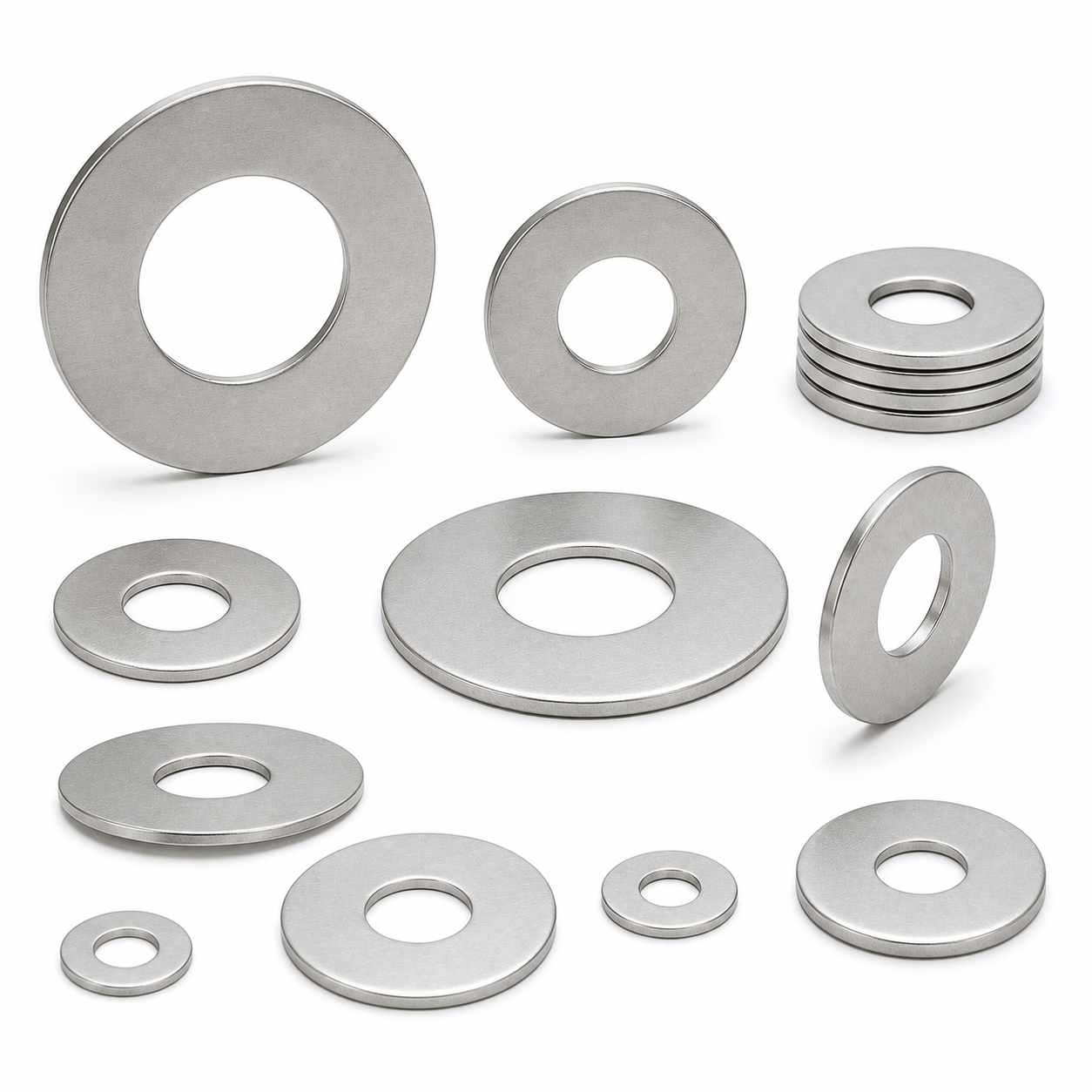
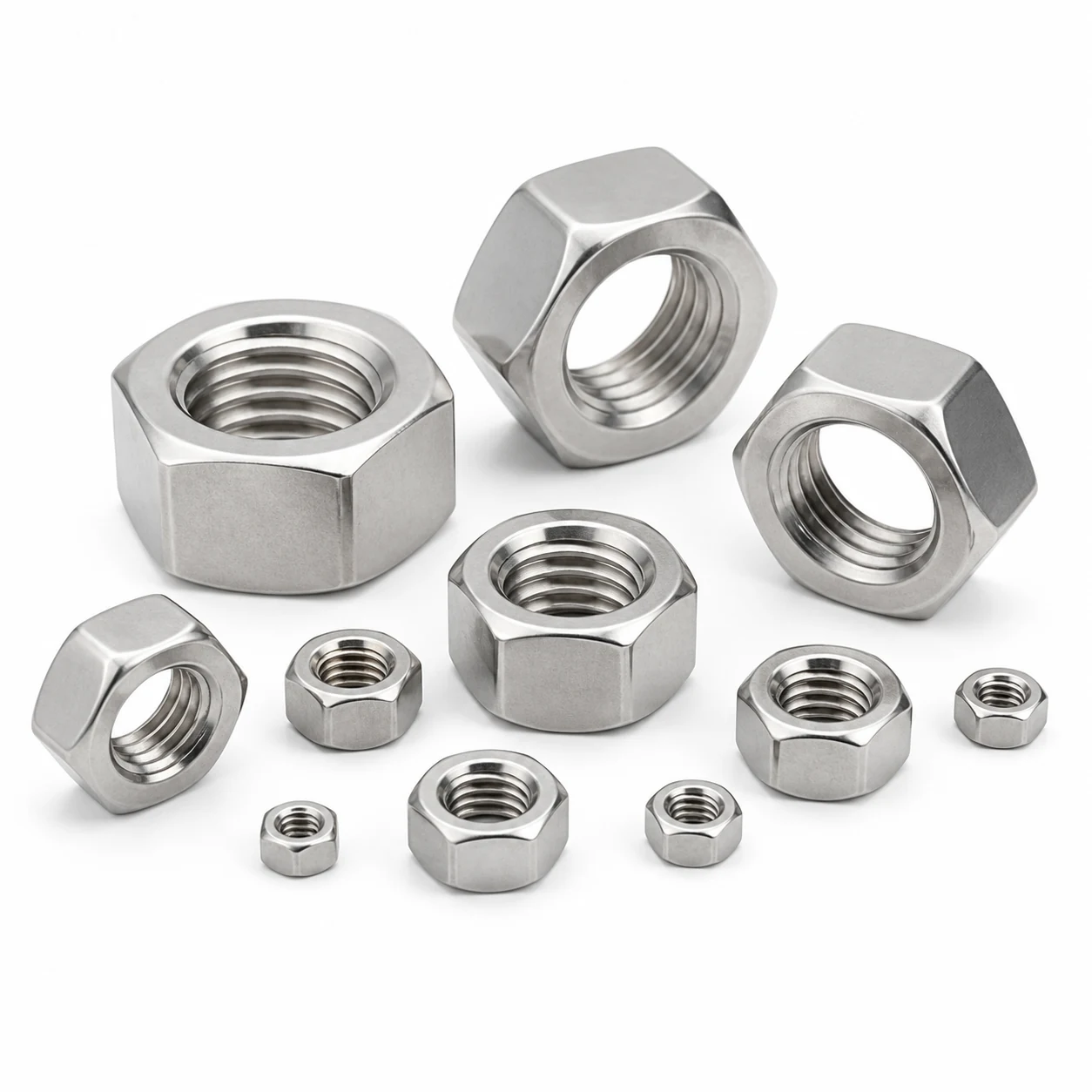
Related products are listed for reference. Replacement nuts, washers or other components must meet the dimensional, material and performance requirements of the specified anchor assembly. They should not be assumed interchangeable.
Need Stainless Steel Wedge Anchors?

Send the required diameter and overall length, stainless steel grade for the stud and clip, nut and washer material requirements, fixture thickness, required embedment or project design requirements, concrete type and condition, quantity, project drawings or reference photos, and required inspection or material documentation.

If embedment is unknown, submit project drawings or design requirements for further confirmation; do not estimate engineering parameters. Use our industrial fastener RFQ checklist to prepare your enquiry.

Request A Quote


Scroll to Top