Hex Weld Nuts
DIN 929 Hexagon Weld Nuts for Sheet Metal & Projection Welding Applications
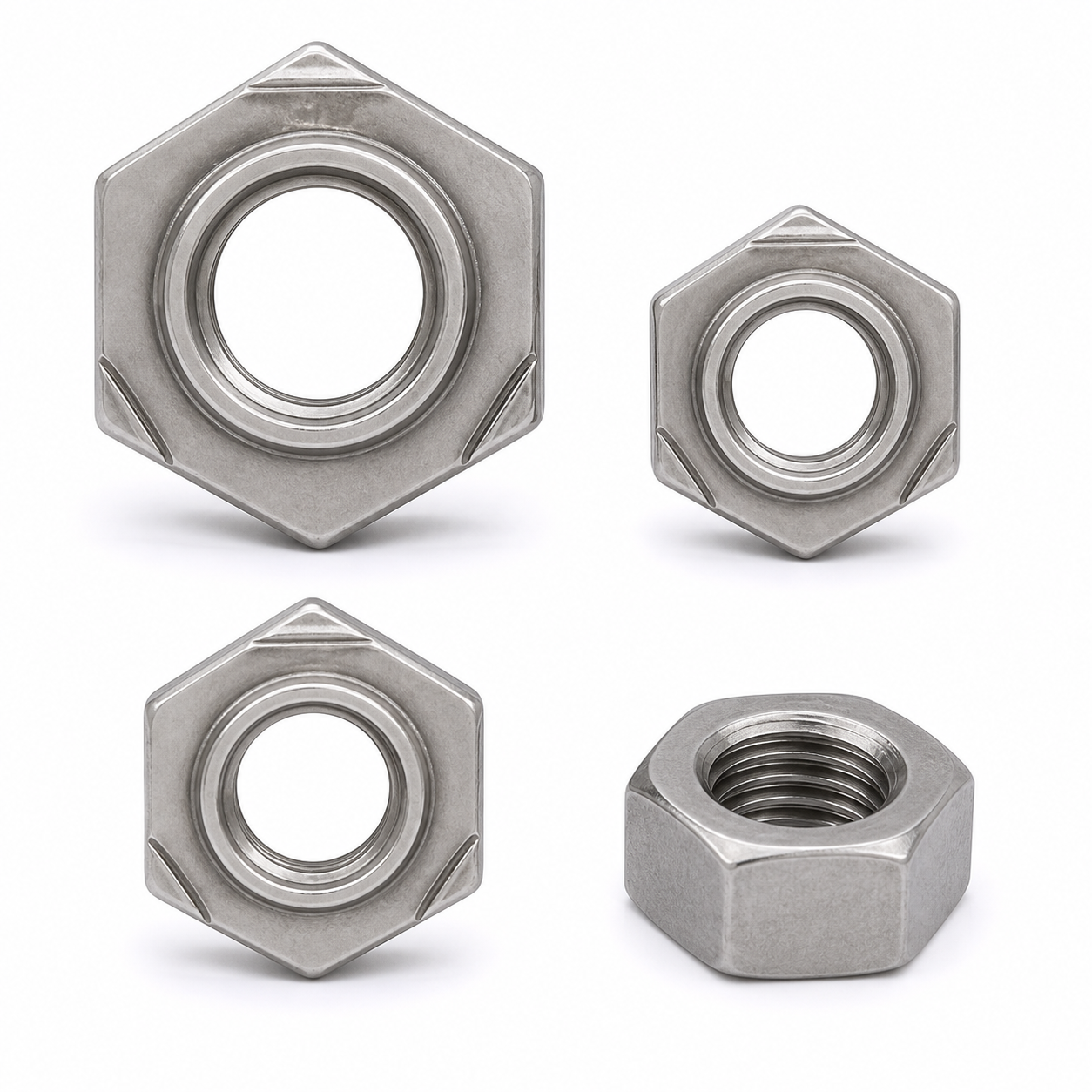
DIN 929 Hex Weld Nuts are internally threaded hexagonal nuts designed for resistance / projection welding onto sheet metal and fabricated components. Formed projections on the bearing face concentrate current and pressure at defined points, permanently attaching the nut while retaining a reusable female thread for later assembly.
Product Overview
DIN 929 Hex Weld Nuts combine a standardized low hexagonal body, internal female thread, locating geometry and formed welding projections. Unlike ordinary hex nuts, they are intended to be permanently joined to a compatible sheet component by projection welding.
During the welding cycle, current and electrode force are concentrated at the projections. The projections heat and collapse to create localized weld zones while the internal thread remains available for subsequent screw or bolt assembly. Material, sheet thickness, surface condition and the welding process must be evaluated together.
DIN 929 specifies hexagon weld nuts and must not be confused with DIN 928 square weld nuts. VALTOR supplies DIN 929 products for machinery panels, equipment housings, electrical enclosures and OEM sheet-metal assemblies, with custom geometry identified separately when it differs from the standard.
Technical Specifications
Projection Welding Geometry & Permanent Thread Integration
Material, Weldability & Finish Options
Clean electrical and physical contact is required at the projections. Coating sequence and weldability must be considered; post-weld coating may suit some fabrication processes better.
Weld Quality, Thread Protection & Documentation
Inspection verifies thread diameter, pitch, continuity and mating fit; the presence, formation and consistency of projections; relevant body, locating and projection geometry; and freedom from burrs, cracks, contamination or damage. Correct welding setup should protect thread alignment and function. Customer-approved sample trials may evaluate nut position, visible weld condition, attachment integrity and agreed torque, push-out, pull-off or destructive test directions without assuming universal values. Documentation may include an MTC, raw-material report, dimensional or sample report, agreed weld-test report or third-party support when specifically required.
OEM Sheet Metal Supply, Ordering & Packaging
Provide DIN 929 or custom requirement, thread, material, finish, quantity, sheet material and thickness, panel / locating-hole geometry, welding-process information and inspection needs.
Drawings and samples confirm thread, nut dimensions, projection geometry, panel interface, locating features, fit and welding compatibility. Geometry differing from DIN 929 is described as a custom hex weld nut.
Inner bags, small boxes, export cartons, pallets or bulk formats can protect projections, threads, edges and surfaces. Customer labels, part numbers, carton marks and batch identification may be supported. Delivery depends on specification, quantity, approval, testing and production availability.
Applications
Permanent projection-welded female threads for industrial sheet-metal assemblies.
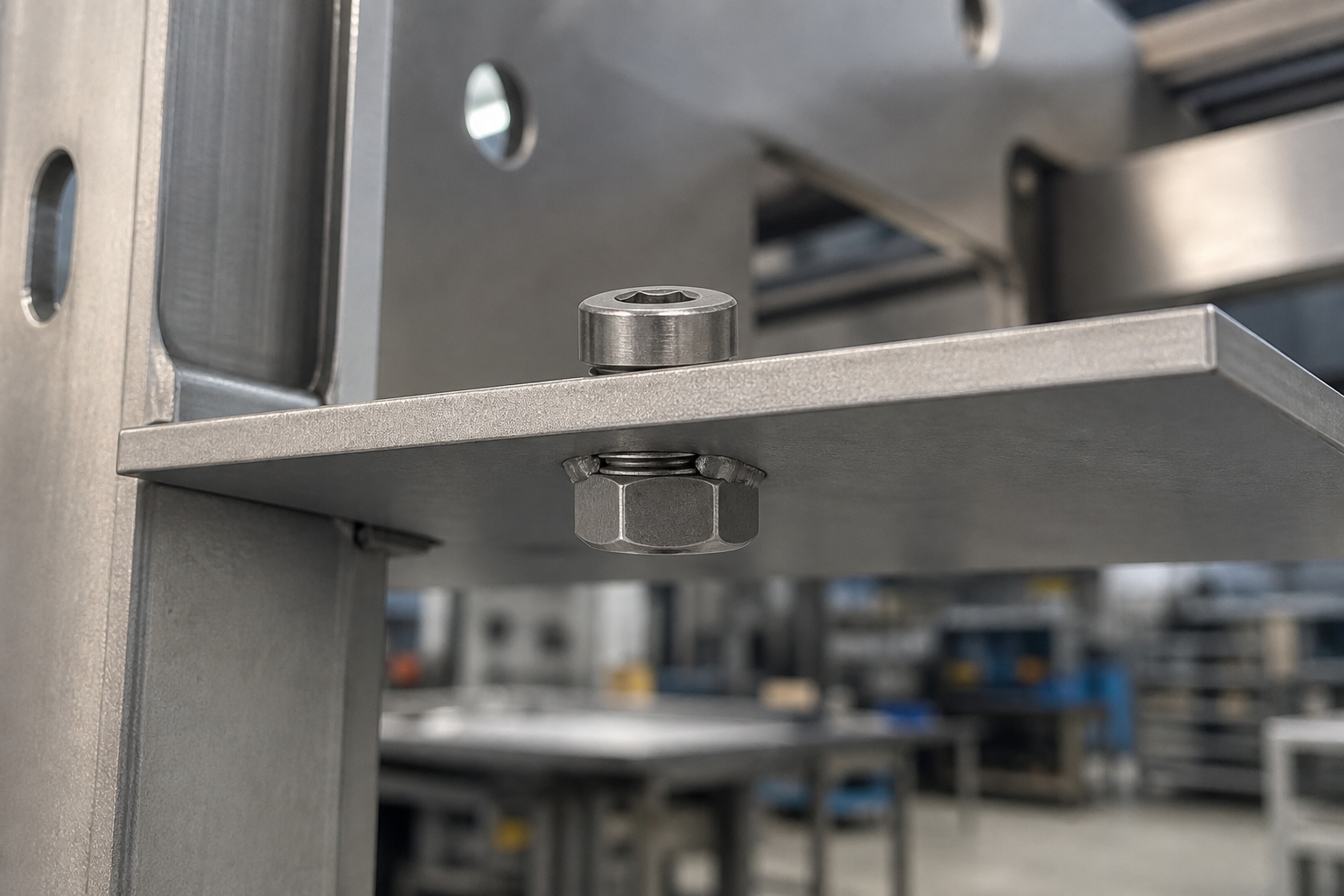
Permanent threaded points in fabricated sheet components for subsequent bolt or screw assembly.
Fixed internal threads for repeatable assembly of machinery housings, guards and covers.
Integrated threaded mounting points in fabricated cabinets and control panels.
Projection-welded nuts incorporated into panels and brackets before final assembly.
Drawing-based components requiring repeatable weld-nut positioning and permanent threaded connections.
Frequently Asked Questions
What is the difference between DIN 929 and DIN 928 Weld Nuts?
DIN 929 specifies hexagon weld nuts, while DIN 928 covers square weld nuts. Their external geometry and welding features differ, so selection should follow the required panel design, welding process and customer specification.
How do DIN 929 Hex Weld Nuts attach to sheet metal?
Formed welding projections concentrate electrical current and electrode pressure at defined contact points. During projection welding, these areas heat and collapse to form localized weld zones between the nut and the sheet component.
Can stainless steel DIN 929 Weld Nuts be supplied?
Yes. Stainless steel options such as 304 and, where suitable, 316 can be supplied for applications requiring corrosion resistance. Nut material, base sheet material and welding procedure should be considered together.
What information should I provide for an OEM Weld Nut quotation?
Please provide the thread size, DIN 929 or custom drawing requirement, material, quantity, sheet material, sheet thickness and any relevant panel or welding requirements.
Can samples be supplied for welding trials before bulk production?
Yes. Samples can be arranged for dimensional checking, panel positioning and welding-process validation before bulk production where required.
Related Products

Share the thread, material, sheet specification, locating geometry, quantity and welding requirements with VALTOR.