
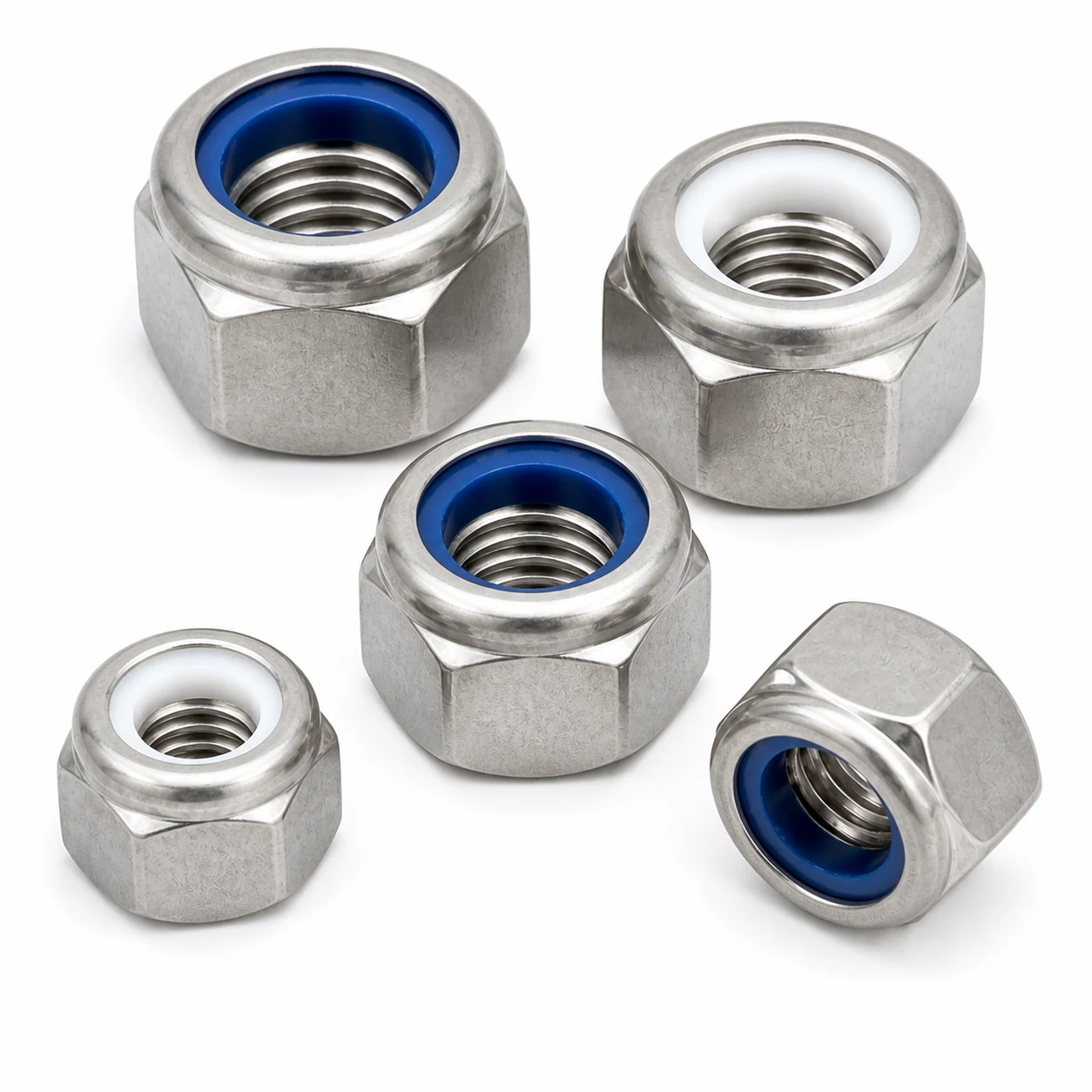
Nylon Lock Nuts
DIN 985 / DIN 982 Stainless Steel Nyloc Nuts for Vibration-Resistant Fastening
Nylon lock nuts use a polymer insert at the top of the nut to create prevailing torque on the mating thread and help resist loosening caused by vibration or repeated movement. VALTOR supplies stainless steel nylon insert lock nuts for machinery, industrial equipment and fabricated assemblies.
Product Overview
Nylon insert lock nuts, also called nyloc nuts or nylon self-locking nuts, use a polymer ring to grip the mating bolt thread. The resulting prevailing torque helps reduce rotation under vibration and repeated movement.
VALTOR supplies DIN 985 and DIN 982 stainless steel nylon lock nuts in standard metric sizes. The two standards use different nut heights and dimensional profiles, allowing buyers to match the nut to the assembly specification and available installation space.
304 and 316 stainless steel options support machinery, equipment and general industrial fastening requirements. Size, packing, labeling and documentation can be arranged according to purchasing requirements.
Technical Specifications
Nylon Insert Locking Performance
DIN 985 and DIN 982 nylon insert lock nuts use controlled friction from a polymer insert to resist loosening in assemblies exposed to vibration or repeated movement.
Material, Insert & Finish Options
Base material, nylon insert specification, thread and finish should be selected together for the service conditions and mating assembly.
Finish availability depends on the base material and project specification; not every finish is suitable for every material.
Quality Control & Documentation
Inspection focuses on mating-thread fit, nylon insert condition, locking performance where specified, dimensions, material and surface condition.
Thread dimensions, pitch and mating fit are checked to the required specification. Where ordered, locking resistance can be checked without publishing unsupported torque values. Insert inspection covers position, completeness, visible damage and assembly into the nut body. Dimensional checks may include thread size, width across flats, nut height and overall geometry. Available order-specific documentation may include a Material Certificate / MTC, raw material report, dimensional inspection report, inspection records or third-party inspection support.
Packaging, Matching Supply & Private Label
Thread size, pitch and material are matched according to the complete assembly requirement.
Packing should help protect the nylon insert from contamination, excessive moisture exposure and physical damage.
Customer labels, part numbers, carton markings, packing quantities and customer-authorized private-label packaging can be supported. This does not imply VALTOR branding is engraved on the nut.
For quotation, provide DIN 985 or DIN 982, thread size and pitch, nut material, insert requirement, surface finish, quantity, packaging and required inspection or documentation. Lead time depends on the specification, quantity and current production availability.
Applications
Vibration-resistant threaded fastening for machinery and industrial equipment.
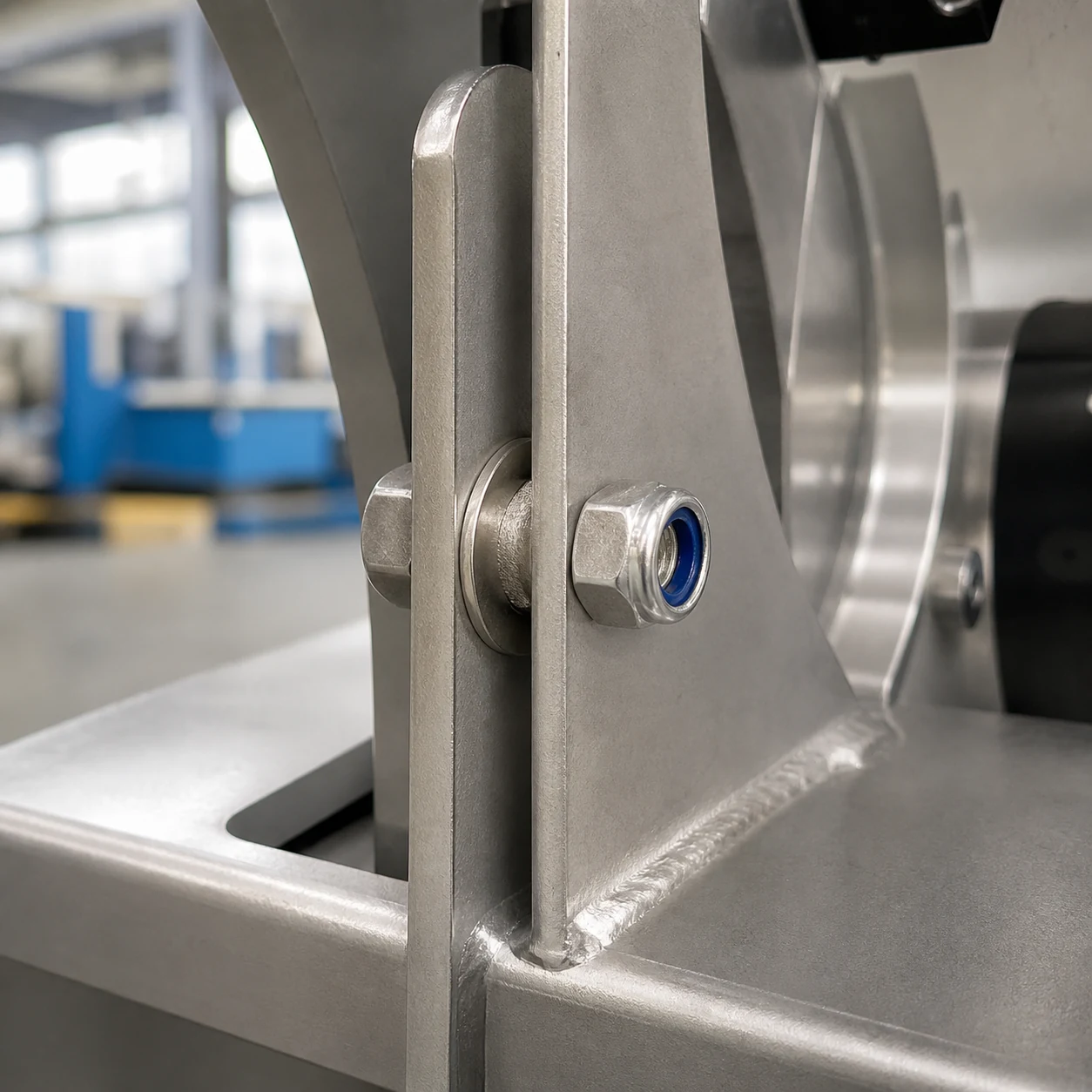
Used on machine frames, moving components and bolted brackets where vibration may loosen a standard nut.
Suitable for production equipment, guards and serviceable assemblies requiring reliable thread retention.
Selected for joints exposed to repeated movement, operating vibration or cyclic equipment use.
Used in equipment cabinets, control assemblies and mounted components subject to machine vibration.
Suitable for planned maintenance and replacement fastening where a nylon locking feature is specified.
Frequently Asked Questions
How does a nylon lock nut prevent loosening?
The nylon insert grips the mating bolt thread and creates prevailing torque, helping the nut resist rotation caused by vibration or repeated movement.
What is the difference between DIN 985 and DIN 982 nylon lock nuts?
Both use nylon inserts for locking, but they differ in nut height and dimensional design. The required standard should be selected according to the assembly and specification.
Can nylon lock nuts be used in high-temperature applications?
The allowable temperature depends on the nylon insert material and operating conditions. For higher-temperature environments, an all-metal locking nut may be more suitable.
What is the typical lead time for stainless steel nylon lock nuts?
Lead time depends on size, quantity and stock availability. Standard items can generally be supplied faster, while special sizes or customized orders require additional production time.
How are nylon lock nuts packed for export?
Packaging can include bags or small boxes inside export cartons and pallets, with customized packing or private-label requirements available according to the order.
Related Products

Share the required standard, material, thread size, quantity, packaging and documentation requirements with VALTOR for a quotation.