
MATERIALS
Stainless Steel & Special Alloy Materials
Material Options for Fasteners, Industrial Hardware & Custom Components
VALTOR supplies stainless steel fasteners and industrial hardware in commonly used grades such as 304, 316 and 410, together with special stainless steels, duplex grades and selected corrosion-resistant alloys for demanding project requirements.
Material selection should consider the actual service environment, corrosion exposure, mechanical requirements, manufacturing process, product geometry and project specification.
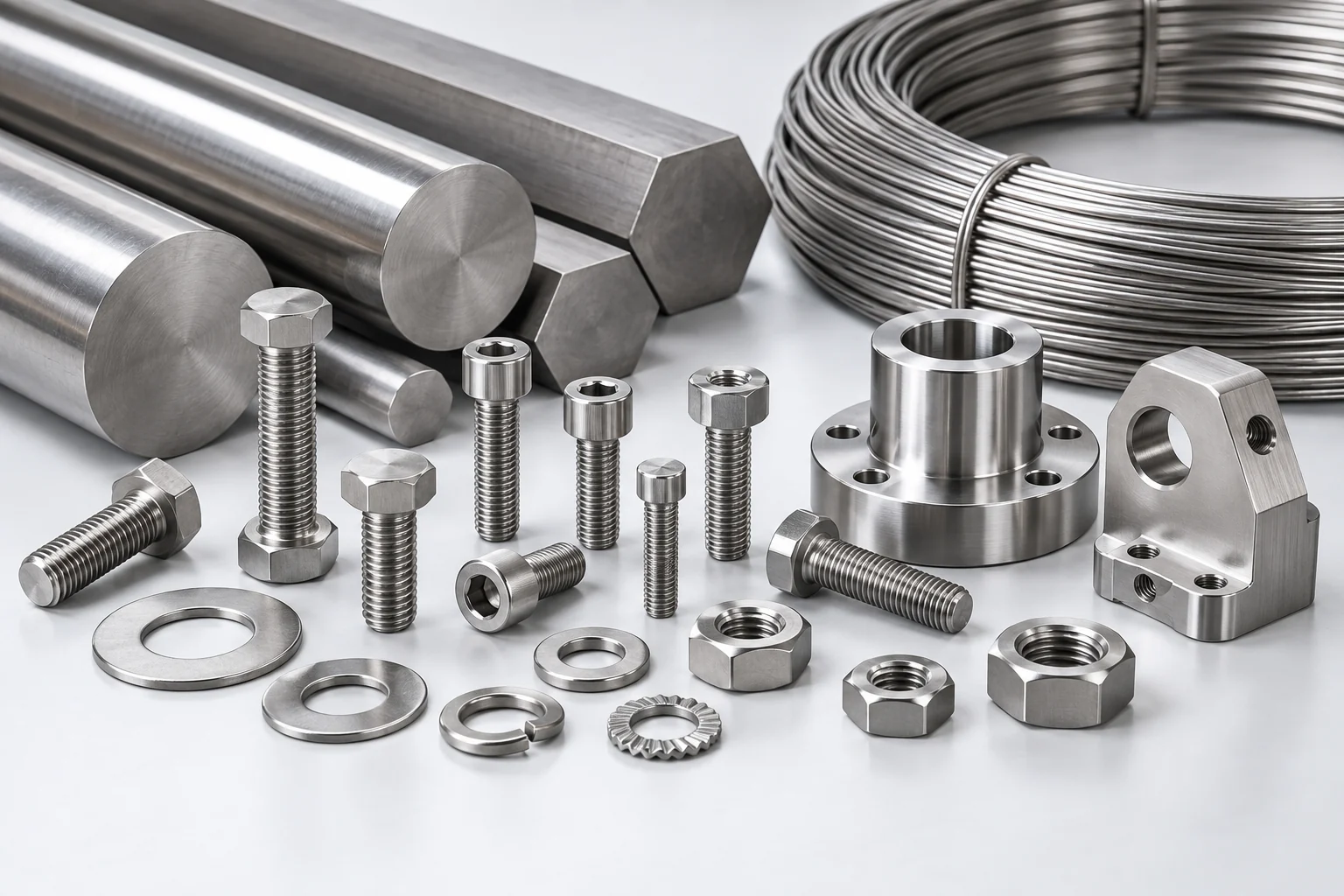
Material Selection at a Glance
A practical first reference for matching commonly requested grades with purchasing and application priorities.
| Grade | Material Type | Main Selection Reason | Typical Application Environment |
|---|---|---|---|
| 304 / A2 | Austenitic Stainless Steel | General corrosion resistance and broad fastener availability | General industrial / construction / machinery |
| 316 / 316L / A4 | Austenitic Stainless Steel | Improved resistance in chloride-containing and more demanding environments | Coastal / marine / outdoor / humid environments |
| 410 | Martensitic Stainless Steel | Hardness potential and suitability for selected drilling / tapping fasteners | Self-drilling / self-tapping / mechanical fastening applications |
| 321 | Stabilized Austenitic Stainless Steel | Suitable for selected elevated-temperature applications | High-temperature / industrial projects |
| 310S | High-Alloy Austenitic Stainless Steel | Selected high-temperature and oxidation-related applications | High-temperature industrial applications |
| 2205 | Duplex Stainless Steel | Higher strength and improved resistance in certain chloride environments | Marine / coastal / chemical / infrastructure |
| 2507 | Super Duplex Stainless Steel | Selected severe chloride and aggressive corrosion applications | Offshore / marine / chemical / demanding industrial projects |
| 904L | High-Alloy Austenitic Stainless Steel | Selected aggressive corrosion environments | Chemical / industrial / special projects |
| 1.4529 / UNS N08926 | 6Mo High-Alloy Austenitic Stainless Steel | Severe chloride and seawater-related corrosion resistance | Seawater / chemical / FGD / demanding process environments |
| C-276 / UNS N10276 | Nickel-Based Corrosion-Resistant Alloy | Highly aggressive chemical corrosion environments | Chemical processing / special industrial applications |
Material selection depends on the complete service environment, product requirements and project specification. This table is a selection reference, not a universal engineering design chart.
Common Stainless Steel Grades
Frequently specified starting points for fastener and industrial hardware sourcing.
304 / A2 Stainless Steel
304 is one of the most commonly used stainless steels for fasteners and industrial hardware, offering a practical combination of corrosion resistance, manufacturability and broad product availability.
Typical Applications- General Fasteners
- Machinery
- Construction Hardware
- Industrial Equipment
- General Outdoor Applications
Buyer note: 304 should not automatically be selected for severe marine or high-chloride exposure without reviewing the actual environment.
316 / 316L / A4 Stainless Steel
316 stainless steel contains molybdenum and is commonly selected where improved resistance to chloride-containing, humid, coastal and marine environments is required compared with 304.
Typical Applications- Marine Hardware
- Coastal Construction
- Outdoor Equipment
- Corrosion-Sensitive Assemblies
- Industrial Fasteners
Buyer note: 316L may be specified where a low-carbon 316 grade is specifically required by the product or project specification.
410 Stainless Steel
410 is a martensitic stainless steel used for selected fasteners where hardness, drilling or tapping performance is important.
Typical Applications- Self-Drilling Screws
- Self-Tapping Fasteners
- Selected Mechanical Fasteners
Buyer note: 410 has a different corrosion-resistance profile from 304 and 316 and should not be positioned as a direct higher-grade replacement for austenitic stainless steel.
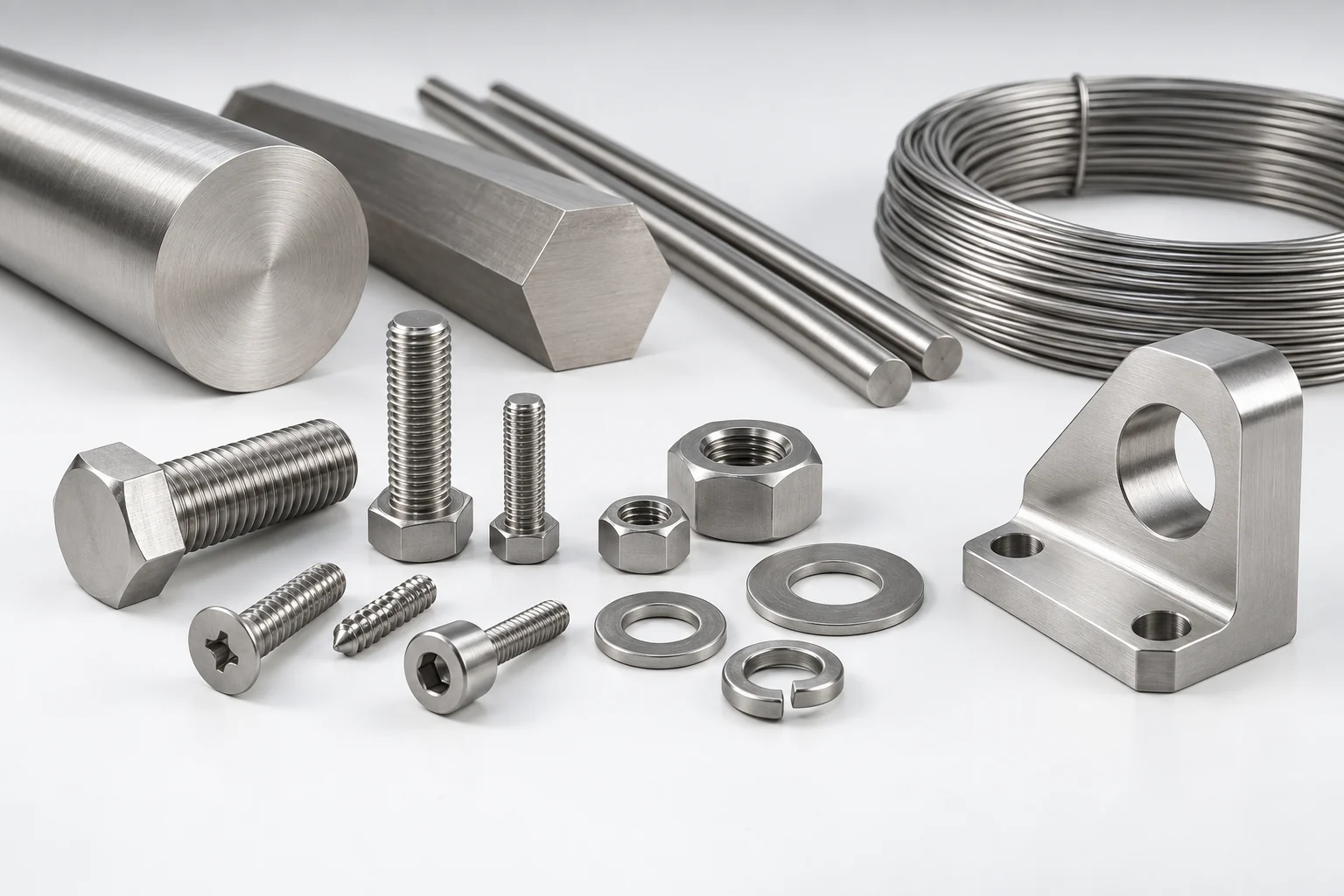
PROJECT MATERIALS
Special Stainless Steel Grades
Special grades are reviewed against the required product form, dimensions, manufacturing route, quantity and project specification. They are not presented as routine stock materials.
321 Stainless Steel
A stabilized austenitic stainless steel available for selected elevated-temperature and project-specific industrial applications.
Supply PositionAvailable according to product requirements, material sourcing and manufacturing feasibility.
310S Stainless Steel
A high-alloy austenitic stainless steel considered for suitable high-temperature and oxidation-related industrial applications.
Supply PositionAvailable according to product type, size, manufacturing process and material sourcing.
2205 Duplex Stainless Steel
A duplex stainless steel combining higher strength with improved resistance to certain chloride-containing environments compared with common austenitic grades.
Typical Directions- Marine
- Coastal
- Chemical
- Industrial Infrastructure
Available according to order requirements and manufacturing feasibility.
2507 Super Duplex Stainless Steel
A super duplex stainless steel used for selected highly demanding chloride, marine and industrial corrosion environments.
Special-Order Review- Material Availability
- Product Geometry
- Manufacturing Route
- Quantity
- Project Specification
904L Stainless Steel
A high-alloy austenitic stainless steel available for selected projects requiring enhanced corrosion resistance beyond common 304 and 316 grades.
Supply PositionAvailable according to project requirements, sourcing and manufacturing feasibility.
1.4529 / UNS N08926 Stainless Steel
A high-alloy 6Mo austenitic stainless steel considered for severe chloride-containing, seawater and selected chemical-processing environments.
Typical Directions- Seawater Systems
- Chemical Processing
- Flue Gas Desulfurization
- Highly Corrosive Industrial Environments
Available according to product requirements, material sourcing and manufacturing feasibility.
Special Corrosion-Resistant Alloy
C-276 / UNS N10276 Nickel Alloy
C-276 is a nickel-based corrosion-resistant alloy, not a stainless steel grade.
C-276 is used for selected applications involving highly aggressive chemical media and demanding corrosion environments where conventional stainless steels may not provide sufficient resistance.
Typical Application Directions- Chemical Processing
- Aggressive Industrial Media
- Selected Chloride-Containing Environments
- Specialized Process Equipment
- Custom Project Hardware
Availability depends on raw-material sourcing, dimensions, quantity, product geometry and manufacturing feasibility.
Choosing Materials by Application Environment
Use the operating environment as a starting point, then review the full project specification.
General Industrial
Typical starting point: 304
Machinery, general hardware and normal industrial environments.
Outdoor & Construction
Common options: 304 / 316
Selection depends on humidity, pollution, salt exposure, service conditions and project specification.
Coastal & Marine
Common considerations: 316 / 2205 / higher-alloy grades
Selection depends on exposure severity and project requirements.
High-Chloride / Seawater
Possible directions: 2205 / 2507 / 1.4529
Selection depends on actual service conditions.
High-Temperature Applications
Possible directions: 321 / 310S
Selection depends on actual temperature, loading and service requirements.
Aggressive Chemical Environments
Possible directions: 904L / 1.4529 / C-276
Selection depends on the actual process media and project specification.
This section is a material-selection reference only. Final material choice should consider the complete operating environment and project specification.
Material Selection Also Affects Manufacturing
Material grade influences not only corrosion performance, but also manufacturing feasibility, tooling, machining, forming and product availability.
Cold Heading
Formability and material condition affect whether a grade is suitable for cold forming.
Forging
Special alloys require review of forging route, geometry and material condition.
CNC Machining
High-alloy, duplex and nickel alloys may require different tooling and machining strategies.
Thread Rolling
Material condition and geometry affect thread-forming feasibility.
Product Size & Geometry
Special grades may have more limited raw-material forms or dimensional availability.
Order Quantity
Special-material sourcing and manufacturing routes may depend strongly on quantity.
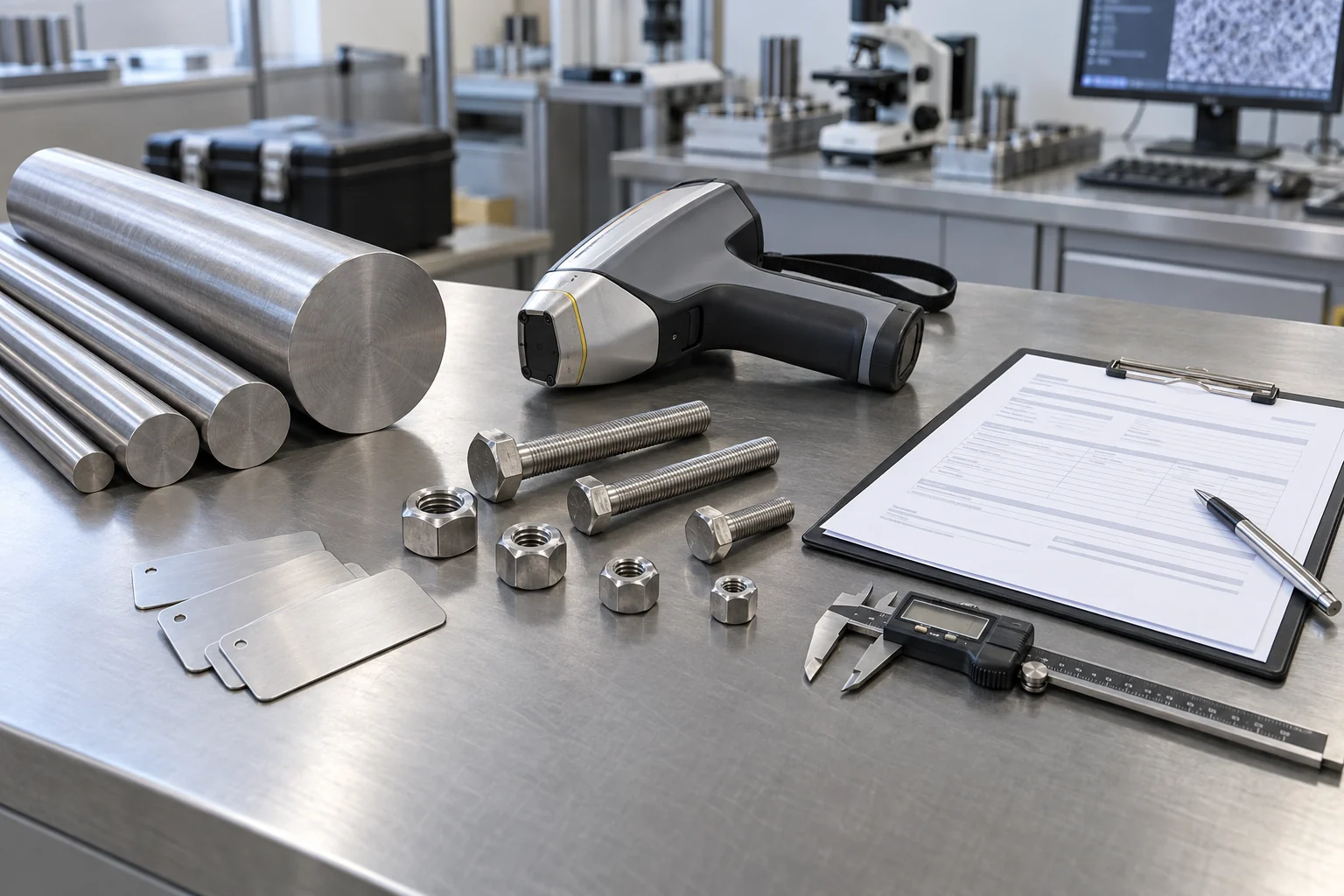
Material Verification & Documentation
Material documentation can be reviewed according to product specifications and order requirements.
Documentation and verification requirements should be confirmed before production.
What to Send for a Material Inquiry
Clear technical information helps VALTOR review material sourcing and manufacturing feasibility efficiently.
If the material grade has not yet been finalized, provide the operating environment and application requirements so suitable material options can be reviewed.
Need a Special Stainless Steel or Alloy Material?
Send VALTOR your product, drawing, required material, application environment and quantity for review.