
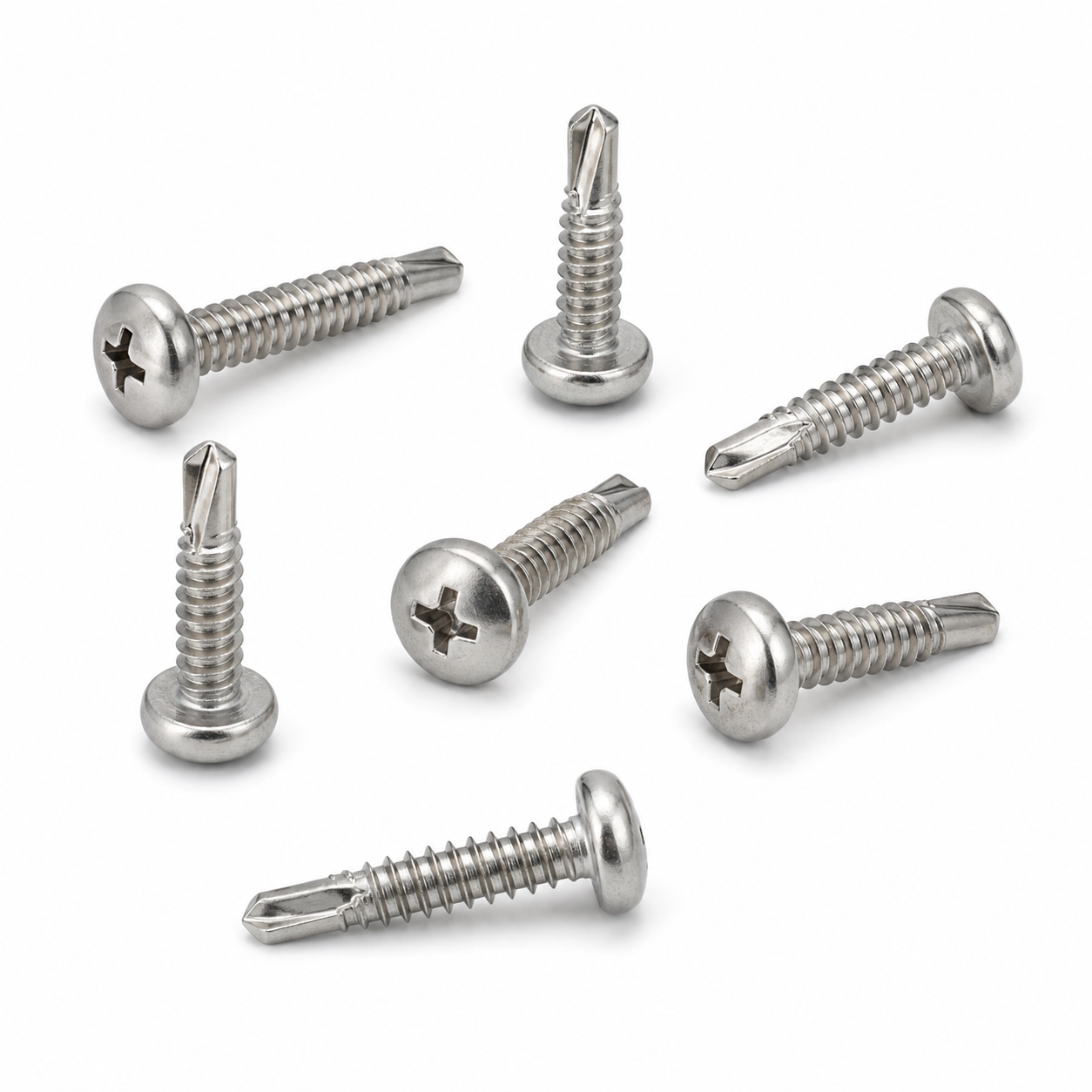
Pan Head Self Drilling Screws
DIN 7504 N Stainless Steel Pan Head Self Drilling Screws for Sheet Metal & Industrial Assembly
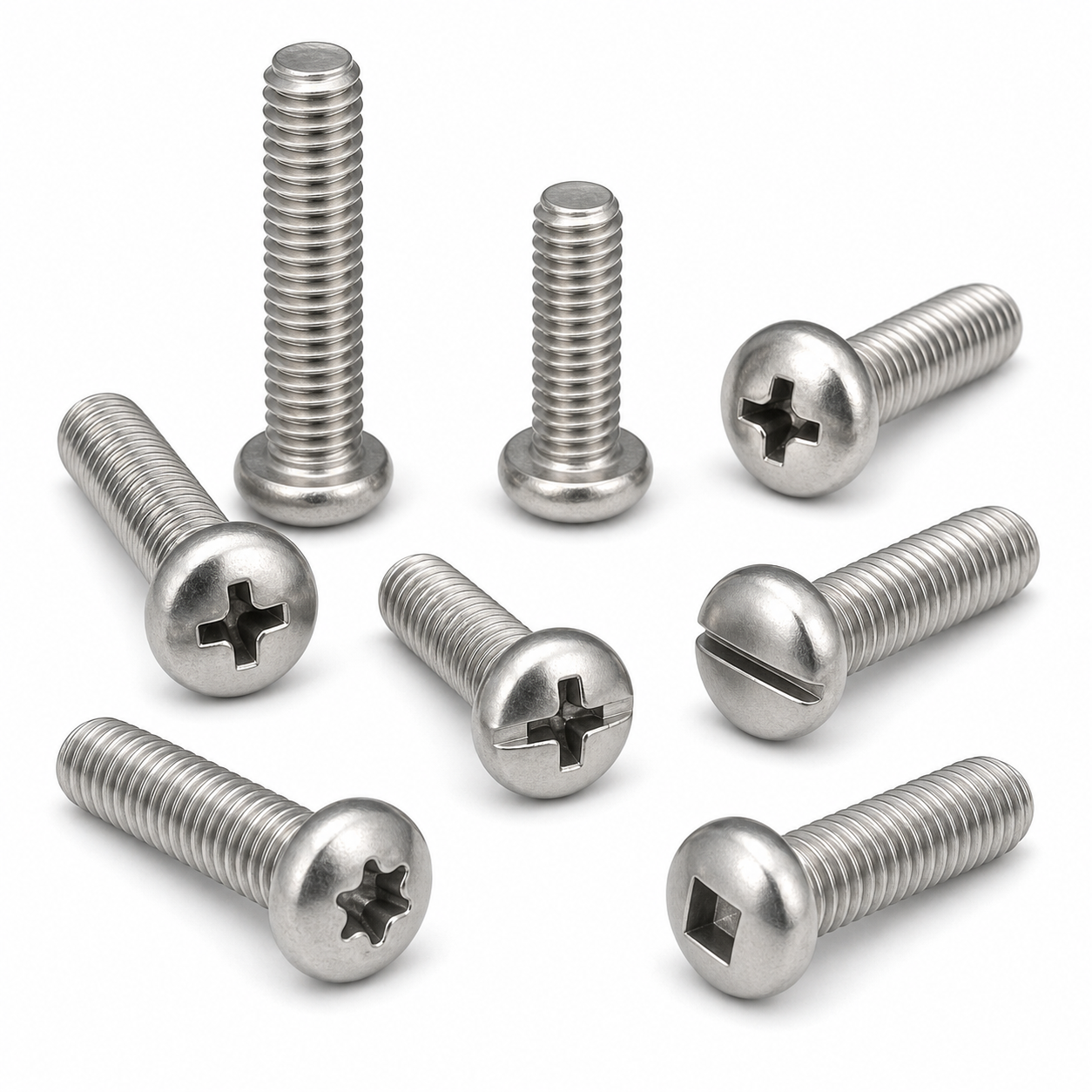
DIN 7504 N Pan Head Self Drilling Screws combine a rounded pan head, PH or PZ cross recess, tapping thread and integrated drill point for efficient fastening of suitable metal assemblies. DIN 7504 N remains the primary purchasing designation, with ISO 15481 as the corresponding international reference.
Product Overview
DIN 7504 N Pan Head Self Drilling Screws integrate a drill point, tapping thread, cross recess and pan head. The drill point creates the initial hole, the tapping thread forms fastening engagement, and the pan head seats against the upper component: DRILL → THREAD → SEAT.
The rounded pan head provides broad bearing contact and remains above the component surface, unlike a countersunk head designed for flush installation. DIN 7504 N market supply commonly uses PH or PZ cross recesses; these are different geometries and require compatible drivers.
Buyers should specify DIN 7504 N, ST diameter, length, PH or PZ drive, material, drill point, base material, individual and total drilling thickness, corrosion requirement and quantity. ISO 15481 is the secondary international reference; actual dimensions and requirements should be confirmed rather than assuming every historical edition is identical.
Technical Specifications
Drill Point, Material Thickness & Cross-Recess Selection
410, 304 & 316 Stainless Steel Options
Size, Drill Point & OEM Manufacturing
ST2.9–ST6.3 with 9.5–50 mm common lengths. ST3.5, ST4.2, ST4.8, ST5.5 and ST6.3 are key commercial sizes; not every diameter is supplied in every length.
PH or PZ drive and drill-point geometry selected by metal type, individual thickness, supporting steel, total stack and hardness.
Diameter, length, drill point, thread length, head diameter, recess, material, finish and packaging may follow an agreed drawing. Non-DIN geometry is described as a custom pan-head self-drilling screw.
Provide DIN 7504 N or custom requirement, size, length, PH/PZ, material, base materials, upper/supporting/total thickness, quantity and drawing or sample.
Bags, boxes, export cartons, pallets, customer labels, part numbers and authorized private-label packaging.
Functional Testing, Inspection & Documentation
Inspection covers thread diameter, pitch, profile and damage; head diameter, height, bearing surface and concentricity; recess size, depth, geometry, burrs and tool engagement; and drill-point length, diameter, cutting edge, flute, symmetry and condition. Defined representative substrates may be used for drilling, thread formation, seating and consistency tests. Reports may include MTC, raw-material, dimensional, hardness, product and actually performed functional test documentation. No universal drilling time, RPM or torque is assumed.
Applications
One-step drilling and fastening for compatible industrial metal assemblies.
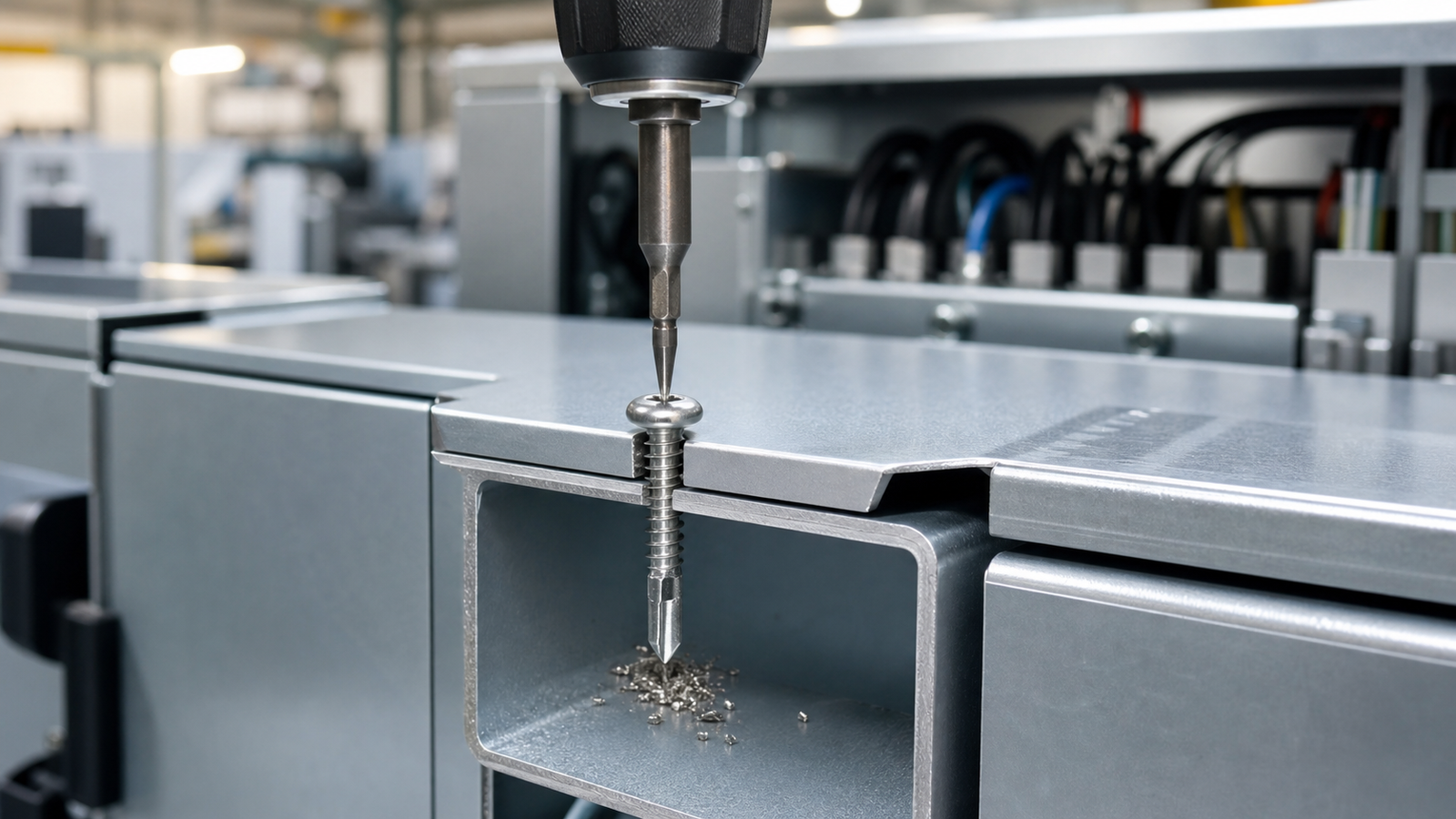
DIN 7504 N drilling and fastening for compatible sheet-metal components.
Cabinet panels, brackets and electrical equipment housings.
Compatible ducts, channels and fabricated metal components.
Equipment covers, guards and industrial sheet assemblies.
Drawing-based supply with defined size, drive, material and drilling conditions.
Frequently Asked Questions
What is DIN 7504 N?
DIN 7504 N is a widely used purchasing designation for cross-recessed pan-head self-drilling screws with tapping thread. ISO 15481 is the corresponding international reference for applicable products.
How do DIN 7504 N screws differ from pan-head self-tapping screws?
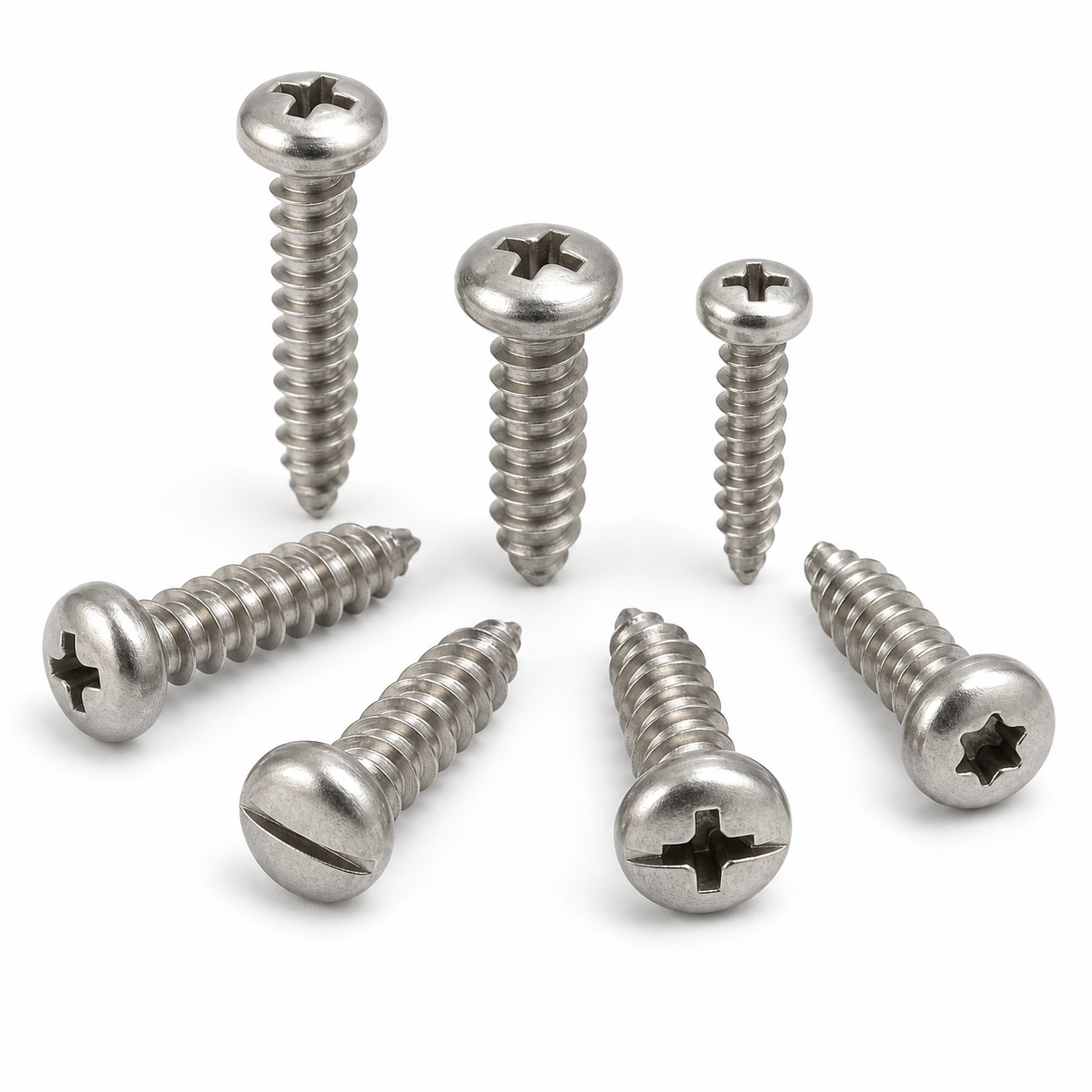
DIN 7504 N screws use an integrated drill point to create the initial hole before the tapping thread engages. Conventional self-tapping screws do not use the same drill-point structure and may require a prepared hole.
Are DIN 7504 N screws available with PH and PZ drives?
Yes. PH and PZ versions may be supplied according to specification, but the geometries differ and require matching drivers.
What sizes can VALTOR supply?
Common DIN 7504 N sizes cover ST2.9–ST6.3 with approximately 9.5–50 mm common lengths, depending on diameter and configuration.
Should I choose 410, 304 or 316 stainless steel?
410 is primary where drill-point hardness and performance matter. 304 and 316 provide higher corrosion-resistance options, but drilling performance must be confirmed against the substrate and thickness.
Related Products
Share size, length, PH/PZ drive, stainless grade, substrate, drilling thickness, quantity and drawing with VALTOR.