
304 vs 316 Stainless Steel Fasteners: Material Selection Guide
Compare 304 and 316 stainless steel fasteners by corrosion resistance, service environment, specification control and purchasing requirements.
Overview
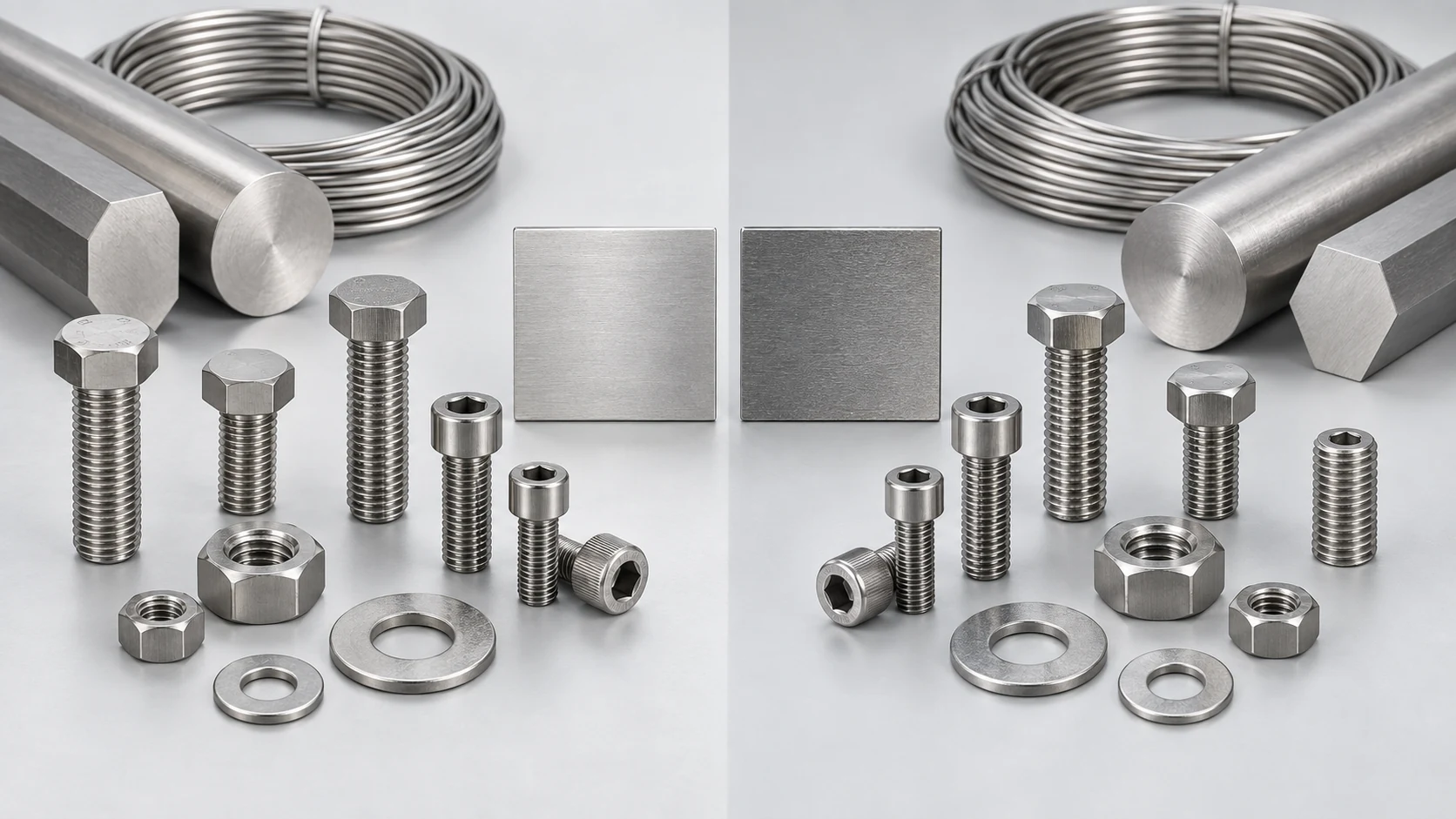
304 and 316 are widely specified austenitic stainless steels for industrial fasteners. Both provide good general corrosion resistance, formability and availability, but they are not interchangeable in every environment. The correct choice depends on chloride exposure, operating conditions, mating materials, cleaning chemicals and the required service life.
Key Takeaways
- 304 stainless steel is a practical choice for many general industrial, machinery and construction applications.
- 316 stainless steel offers improved resistance in many chloride-containing, coastal and marine environments.
- Material selection should consider the complete service environment, product specification and mechanical requirements.
- More demanding environments may require duplex, high-alloy stainless steel or other corrosion-resistant materials.
304 Stainless Steel Fasteners
304 stainless steel is a common general-purpose choice for fasteners used in machinery, equipment, enclosures, construction hardware and many indoor or moderately corrosive environments. Selection should still confirm the applicable product standard, mechanical properties, surface condition and exposure conditions.
Specify the exact grade, fastener standard, dimensions, finish and required documentation instead of relying only on a general stainless steel description.
316 Stainless Steel Fasteners
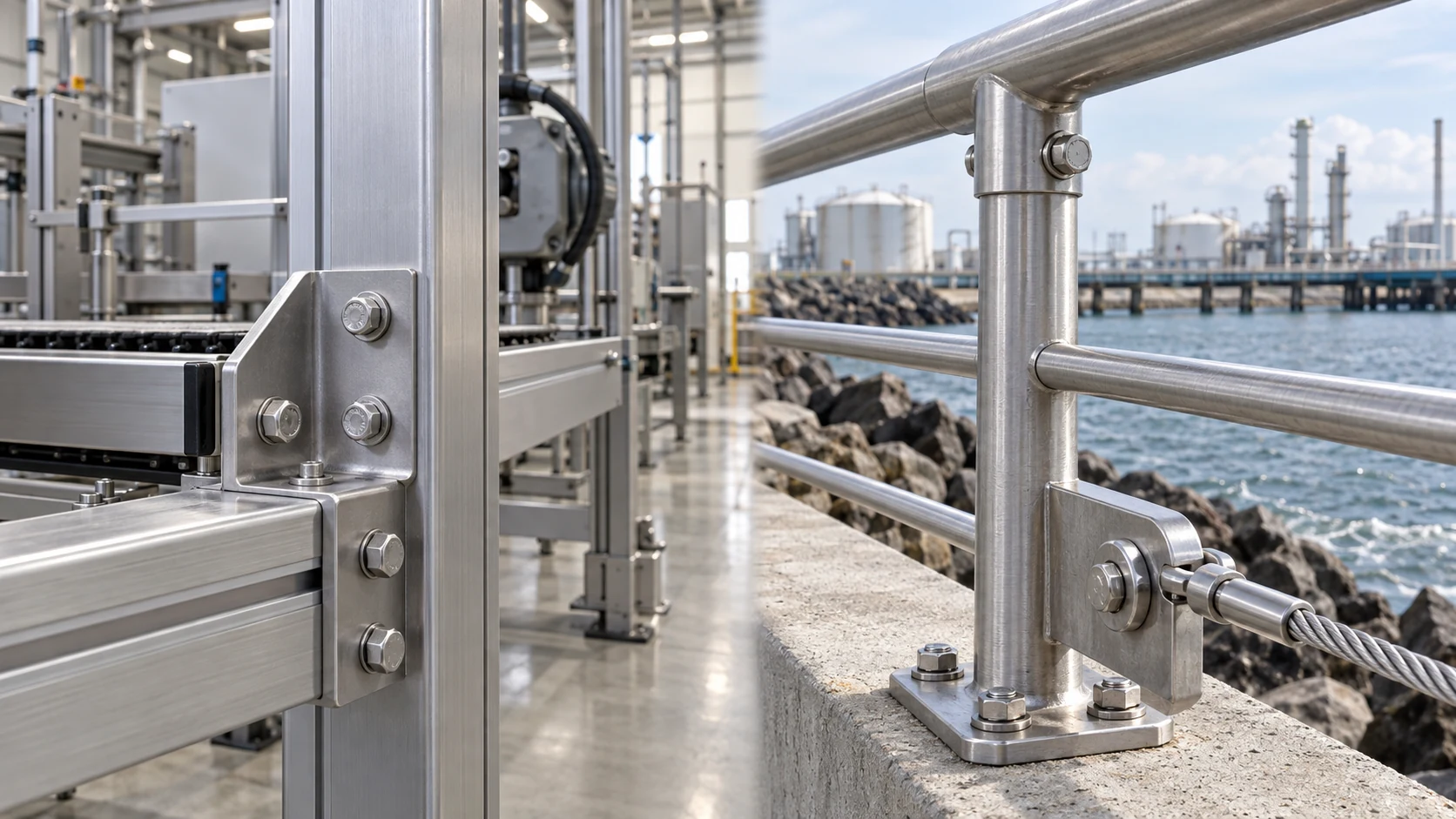
316 stainless steel contains molybdenum, which generally improves resistance to localized corrosion in many chloride-containing environments. It is commonly evaluated for coastal, marine, food-processing and chemical-service applications, but suitability must be confirmed for the actual chloride concentration, temperature, cleaning regime and service conditions.
316 should not be described as universally suitable for every marine environment. Crevices, stagnant exposure, temperature and chloride concentration can materially affect performance.
304 vs 316 Comparison
| Buyer factor | 304 stainless steel | 316 stainless steel |
|---|---|---|
| Material family | Austenitic stainless steel | Austenitic stainless steel |
| Common designation | Often associated with A2 fastener designations, subject to the applicable standard. | Often associated with A4 fastener designations, subject to the applicable standard. |
| Molybdenum difference | Not normally intentionally alloyed with molybdenum. | Contains molybdenum as part of its specified composition range. |
| General corrosion resistance | Suitable for many indoor, architectural and general industrial environments. | Higher resistance in many chloride-bearing, coastal and chemical environments. |
| Chloride exposure | Requires careful review where salt, de-icing chemicals or chloride cleaners are present. | Often preferred over 304, but not immune to pitting or crevice corrosion. |
| Typical environments | Dry indoor, urban, machinery and moderately corrosive service. | Coastal, marine-adjacent, food-processing and selected chemical service. |
| Typical applications | Equipment, enclosures, construction hardware and general assemblies. | Marine hardware, coastal construction and demanding outdoor assemblies. |
| Cost consideration | Usually the more economical stainless option. | Higher alloy content normally increases material cost. |
| Specification control | Confirm grade, standard, dimensions and mechanical requirements. | Confirm the same data and whether enhanced corrosion resistance is sufficient for the actual environment. |
Application Guide
Use the service environment as the first filter. Regular salt spray, de-icing salts, pool chemicals or coastal exposure often justify evaluating 316. For dry indoor equipment and many lightly corrosive environments, 304 may provide the required balance of performance and cost.
- Check exposure to chlorides, acids, cleaning chemicals and temperature.
- Avoid galvanic combinations without reviewing the complete joint.
- Confirm that the fastener standard and mechanical properties match the design.
- Specify passivation, finish and documentation when they are project requirements.
Evaluate the complete joint and service conditions rather than selecting a grade from the fastener appearance or a generic “marine grade” description.
Beyond 316: Higher-Alloy Options
More severe chloride, chemical or temperature conditions may justify reviewing 2205 Duplex, 2507 Super Duplex, 904L, 1.4529 / UNS N08926 or C-276 / UNS N10276. These materials have different availability, manufacturing and cost implications. See Stainless Steel & Special Alloy Materials for a concise overview.
Purchasing Checklist
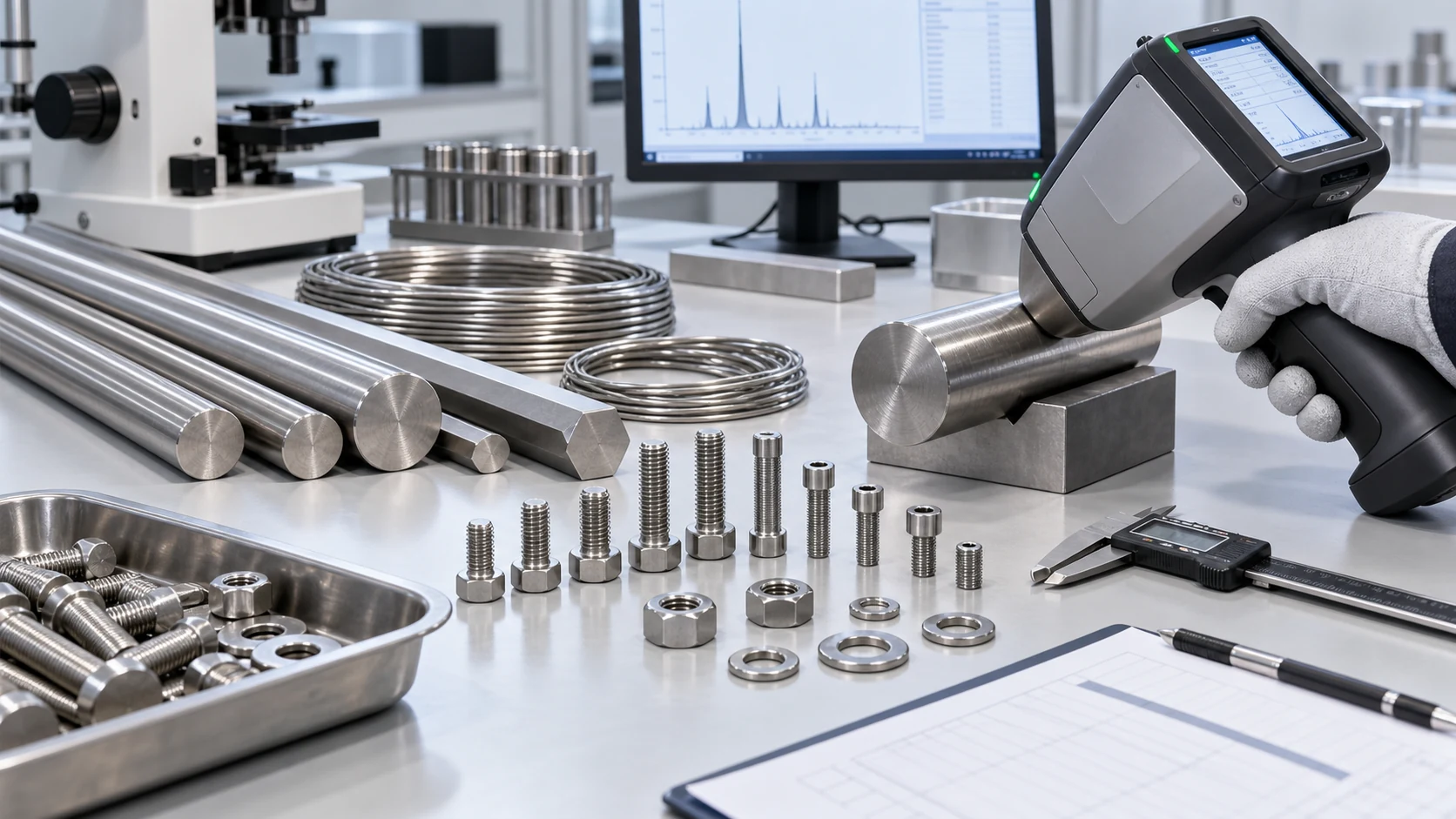
A clear inquiry should identify the product standard or drawing, thread and dimensions, stainless grade, required quantity, finish, packaging and any inspection or certificate requirements. Terms such as “marine grade” should be replaced by an exact grade and acceptance criteria.
- Provide the standard number or revision-controlled drawing.
- State size, thread, material grade and mechanical requirements.
- Describe the service environment and critical exposure.
- Confirm finish, packaging, inspection and documentation needs.
- Identify whether alternative grades require written approval.
FAQ
Is 316 always better than 304?
No. 316 offers additional corrosion resistance in many environments, but 304 can be appropriate where its performance meets the application and budget.
Are A2 and A4 the same as 304 and 316?
A2 and A4 are fastener stainless steel group designations used by applicable standards. They are commonly associated with 304- and 316-type compositions, but the exact grade and mechanical class should be confirmed from the governing specification.
Can 304 and 316 fasteners be identified visually?
They generally cannot be distinguished reliably by appearance alone. Material documentation or suitable verification methods may be required.
When should duplex stainless steel be considered?
Duplex grades may be evaluated when the project requires higher strength or improved resistance in demanding chloride-bearing environments. Final selection depends on the complete service and manufacturing requirements.
Can VALTOR supply special stainless steel grades?
VALTOR can review requirements for duplex, high-alloy stainless steel and other corrosion-resistant materials based on the drawing, specification, quantity and required documentation.
Need Product or Technical Support?
Share your fastener, material, standard or application requirements with VALTOR.