
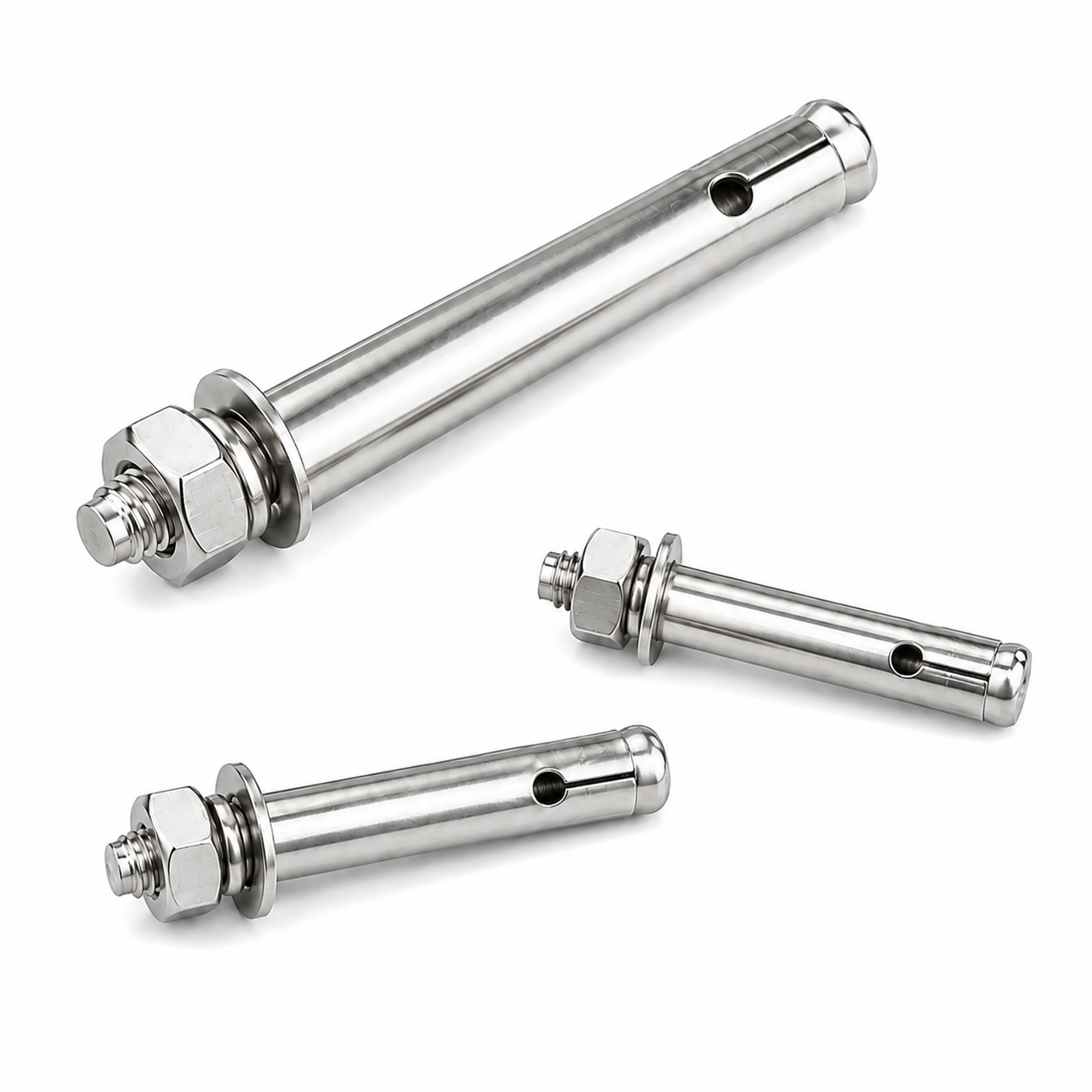
Stainless Steel Sleeve Anchors
Expansion Sleeve Anchors for Concrete, Solid Masonry & Industrial Fixing
Mechanical through-fixing anchors with a long formed sleeve around an integral stud. Tightening the exterior nut draws the tapered embedded end into the sleeve, expanding it radially against the prepared hole wall.
Product Overview
Stainless Steel Sleeve Anchors combine an integral threaded stud and smooth shank with a long expansion sleeve, embedded tapered expansion head, exterior hex nut, large flat washer and spring lock washer where specified. The extended sleeve distinguishes this family from wedge anchors that use a small localized clip.
For through-fixing, the anchor passes through a positioned bracket, frame or base plate into a correctly drilled and cleaned hole. Tightening the exterior nut draws the tapered head relative to the sleeve; the sleeve expands radially and engages the hole wall while the fixture is clamped to the base material.
Procurement should define nominal diameter, sleeve OD, overall and sleeve lengths, thread length, fixture thickness, required embedment, base material, complete assembly grades, quantity and project requirements. Concrete is the primary reference; use in selected solid masonry must be confirmed for the exact anchor and substrate.
Technical Specifications
Sleeve-anchor performance depends on the exact design, diameter, length, embedment, base material, hole geometry and installation procedure. For structural or safety-critical anchoring, use only data and approvals verified for the exact supplied configuration; another manufacturer’s values are not transferable.
Expansion Sleeve, Cone Movement & Base Material Selection
304 / 316 Stainless Steel & Size Options
304 / A2 is commonly selected for general construction, industrial equipment and suitable outdoor hardware. 316 / A4 is preferred for coastal, marine, high-humidity and other more corrosion-sensitive installations. Selection must consider the complete assembly and exposure environment.
Commercial positioning covers M6, M8, M10, M12, M16 and M20, with M8–M16 as the main website focus. Multiple lengths may be offered according to fixture thickness, installation depth and application; every size-by-length combination is not implied to be stocked.
Anchor Length, Sleeve Geometry & OEM Supply
Expansion Assembly & Quality Documentation
No generic expansion diameter, installation torque, load capacity, edge distance, spacing, concrete strength or approval claim is made.
Applications
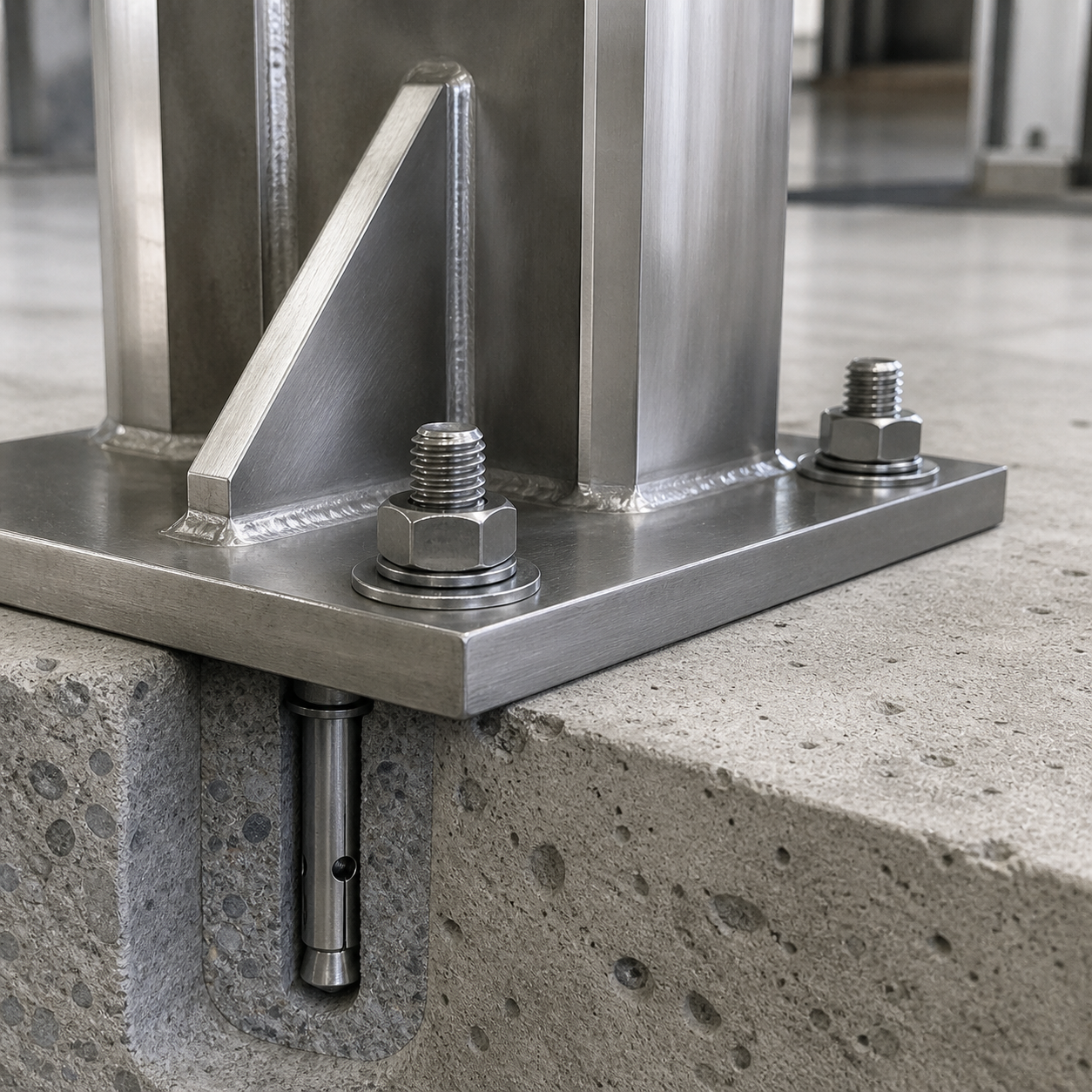
Through-fixing of steel brackets, frames and mounting components to suitable concrete substrates.
Selected machinery bases and industrial supports where a mechanical sleeve anchor is specified.
Rail, frame and support applications mounted to suitable concrete or confirmed solid masonry.
316 / A4 provides an option for more corrosion-sensitive outdoor and coastal fastening environments.
Supply by diameter, overall length, sleeve geometry, stainless grade and project specification.
Frequently Asked Questions
What is a Sleeve Anchor?
A mechanical expansion anchor with a metal sleeve around the anchor body. Tightening moves the tapered embedded head into the sleeve, causing radial expansion against the drilled-hole wall.
What is the difference between a Sleeve Anchor and a Wedge Anchor?
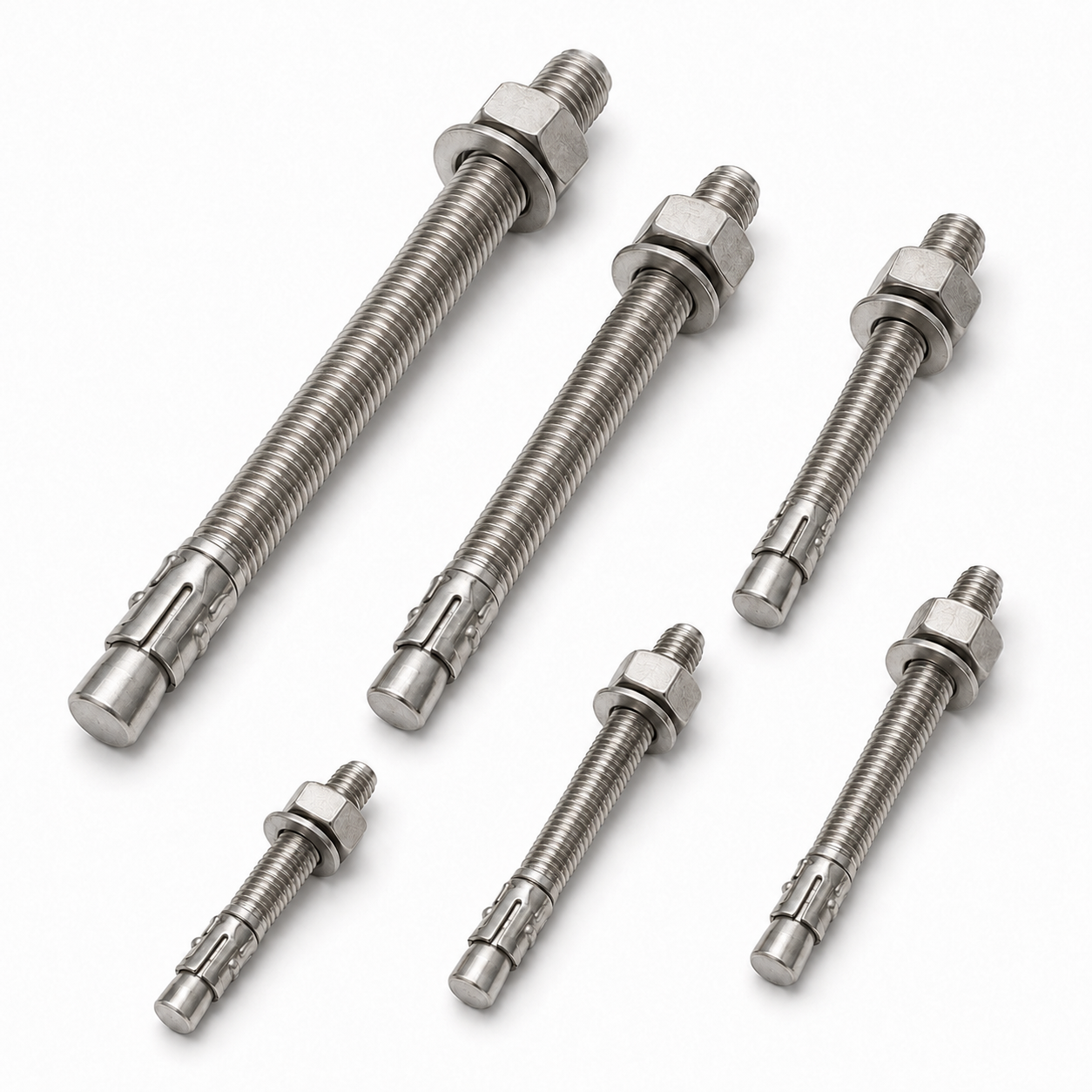
A sleeve anchor uses a longer expandable sleeve around part of its body; a wedge anchor uses a localized clip near the tapered embedded end. Selection depends on base material and application.
Can Sleeve Anchors be used in masonry?
Some designs suit selected solid masonry, but compatibility must be confirmed for the exact anchor and substrate. Do not assume suitability for hollow, weak or aerated masonry.
How do I select Sleeve Anchor length?
Account for required installation depth, fixture thickness, nut and washers, exterior thread projection and the project specification.
Can VALTOR supply 304 and 316 Stainless Steel Sleeve Anchors?
Yes. 304 / A2 and 316 / A4 options are supplied according to size, application and actual assembly specification.
Related Products
Send diameter × overall length, fixture thickness, installation depth, base material, complete assembly grade, quantity and project specification.