
Surface Treatment & Finishing
Surface Finishing Options for Stainless Steel, Carbon Steel & Custom Industrial Hardware
Surface treatment affects more than product appearance. The selected finish can influence corrosion resistance, thread fit, coating thickness, assembly performance and suitability for the intended service environment.
VALTOR supplies stainless steel, carbon steel and custom industrial hardware with surface finishing options selected according to material, drawing requirements, corrosion targets and application conditions.
For coated fasteners and precision components, coating thickness, thread engagement, critical fit areas and required salt spray performance should be reviewed before production.
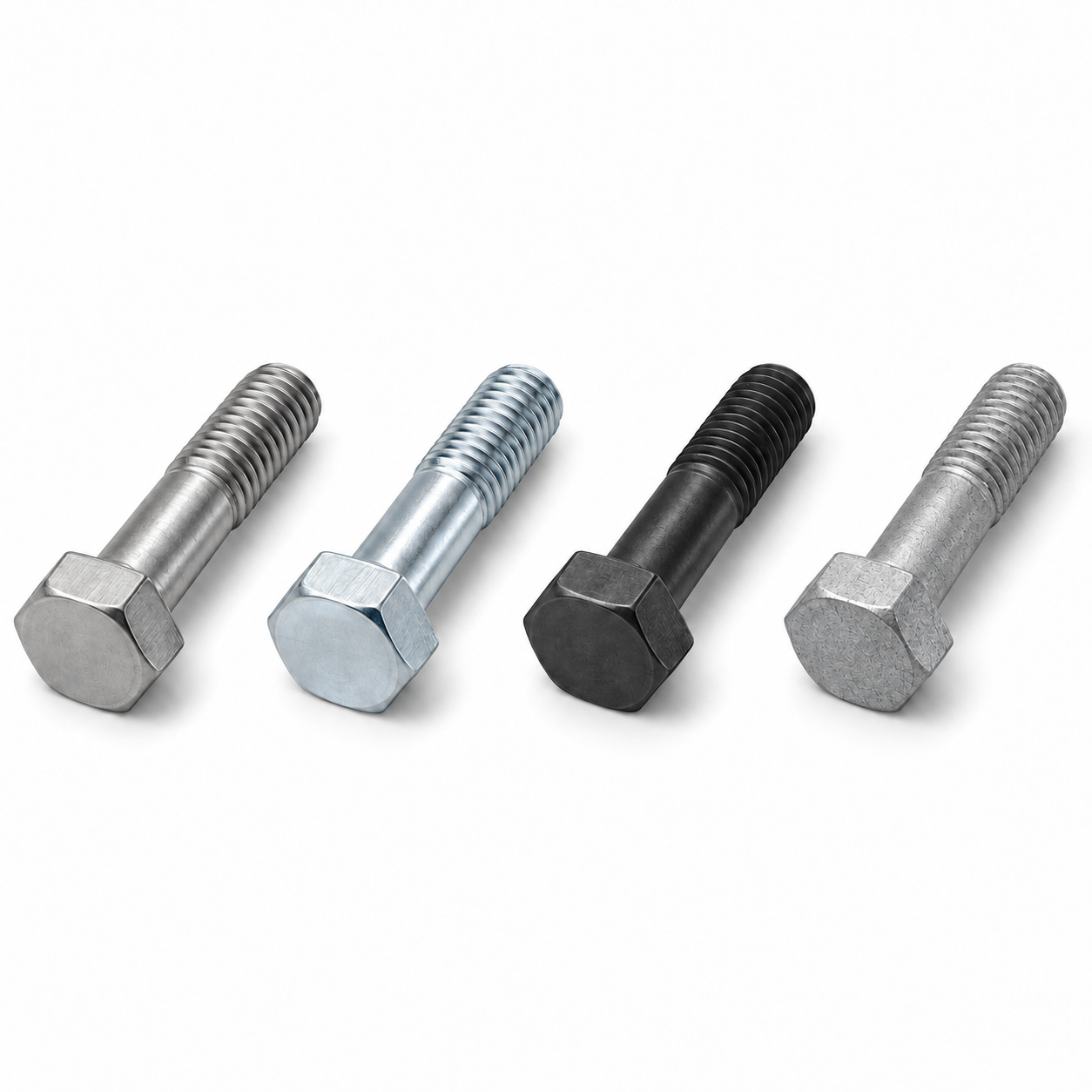
Surface Finish Comparison at a Glance
A purchasing reference for comparing appearance, protection positioning, environment and critical engineering considerations.
| Finish | Typical Base Material | Appearance | Corrosion Protection Positioning | Typical Environment | Main Engineering Attention |
|---|---|---|---|---|---|
| Passivated Stainless Steel | 304 / 316 and suitable stainless grades | Natural clean silver stainless surface | Depends primarily on stainless grade and service condition | Industrial, outdoor and corrosion-sensitive stainless applications | Passivation is not a thick coating |
| Blue-White Zinc Plating | Carbon Steel | Bright silver-white | Low to medium; higher with a complete zinc, passivation and sealer system | General hardware, machinery, indoor and selected outdoor use | Thickness, thread fit and hydrogen-embrittlement review for susceptible high-strength parts |
| Black Oxide | Carbon / Alloy Steel | Black / dark matte | Low | Indoor machinery, equipment and appearance-focused applications | Not primary protection for aggressive outdoor exposure |
| Hot-Dip Galvanizing | Carbon Steel | Silver-gray, relatively thick zinc layer | High atmospheric corrosion-protection positioning | Outdoor construction, structural hardware and heavy fasteners | Coating thickness and thread allowance |
| Zinc Flake | Carbon / Alloy Steel | Silver-gray / gray matte | High to very high depending on the coating system | High-strength fasteners, industrial and outdoor equipment | Coefficient of friction and tightening behavior |
| Nickel Plating | Steel / suitable metal substrate | Bright smooth metallic finish | Depends on nickel system and thickness | Equipment, precision hardware and visible components | Thickness, underlayer and critical dimensions |
| Black Ruspert-Type Coating | Typically carbon steel / suitable fasteners | Black / dark coated surface | High when the specified multi-layer system supports it | Construction, roofing, outdoor and industrial hardware | Exact coating system and salt-spray grade must be confirmed |
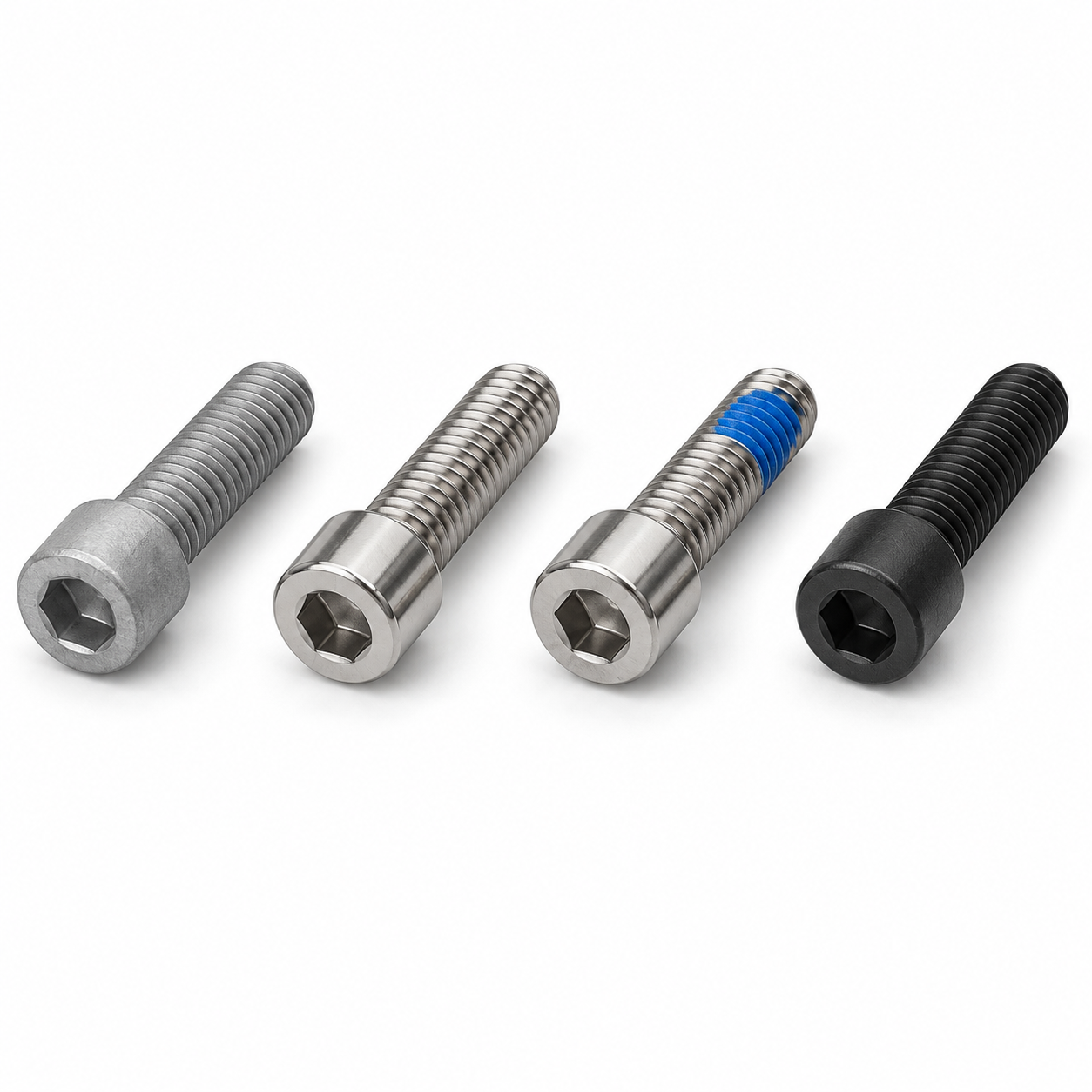
| Pre-Applied Thread Locking Patch | Threaded Fasteners | Localized blue functional patch on threads | Not a corrosion-protection finish | Machinery, equipment and assembly applications | Patch position, prevailing torque requirement and underlying-finish compatibility |
Common Surface Finishes
Four widely requested treatment routes explained through material, process, appearance, performance and engineering limitations.
Stainless Steel Passivation
Primary base: 304 / 316 / 316L and other suitable stainless steels
A chemical surface treatment after appropriate cleaning removes contamination such as free iron and supports a clean passive stainless surface. It does not add a thick coating.
Natural stainless appearance, clean metallic silver and usually little visible color change.
Surface cleanliness, removal of free-iron contamination where applicable and support for the corrosion-resistant passive condition.
Testing can be specified, but performance depends on stainless grade, surface condition, treatment specification and acceptance criteria. No universal salt-spray value applies.
Stainless fasteners, industrial equipment, outdoor hardware, corrosion-sensitive assemblies and marine/coastal use when the correct grade is selected.
Passivation cannot compensate for incorrect stainless grade, chloride exposure beyond material capability, poor surface condition, galvanic corrosion or incorrect design.
Blue-White Zinc Plating
Primary base: Carbon Steel
An electroplated zinc layer is deposited on steel and normally followed by suitable passivation and, where required, a sealer or topcoat.
Bright silver-white, smooth and clean electroplated appearance with a slight cool metallic tone.
Sacrificial zinc corrosion protection for carbon-steel components.
Capability varies with zinc thickness, passivation, sealer/topcoat, geometry and acceptance criterion. Project targets can be specified during quotation and confirmed against the selected system and supplier test capability.
General industrial hardware, machinery, indoor equipment, general fasteners and selected controlled outdoor uses.
Coating build-up affects threads and recesses. Susceptible high-strength steel needs hydrogen-embrittlement risk review. Specify exact thickness where critical.
Black Oxide
Base: Carbon Steel / Alloy Steel where suitable
A chemical conversion process produces a very thin dark oxide layer, commonly combined with oil, wax or another post-treatment where required.
Black or dark gray-black, low-gloss or matte, with minimal dimensional build-up.
Dark appearance, mild corrosion resistance and minimal dimensional change.
Generally limited compared with zinc plating, zinc flake or galvanizing. Requirements must be reviewed against the exact post-treatment.
Indoor machinery, tools, equipment, industrial assemblies and appearance-focused hardware.
Not recommended as primary protection for aggressive outdoor, coastal, marine or highly corrosive industrial exposure.
Hot-Dip Galvanizing
Primary base: Carbon Steel
Suitable steel components are immersed in molten zinc to form a relatively thick zinc-based protective layer.
Silver-gray and thicker than electroplated zinc; the surface may be less smooth or cosmetically uniform.
Long-term sacrificial zinc protection for suitable outdoor and atmospheric exposure.
Commonly specified through galvanizing requirements, coating thickness/mass and actual environment. Salt spray should not be presented as a direct conversion to outdoor service life.
Outdoor construction, structural hardware, heavy bolts, anchors, steel structures and infrastructure hardware. See Hex Bolts and Anchors.
Thick coating affects thread fit. Nut or mating-thread allowance may be required; internal threads need special consideration, and small precision recesses may not be suitable.
Special Coatings & Functional Treatments
Higher-performance, appearance-focused and assembly-functional options selected against the exact project requirement.
Zinc Flake Coating
- How Applied
- Zinc/aluminum flake material is applied in a binder system and cured, with optional topcoats for corrosion and friction requirements.
- Appearance
- Silver-gray or gray, matte, thin and uniform.
- Main Effect
- High corrosion protection with relatively thin film; useful for threaded and high-strength fasteners where coating-process hydrogen risk matters.
- Salt Spray
- Depending on the exact basecoat/topcoat system, project requirements may range from several hundred hours to 1,000+ hours NSS before base-metal red rust. This is typical system/project capability, not a universal VALTOR guarantee.
- Engineering
- Confirm coefficient of friction, torque/tension behavior, topcoat, thread fit and exact coating specification.
Nickel Plating
- How Applied
- A nickel layer is deposited on a suitably prepared substrate according to the required plating system.
- Appearance
- Bright, smooth, clean metallic silver with decorative or precision character.
- Main Effect
- Appearance enhancement and surface protection for selected precision and visible hardware.
- Salt Spray
- Performance depends on nickel thickness, underlayer, substrate, plating system and final sealing where applicable.
- Engineering
- Review tight fits, internal threads, holes and cosmetic requirements. Nickel plating is not automatically suitable for severe marine exposure.
Pre-Applied Thread Locking Patch
- Classification
- A functional thread treatment, not a corrosion-protection finish.
- How Applied
- A controlled quantity of locking material is pre-applied to a defined external-thread area before assembly.
- Appearance
- Localized blue patch on only part of the threaded area.
- Function
- Depending on the system, it may resist loosening, provide prevailing torque, simplify assembly and replace separate liquid threadlocker in suitable joints.
- Quotation
- Confirm thread size, patch position, length, coverage angle if specified, locking/prevailing torque requirement, reusability and compatibility with the underlying finish.
Black Multi-Layer Corrosion-Resistant Coating
- How Applied
- A multi-layer system combines a metallic/conversion protection layer with a protective topcoat according to the selected specification.
- Appearance
- Uniform black or dark gray-black coated appearance.
- Main Effect
- High corrosion resistance for suitable outdoor fasteners where the specified system supports the requirement.
- Salt Spray
- Commercial grades may target 500 h, 1,000 h or 1,500 h NSS, with specialized systems exceeding these levels. Exact performance must be confirmed against the selected coating specification and test report.
- Engineering
- Confirm system, NSS grade, color, thread friction/assembly behavior and substrate compatibility. Relevant to suitable roofing screws.
Understanding Salt Spray & Corrosion Performance
Salt spray testing helps compare and verify corrosion-protection systems under controlled conditions, but a finish name alone does not define one universal service life.
Salt Spray Performance Depends On
Base Material · Coating Type · Coating Thickness · Passivation · Sealer · Topcoat · Part Geometry · Edge / Thread Condition · Test Method · Failure Criterion
Controlled Test Methods
ASTM B117 and ISO 9227 define controlled salt-spray testing methods. The coating system, specimen condition, duration and acceptance criterion must be stated for meaningful procurement.
No Direct Outdoor-Life Conversion
1,000 hours of salt spray must not be converted into a fixed number of years outdoors. Real performance depends on the service environment, design, damage, maintenance and complete material/coating system.
Salt Spray Reference Table
| Finish | How to Specify the Corrosion or Functional Requirement |
|---|---|
| Passivated Stainless Steel | Specify stainless grade, passivation requirement and test/acceptance criterion where needed. Do not assign universal hours. |
| Blue-White Zinc Plating | Specify zinc thickness, passivation/sealer and required NSS target. Exact hours are confirmed per coating system. |
| Black Oxide | Generally selected for appearance and mild protection, not normally for high NSS requirements. |
| Hot-Dip Galvanizing | Specify galvanizing requirement, coating thickness/mass and environmental exposure. Do not use NSS hours as the only durability metric. |
| Zinc Flake | Specify exact basecoat/topcoat system, NSS target and friction requirement. High-performance systems may support 1,000+ h NSS depending on specification. |
| Nickel Plating | Specify nickel thickness, underlayer, appearance and required corrosion test. |
| Black Ruspert-Type | Specify exact coating grade and NSS target. Commercial project grades may include 500 h, 1,000 h and 1,500 h, but the final value depends on the actual system. |
| Thread Locking Patch | Specify locking or prevailing torque performance. Do not specify corrosion hours for the patch itself. |
Salt spray values shown on this page are selection and specification references, not universal guarantees. Final corrosion performance should be confirmed according to the exact coating system, part geometry, acceptance criterion and available test documentation for the order.
Threads, Tolerances & Masking Requirements
Surface treatment adds another dimensional and functional variable. Fasteners and precision hardware must be reviewed together with threads, fits, recesses and critical mating surfaces.
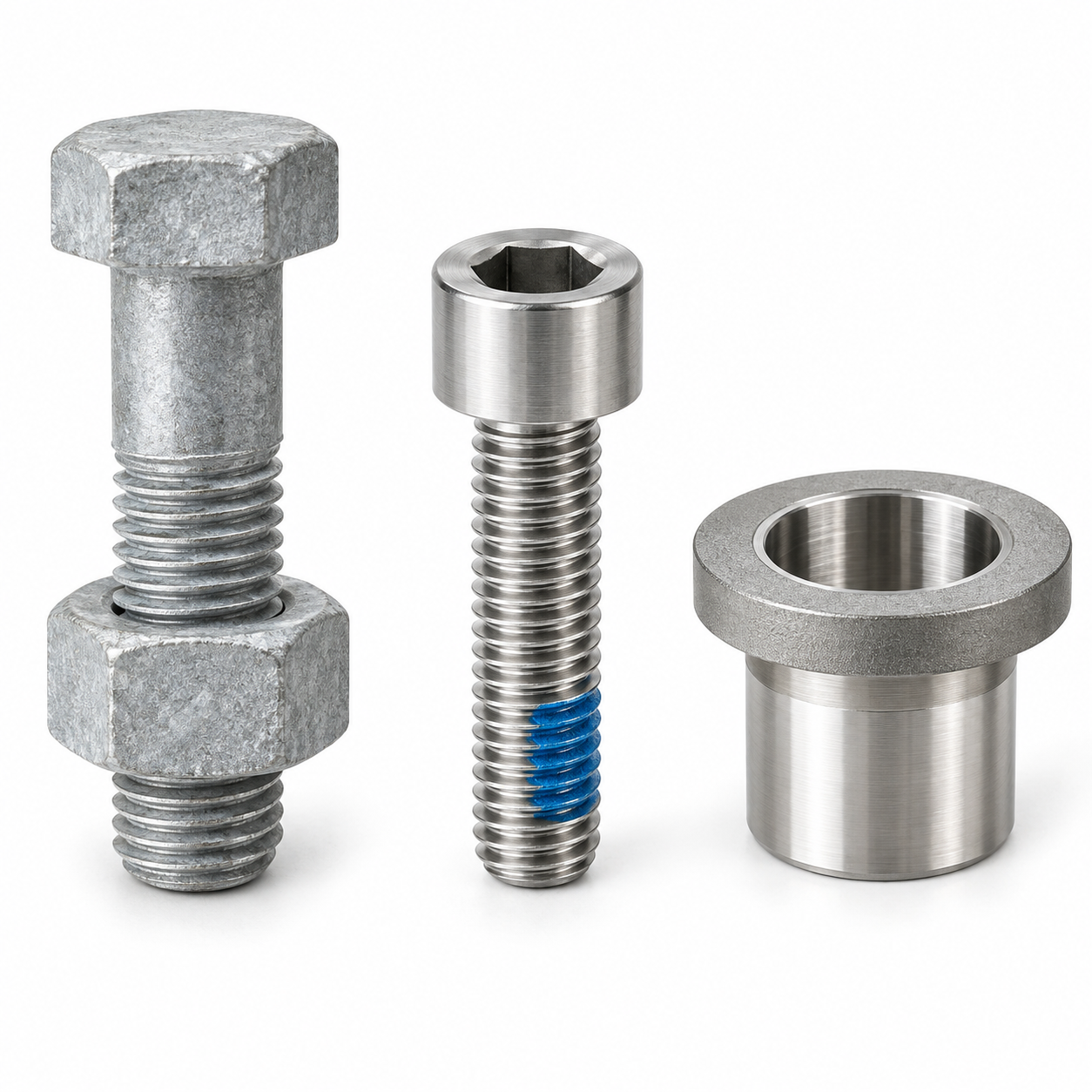
External Threads
Coating thickness can affect thread diameter, engagement and nut fit.
Internal Threads
Heavy coating can reduce clearance. Allowance, post-treatment cleaning, tapping/chasing where appropriate or specified masking may be required.
Sockets & Drive Recesses
Build-up can affect hex socket, Torx/6-lobe and Phillips/cross recess fit and tool engagement.
Precision Bores & Mating Surfaces
Critical bores, shafts, locating faces and bearing surfaces may need controlled thickness or masking. See CNC Machined Parts.
Masking
Possible areas include threads, holes, electrical contacts, bearing surfaces, sealing faces and precision mating areas.
Post-Treatment Inspection
Where required: thread gauging, dimensional inspection, coating-thickness measurement, visual checks and fit/assembly verification.
Choosing a Finish by Application Environment
Shortlist treatments by exposure, material, strength, geometry, appearance and assembly requirement.
Indoor Machinery
Black oxide, zinc plating or nickel plating may be considered according to appearance and corrosion-protection needs.
General Industrial Use
Passivated stainless steel, zinc plating or zinc-flake systems may be considered according to exposure and specification.
Outdoor Construction
Hot-dip galvanizing, zinc flake or suitable stainless steel are common options for appropriate hardware.
Marine & Coastal
Correct stainless grade is the primary consideration; 316/A4 is often preferred over 304. Special alloys may be reviewed. A simple carbon-steel coating should not be assumed equivalent to suitable marine stainless performance.
High-Strength Fasteners
Review hydrogen-embrittlement risk, friction, torque/tension behavior and coating thickness. Zinc-flake systems may be suitable where specified.
Visible / Appearance-Critical Hardware
Nickel plating, polished stainless, brushed stainless or another controlled decorative finish may be selected to an agreed cosmetic standard.
Surface Finish Quality & Documentation
Inspection and documents are supplied or coordinated according to the confirmed order requirement.
Visual Appearance
Color, uniformity, stains, bare areas and obvious surface defects.
Coating Thickness
Measurement where specified and applicable to the selected coating system.
Thread Fit
GO / NO-GO gauge or mating-fit inspection where required.
Salt Spray Testing
Arranged where specified for the selected coating system, method, duration and criterion.
Masking & Critical Areas
Verification of treated and untreated areas according to the drawing.
Documentation
May include MTC, coating report, thickness report, salt-spray report where actually tested, dimensional inspection, sample approval and third-party inspection support.
A test report is available only when it is required, arranged and completed for the supplied order. Documentation requirements should be confirmed before production.
What to Send for a Faster Quote
Provide the treatment, performance and functional-area information needed to select and price the correct route.
Frequently Asked Questions
Which surface treatment is best for outdoor fasteners?
There is no single finish for every outdoor application. Hot-dip galvanizing, zinc-flake coatings and suitable stainless steel are commonly considered depending on exposure, fastener size, strength grade, thread fit and required corrosion performance. Coastal and aggressive environments require more careful material and coating selection.
How many hours of salt spray can zinc plating or zinc-flake coating achieve?
Performance depends on the complete system rather than the finish name alone. Zinc plating varies with zinc thickness, passivation and sealer. High-performance zinc-flake systems can be specified for several hundred to 1,000+ hours NSS depending on basecoat and topcoat. Confirm the exact target during quotation.
What is the difference between zinc plating and hot-dip galvanizing?
Zinc plating normally creates a thinner, smoother electroplated finish for many general fasteners and industrial parts. Hot-dip galvanizing produces a significantly thicker zinc layer for outdoor structural and heavy hardware, so thread allowance and build-up need more attention.
Can threads and precision areas be masked during surface treatment?
Yes, where the selected process allows it. Threads, precision bores, mating faces, bearing surfaces and other critical areas can be reviewed for masking or controlled coating according to the drawing.
Can VALTOR provide coating thickness and salt-spray test reports?
Coating-thickness inspection, salt-spray testing and related documentation can be arranged where required by the order. Specify requirements before production so the system, method, duration and acceptance criteria can be confirmed.
Need Help Selecting the Right Surface Finish?
Send VALTOR your drawing, base material, application environment and corrosion requirements. We can review suitable options together with coating thickness, thread fit, masking and testing requirements.