How to Select Industrial Fasteners by Grade, Size and Application
Selecting industrial fasteners requires more than choosing a bolt size or material name. The correct product depends on the connection design, applied load, operating environment, installation method and expected service conditions. A fastener that fits an assembly may still be unsuitable if its material is incompatible, its strength does not match the joint design, its dimensions limit thread engagement or its finish cannot withstand the exposure. A practical selection process should therefore review the fastener type, product standard, material grade, diameter, length, thread, head and drive configuration, mechanical requirements, corrosion conditions and documentation needs together. Buyers should also consider tooling access, vibration, maintenance and permitted substitutions before requesting a quotation. The following guide organizes these decisions into a clear purchasing workflow for engineers, distributors, OEM manufacturers and project procurement teams.
Overview
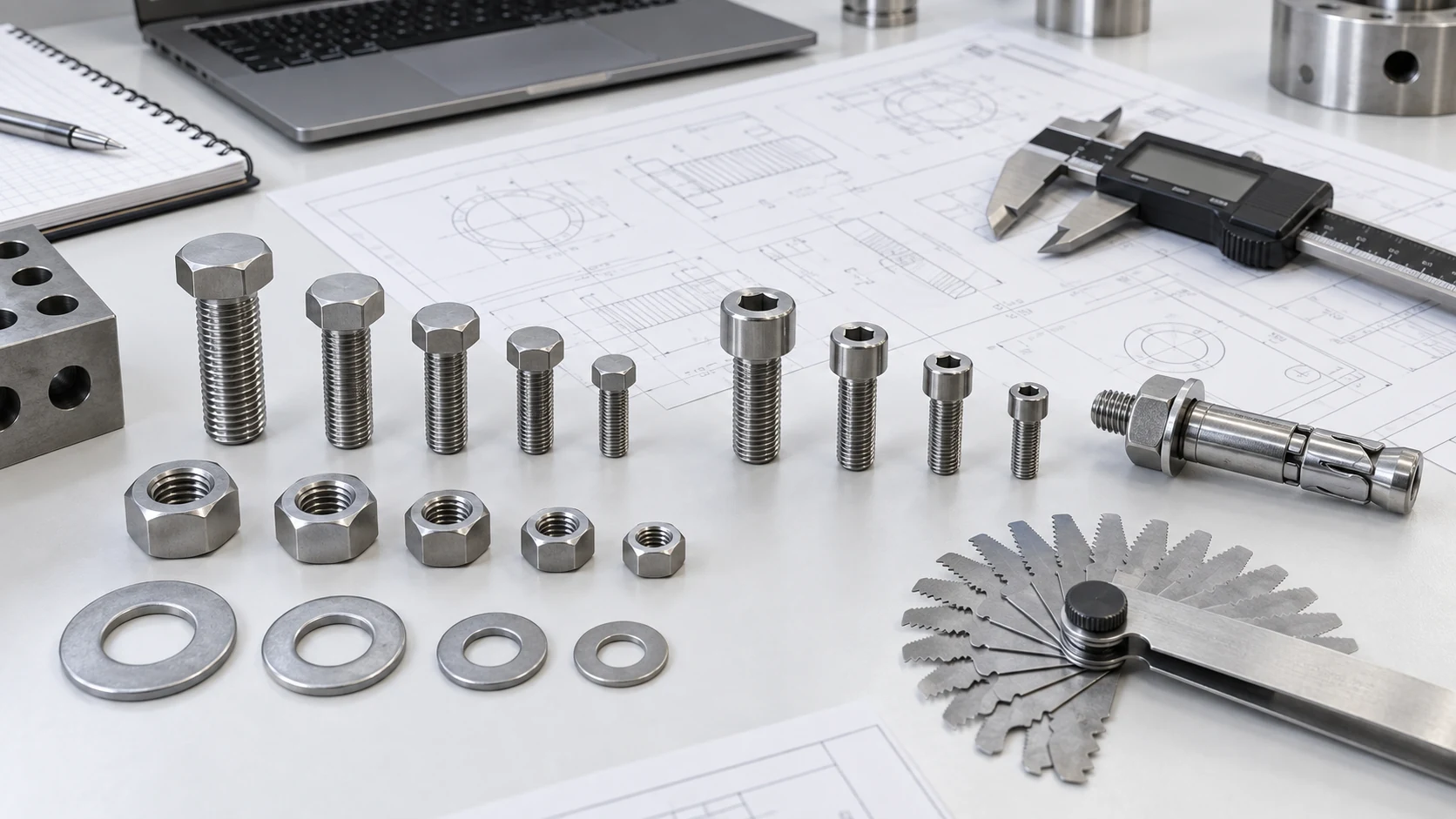
Industrial fasteners appear simple, but their performance depends on many interconnected factors. A bolt that fits mechanically may still be unsuitable because of corrosion exposure, insufficient strength, incorrect material compatibility or unsuitable installation conditions.
A complete fastener specification should include product type, standard, size, material, strength requirement, finish, quantity and any documentation requirements.
Key Takeaways
- Select fasteners according to the complete application, not only product appearance.
- Material selection depends on corrosion environment, temperature and service requirements.
- Correct dimensions include diameter, length, thread and head configuration.
- Strength requirements should match the actual joint design.
- Complete purchasing information improves quotation accuracy and reduces supply risks.
1. Define the Application Requirement
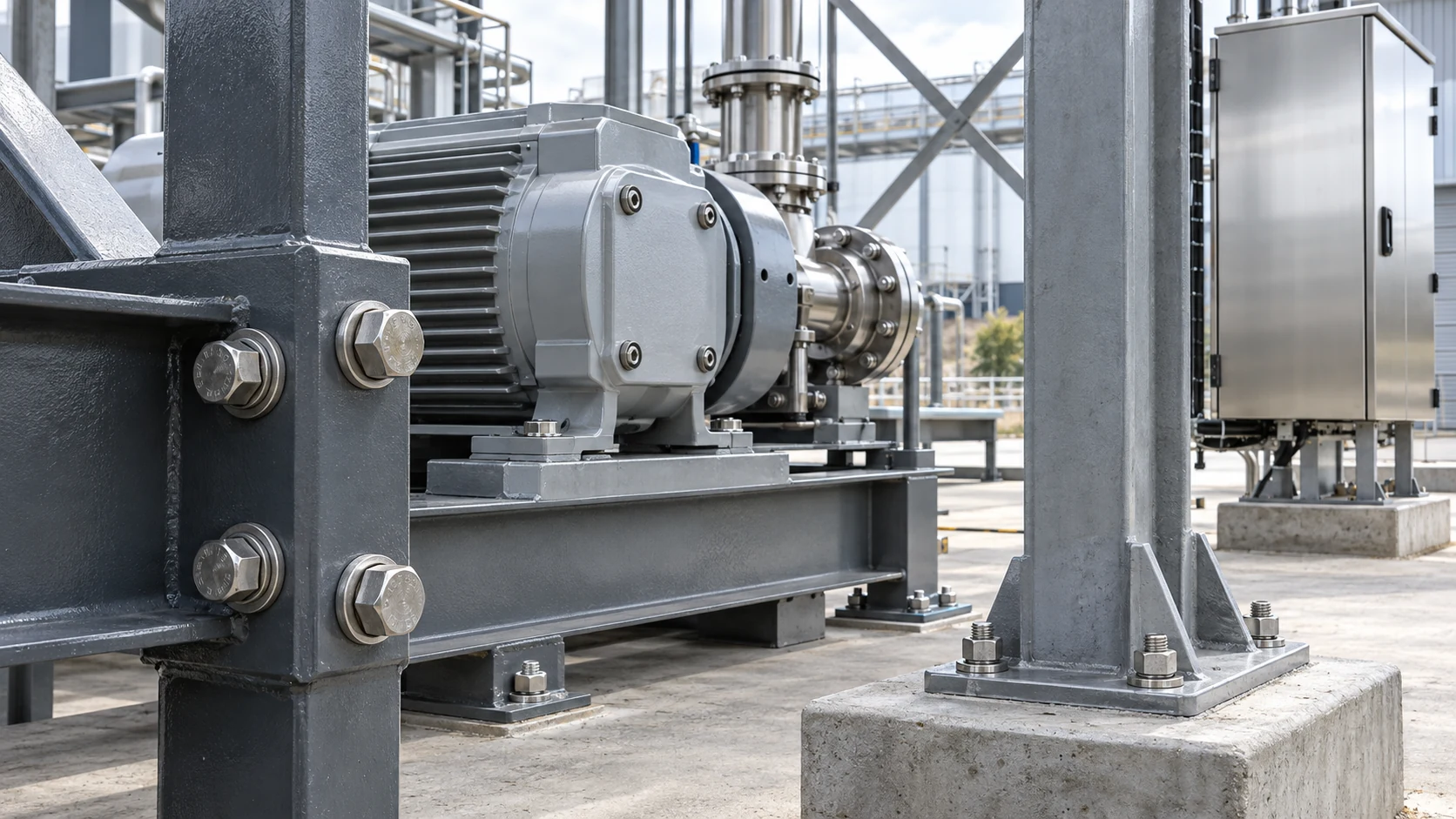
Begin by identifying where the connection will operate and what the joint must achieve. The application may involve construction, machinery, industrial equipment, marine hardware, outdoor structures or an OEM assembly.
Application and Environment Checklist
- Application: construction, machinery, industrial equipment, marine or OEM assembly.
- Environment: indoor, outdoor, coastal, chemical exposure or high temperature.
- Performance: load, vibration, corrosion resistance and required service life.
- Project control: drawing, standard, inspection plan and permitted substitution.
2. Select the Correct Fastener Type
Bolts are used for detachable structural and mechanical connections, normally with a matching nut or tapped component. Nuts must match the mating thread and required mechanical system. Screws support direct fastening or specific assembly requirements. Washers distribute load, protect surfaces or provide a locking or sealing function. Anchors are selected for concrete and construction fixing according to the base material and design requirement.
3. Choose Material and Corrosion Resistance
Material selection should match corrosion exposure, temperature, mechanical requirements and project cost. 304 and 316 stainless steels cover many general industrial applications. 2205 Duplex and 2507 Super Duplex may be evaluated where higher strength or corrosion resistance is required. Carbon steel is widely used where strength, finish and cost requirements determine selection. Special grades such as 904L, 1.4529 and C-276 are reserved for specific severe environments.
See Stainless Steel & Special Alloy Materials for additional grade-selection guidance.
4. Confirm Size, Thread and Dimensions
Specify diameter, length, thread pitch, thread length, head style, drive type and washer compatibility. The nominal size alone does not fully define fit or installation requirements.
| Parameter | Why It Matters |
|---|---|
| Diameter | Determines fit and contributes to load capability within the joint design. |
| Length | Affects engagement and assembly thickness. |
| Thread | Must match mating components. |
| Head / Drive | Affects installation tools and available space. |
5. Understand Strength and Mechanical Requirements
Strength requirements depend on the application and governing specification. Stainless steel fasteners use material and property-class designations defined by the applicable standard, while carbon and alloy steel fasteners may use property classes such as 8.8, 10.9 or 12.9. These examples do not apply universally to every material or product. Confirm tensile, yield, hardness, proof-load or other requirements only where the joint design and product standard require them.
6. Consider Surface Treatment and Environment
Surface treatment can affect corrosion protection, appearance and service life. Stainless steel may be supplied plain or passivated where specified. Carbon steel options can include zinc plating, hot-dip galvanizing, zinc flake or black oxide, but not every finish is suitable for every product or environment.
Review Surface Treatment & Finishing for practical finish-selection context.
7. Review Installation and Assembly Requirements
Consider installation tools, tightening or torque requirements, access around the head and drive, vibration, inspection access and future maintenance. A dimensionally correct fastener may still be difficult to install or service if the assembly leaves insufficient tool clearance.
The correct fastener must work with the complete assembly, not only satisfy the individual product specification.
8. Purchasing Checklist for Industrial Fasteners
- Product type
- Standard number
- Diameter and length
- Thread specification
- Material grade
- Mechanical requirements
- Surface finish
- Quantity
- Packaging requirements
- Inspection documentation
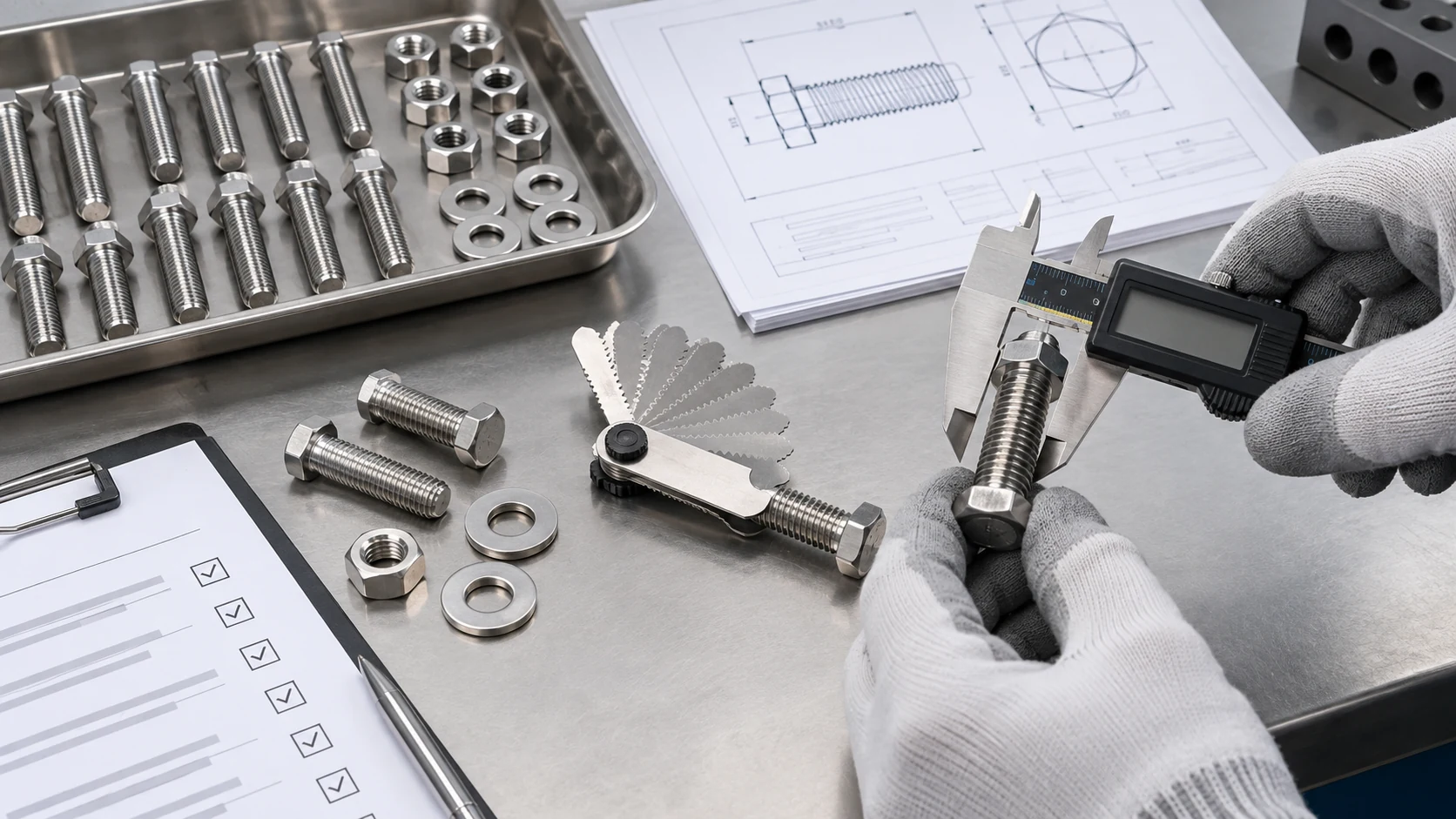
Providing complete specifications helps suppliers quote accurately and prevents incorrect substitutions.
FAQ
What information should I provide when requesting a fastener quotation?
Provide product type, standard, size, material, quantity, finish and any project or inspection requirements.
Should I choose stainless steel or carbon steel fasteners?
The choice depends on corrosion environment, strength requirements, cost considerations and application conditions.
Are bigger fasteners always stronger?
Not necessarily. Fastener performance depends on material, design, installation and joint requirements.
How do I choose between 304 and 316 stainless steel?
Consider corrosion exposure, chloride conditions, environment and required service life.
Can different fastener standards replace each other?
Not automatically. Standard substitution should be reviewed according to dimensions and project requirements.
What causes fastener selection problems?
Common issues include incomplete specifications, incorrect material selection, unsuitable dimensions and missing application information.
Need Product or Technical Support?
Share your fastener, material, standard or application requirements with VALTOR.