
Socket Set Screws
Headless Hex Socket Set Screws with Flat, Cone, Dog & Cup Points
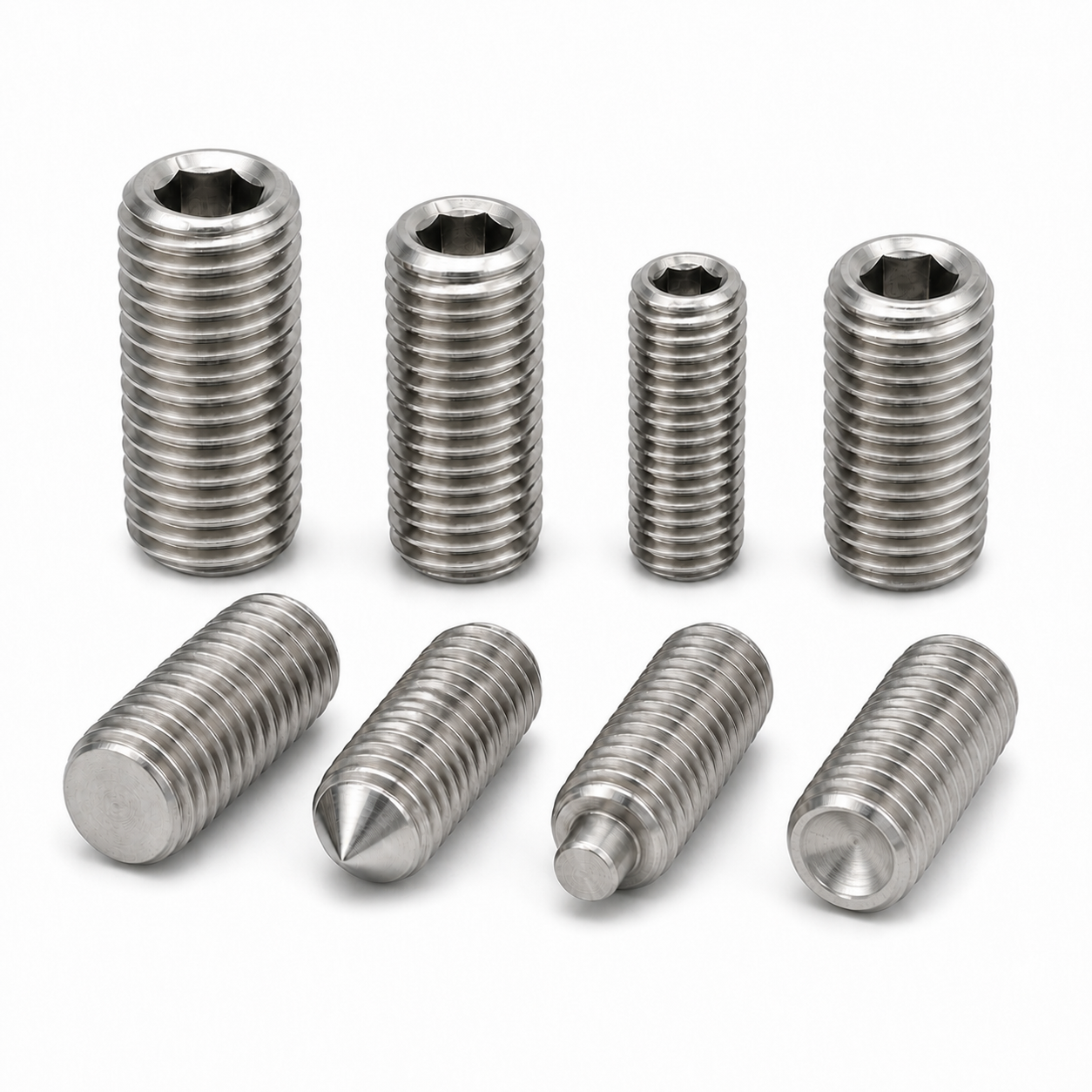
Socket Set Screws, also called Grub Screws, are compact headless fasteners driven by an internal hex socket. They locate, grip or adjust shafts, collars, pulleys, gears, couplings and OEM mechanisms through a point selected for the mating surface and required function.
Product Overview
A Socket Set Screw is threaded through a hub, collar or component so its selected point contacts a shaft or locating feature. Its headless body permits a compact installation with the internal hex socket flush or recessed. It is intended for positioning, gripping and adjustment—not as an ordinary axial bolt or suspended tensile-load fastener.
Point selection determines contact behavior. Flat Point provides broad contact; Cone Point concentrates contact for defined positioning; Dog Point enters a matching hole, slot or groove for positive location; and Cup Point uses a shallow concavity and annular edge to bite or develop friction grip on a round shaft.
Procurement should define point type, thread diameter and pitch, overall length, material, property or hardness requirement, socket dimensions, shaft or mating material, surface preparation, application and quantity. DIN numbers remain familiar legacy purchasing designations, while the corresponding current standards are ISO 4026–4029:2026.
Technical Specifications
Point Styles & Shaft Contact Selection
Material, Thread & Size Options
Custom Point, Length & OEM Manufacturing
Standard Flat, Cone, Dog and Cup Points are supported. Drawing-based point diameter, point length, dog length, tip or special end geometry differing from DIN/ISO is described as a custom Socket Set Screw.
Extra-short, standard and extended lengths may be produced subject to feasibility, with metric, fine-pitch, UNC, UNF or specified threads.
Provide point type, diameter, pitch, length, material, hardness/property requirement, socket requirement, shaft or mating material, application, quantity and drawing or sample.
Small bags, boxes, export cartons, suitable pallets, customer labels, part numbers and authorized private-label packaging may be supported.
Socket, Point & Quality Inspection
Inspection may cover thread diameter, pitch, profile, continuity and damage; complete length; hex socket size, depth, geometry, concentricity, burrs and tool engagement; and point-specific flatness, cone shape, dog diameter and length, cup geometry, annular edge and symmetry. Representative shaft, collar, groove, hole or customer-component checks may evaluate engagement, point contact, location, adjustment and surface condition without inventing holding, slip, load or torque values. Documentation can include MTC, raw-material, dimensional, hardness where applicable, product and third-party inspection reports.
Applications
Compact radial locating, gripping and adjustment in industrial mechanical assemblies.
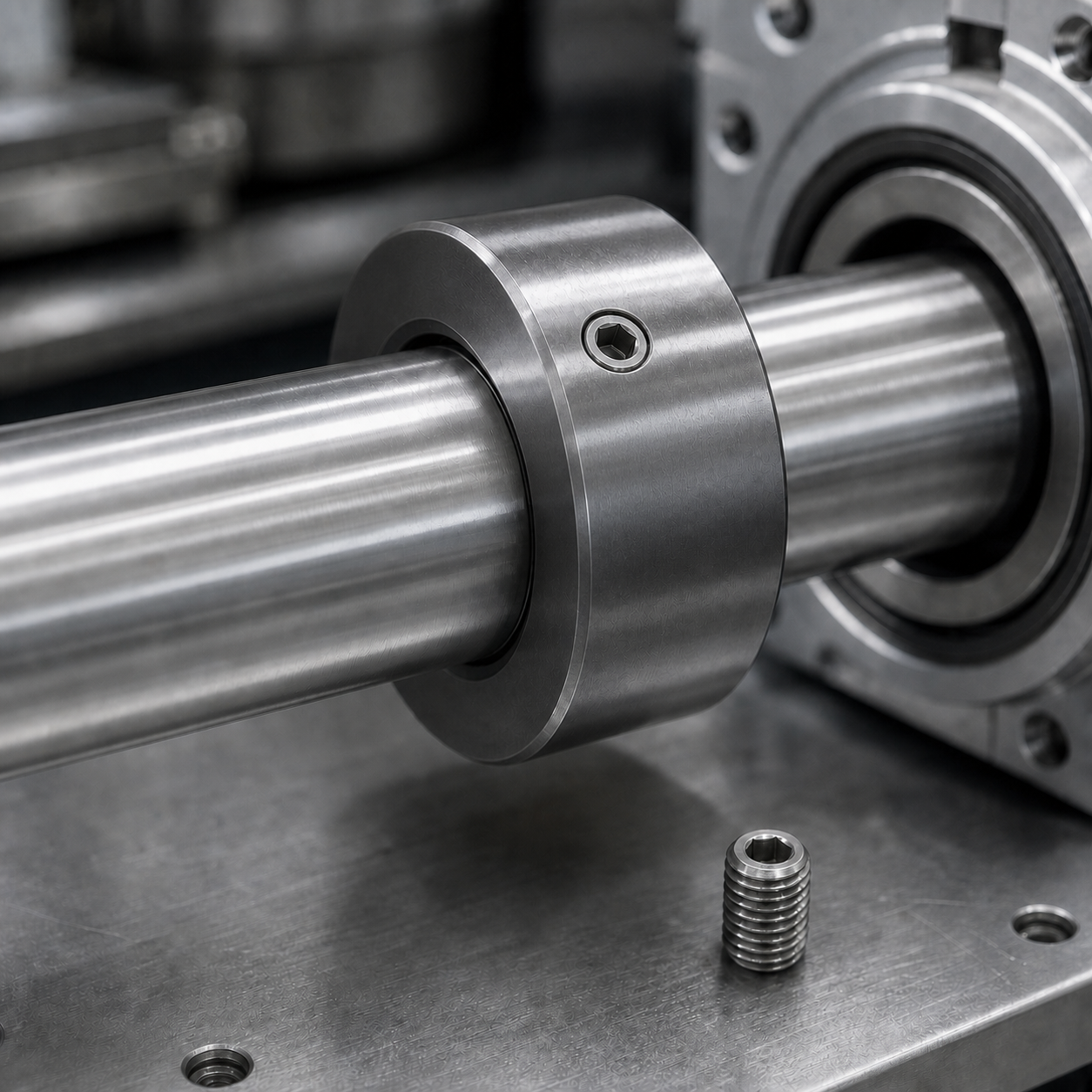
Cup or Flat Points secure collars and hubs according to grip and acceptable shaft marking.
Compact positioning of rotating components on machinery shafts.
Component retention in mechanical shaft couplings and connection assemblies.
Flat or Dog Points support controlled adjustment or repeatable positive positioning.
Point-specific locating, holding or adjustment in custom machinery and fixtures.
Frequently Asked Questions
What is the difference between Flat, Cone, Dog and Cup Point Set Screws?
Flat Point gives broad contact, Cone Point concentrates engagement, Dog Point enters a matching hole or groove for positive location, and Cup Point uses an annular edge for general shaft gripping.
Which Set Screw point is best for a shaft?
Cup Point is common for general gripping; Flat Point can reduce aggressive marking; Cone Point gives concentrated positioning; and Dog Point suits a matching hole or groove.
What sizes of Socket Set Screws can VALTOR supply?
Common metric supply is approximately M2–M24 with commercial lengths around 2–100 mm depending on diameter, point and material. Current stainless ISO ranges extend from M1.6 to M24.
Should I choose 304, 316 or hardened steel Set Screws?
304 and 316 are selected for corrosion resistance, with 316 suited to more demanding exposure. Hardened steel is common where higher hardness, socket strength or aggressive point engagement is required.
What information should I provide for a custom Set Screw quotation?
Provide point type, thread diameter and pitch, complete length, material, hardness/property requirement, quantity, shaft or mating-component data and a drawing or sample for non-standard geometry.
Share point type, thread, length, material, property requirement, socket, mating component, application, quantity and drawing with VALTOR.