Forging
Custom Forged Stainless Steel & Industrial Hardware Components Made to Drawings
VALTOR supplies forged fasteners and custom metal components for industrial, construction and OEM applications.
Forging is suitable for components requiring substantial section thickness, formed heads, eye, fork, lug or other shaped geometries that are not efficiently produced through conventional sheet-metal fabrication or cold heading.
Material, forging geometry, machining allowance, heat treatment, surface finish and secondary operations are reviewed according to customer drawings and project requirements.
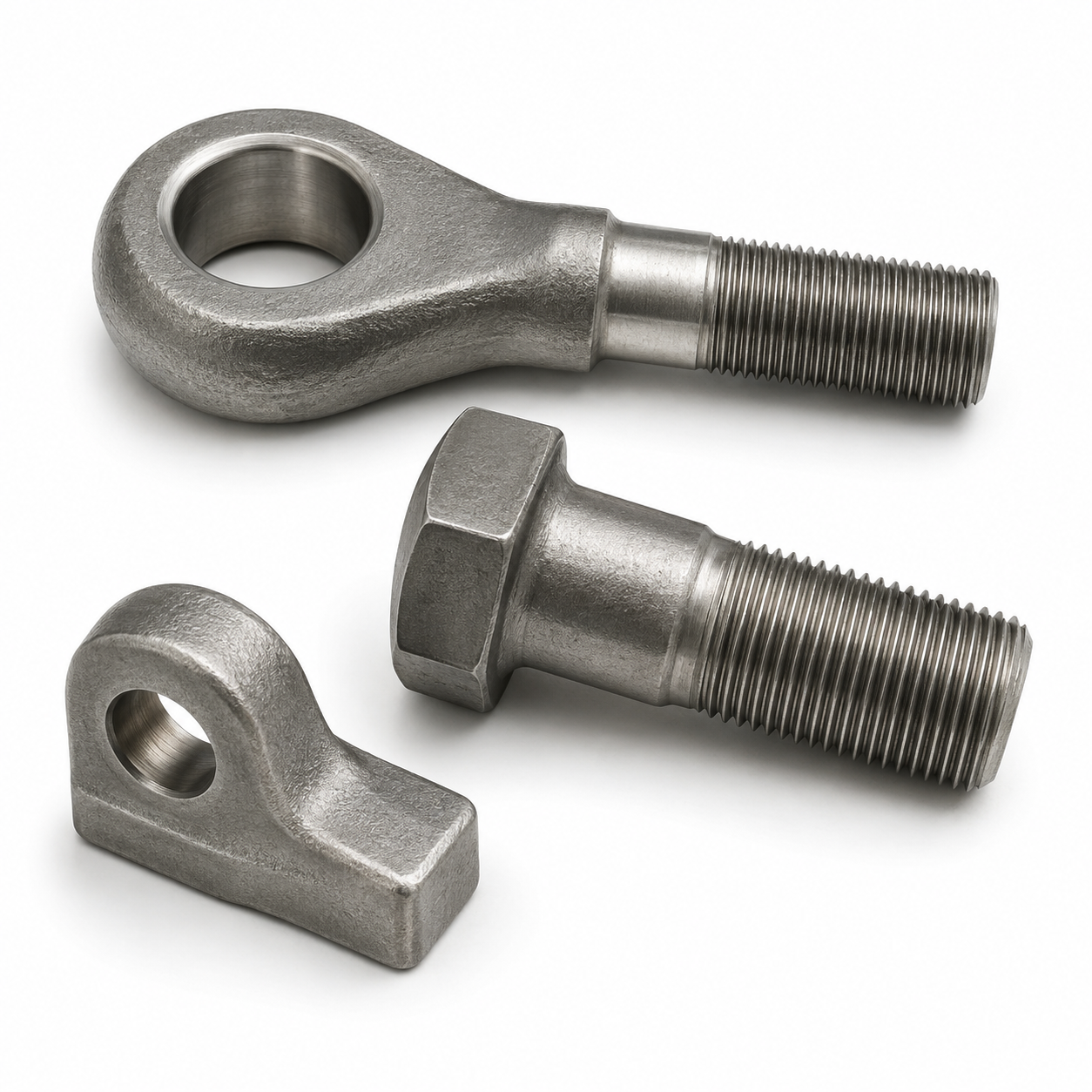
Custom Forging for Industrial Hardware
Forging routes reviewed around geometry, material, quantity and application.
Forging forms metal into the required geometry through controlled deformation. It is particularly suitable for thick sections, large head volumes, eye, fork and lug geometries, and heavy-duty components where other production routes may be inefficient.
Forged blanks may receive secondary CNC machining, drilling, threading, grinding or finishing to create functional surfaces and drawing-defined features. Process selection depends on material, geometry, production quantity, tolerance requirements and the intended application.
Forging is not automatically stronger than every alternative manufacturing method. Final performance depends on the complete component design, material condition, deformation route, heat treatment, machining and inspection requirements.
What We Can Manufacture
Forged component families for industrial, construction and OEM projects.
Forged Bolts & Fasteners
Heavy Bolts · Special Head Bolts · Eye Bolts · Custom Forged Blanks
Eye & Ring Components
Forged Eye Ends · Rings · Connection Components
Clevis & Fork Components
Clevis Bodies · Fork Ends · Yokes · Pivot Connection Parts
Forged Pins & Shafts
Heavy Pins · Headed Pins · Shaft Blanks · Stepped Components
Lugs & Heavy Connectors
Mounting Lugs · Thick-Section Connection Parts · Project Hardware
Drawing-Based Forged Components
Forged and machined OEM components manufactured according to customer drawings.
Forging Geometry & Manufacturing Routes
Hot forging, die forging or related forming routes are selected according to material, geometry and production requirements.
Formed Heads
Heavy Bolt Heads · Eye Ends · Flanged Ends · Enlarged Sections
Eye / Fork / Lug Geometry
Eye Ends · Clevis Ends · Fork Ends · Mounting Lugs
Multi-Diameter Sections
Stepped Bodies · Enlarged Ends · Reduced Shanks · Forged Transitions
Pre-Formed Blanks
Forging followed by machining, drilling, threading or grinding according to the drawing.
Materials for Forging
Material selection is reviewed against forging feasibility and end-use requirements.
304 Stainless Steel
A widely specified stainless option for suitable industrial forged components.
316 Stainless Steel
Commonly selected for suitable outdoor, coastal and corrosion-sensitive applications.
321 / 310S
Available according to project requirements, material availability and forging feasibility.
2205 Duplex
Reviewed for material condition, geometry, deformation route and post-forging treatment.
2507 / 904L
Special grades available subject to project requirements, availability and feasibility.
Carbon Steel
Available for suitable forged fasteners, connectors and project components.
Alloy Steel
Available according to drawing, material specification and processing requirements.
Forging suitability depends on material grade, billet condition, deformation requirements, section geometry and required post-forging treatment.
Secondary Machining & Finishing
Forged blanks may be completed with drawing-specific functional features and finishes.
Machining Operations
CNC Turning · CNC Milling · Drilling · Boring · Reaming · Threading · Grinding · Deburring
Heat & Surface Treatment
Heat Treatment · Pickling / Passivation · Polishing · Carbon Steel Coating, where applicable
Forged and Machined Surfaces
Forged components may combine as-forged surfaces with machined functional surfaces such as threads, bores, bearing surfaces, pin holes and mounting faces. Process availability is confirmed for each order; not every operation is necessarily performed in-house.
From Drawing to Forged Part
A controlled six-step route from feasibility review to delivery.
Drawing, application, material, quantity and documentation.
Geometry, billet, deformation, allowance and route review.
Material condition, dies, tooling and process planning.
Trial forging and sample approval where required.
Production and required secondary operations to approved requirements.
Protective packing according to component and export needs.
Quality Control
Inspection scope follows the drawing, forging route and order requirements.
Dimensional Inspection
Overall Dimensions · Eye / Fork / Lug Geometry · Hole Diameter · Threads · Machined Surfaces
Forging & Surface Inspection
Forging Shape · Cracks · Folds · Burrs · Surface Condition
Material Verification
Specified Grade · Raw Material Records · Material Verification where required
Functional & Project Inspection
Assembly Fit · Functional Checks · Customer-Specified Project Inspection
Documentation availability: MTC · Raw Material Report · Dimensional Inspection · Material Verification · Sample Approval · Heat Treatment Documentation where applicable · Third-Party Inspection Support, according to order requirements and availability.
Applications
Forged parts for five practical industrial and project directions.
Construction & Structural Hardware
Heavy fasteners, connectors, lugs and forged project hardware for suitable structural applications.
Machinery & Heavy Equipment
Pins, shafts, clevis components, yokes and forged blanks for equipment assemblies.
Marine & Coastal Hardware
316 stainless steel and suitable corrosion-resistant grades for appropriate marine and coastal projects.
Industrial Connection Components
Eye, fork, lug and heavy-section parts for industrial connection systems.
OEM & Project Forgings
Drawing-based forged and machined components for customer-specific production.
What to Send for a Faster Quote
Complete technical inputs help us review forging feasibility and prepare an accurate quotation.
Frequently Asked Questions
What types of forged parts can VALTOR supply?
VALTOR can review forged bolts, fasteners, eye and ring components, clevis and fork parts, pins, shafts, lugs, connectors and custom forged blanks made to drawings.
What is the difference between forging and cold heading?
Forging commonly suits substantial sections, larger formed volumes and heavy eye, fork or lug geometry. Cold heading is generally used for suitable smaller repeat-production fasteners and components formed from wire. The correct route depends on geometry, material, tolerance and quantity.
Can stainless steel components be forged?
Yes. 304 and 316 stainless steel are primary options, while other stainless and special grades are reviewed according to availability, material condition, geometry and forging feasibility.
Can forged parts receive CNC machining?
Yes. Forged blanks may receive CNC turning, milling, drilling, boring, reaming, threading, grinding and other drawing-required secondary operations where applicable.
What information is required for a forging quotation?
Send the drawing or 3D model, material grade, dimensions, critical tolerances, quantity, secondary machining, heat treatment or finish, and inspection or documentation requirements.
Have a Custom Forging Requirement?
Send VALTOR your drawing or 3D model for review of material, forging geometry, machining allowance, tooling and inspection requirements.