
DIN vs ISO Fastener Standards: Key Differences for Buyers
DIN and ISO standards are both widely encountered when purchasing industrial fasteners. Many traditional DIN specifications remain familiar in international trade, even where an ISO standard has replaced or superseded the original DIN document. For buyers, the important question is not simply whether two standard numbers are described as equivalent. Dimensions, tolerances, thread length, head geometry, washer series, property class, material and finish should still be confirmed against the applicable standard, drawing or project specification. A reliable purchasing decision therefore begins with the exact product designation and continues with a practical review of assembly fit, service requirements and any permitted substitution before a quotation or order is approved.
Overview
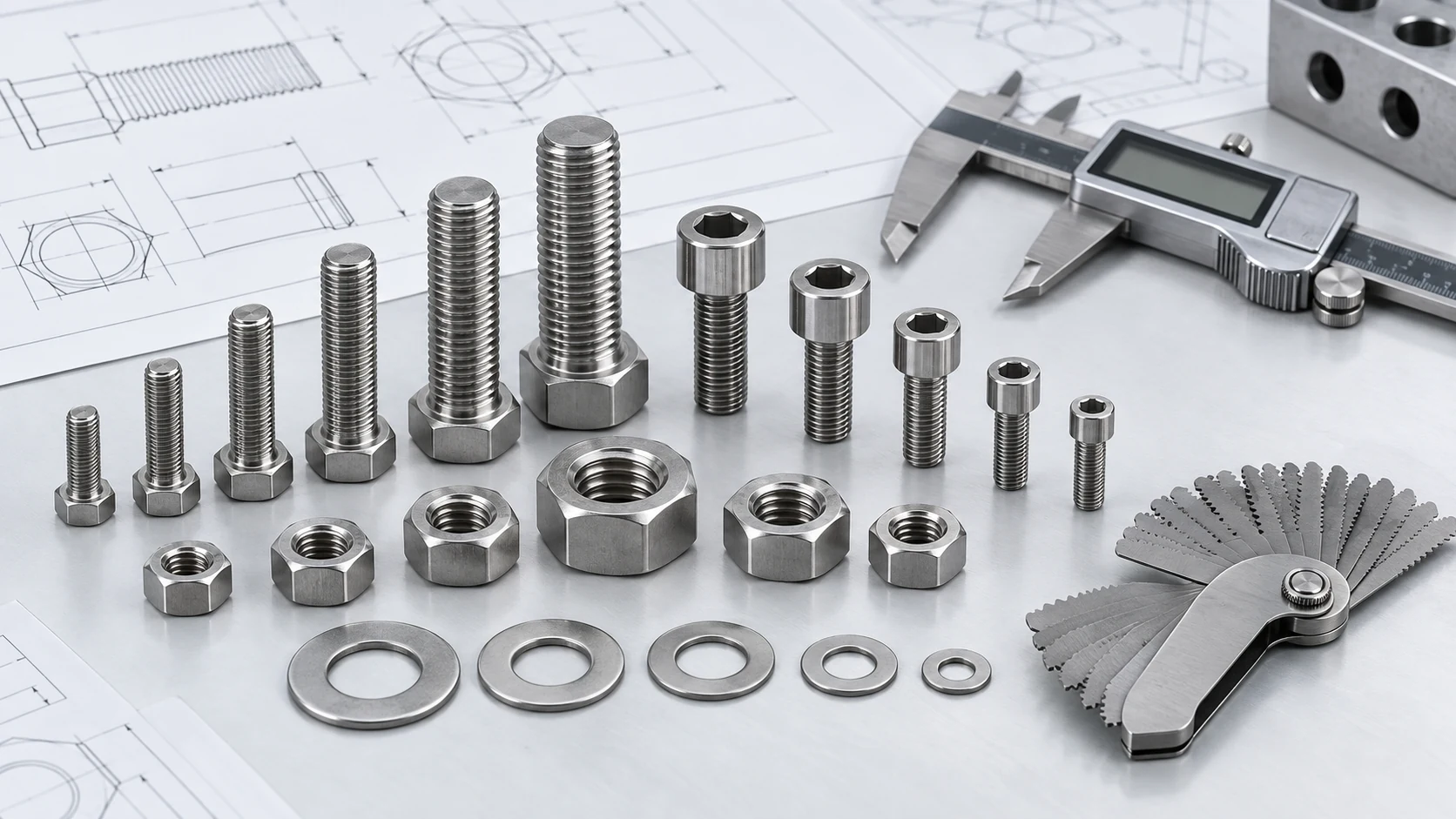
DIN and ISO standards are both important technical references in the global fastener market. DIN originated from German standardization, and many DIN product numbers became widely used internationally through decades of fastener trade. ISO standards provide international specifications used across many markets.
For many common fasteners, an ISO standard now exists alongside or in place of an older DIN designation. However, buyers should avoid assuming that every corresponding DIN and ISO standard is dimensionally identical.
A supplier should receive the actual required standard number, size, material, property class and finish. Using only a generic name such as “DIN bolt” is not sufficient for accurate quotation or production.
Key Takeaways
- DIN numbers remain widely used in international fastener purchasing, even where newer ISO specifications exist.
- A DIN and ISO standard may describe the same general product type without being completely identical in every dimension.
- Thread length, head dimensions, washer geometry and tolerance details should be checked when changing from one standard to another.
- Material grade, property class and surface finish are separate purchasing requirements and are not defined only by the dimensional standard.
- The safest RFQ identifies the required standard and revision, product size and all additional technical requirements.
DIN and ISO: What Do They Mean?
DIN Standards
DIN standards were developed through the German standards system and became extremely influential in international fastener manufacturing and trade. Many buyers, distributors and drawings still use familiar DIN numbers as purchasing terminology.
ISO Standards
ISO standards are international standards developed to provide broader harmonization between markets. For many common metric fasteners, ISO standards are now the principal technical reference.
A DIN number remaining common in purchasing language does not necessarily mean the original DIN document is still the latest governing technical specification.
Why DIN Numbers Are Still Common in Fastener Purchasing
DIN numbers remain traditional and still widely recognized purchasing terminology for practical reasons:
- Existing engineering drawings
- Distributor catalog systems
- Historical purchasing records
- ERP and SKU systems
- Buyer familiarity
- International trading habits
For example, a buyer may request “DIN 933” because that designation remains familiar in the market, even though ISO 4017 is commonly used as the corresponding modern reference for fully threaded hex head screws or bolts.
Common DIN and ISO Fastener Cross-References
| Traditional DIN Reference | Common ISO Reference | Product Type | Buyer Note |
|---|---|---|---|
| DIN 931 | ISO 4014 | Hex head bolts with partial thread | Check dimensional details and thread length according to the required standard. |
| DIN 933 | ISO 4017 | Hex head screws / fully threaded hex bolts | Widely treated as corresponding standards in trade; verify exact dimensions and specification requirements. |
| DIN 912 | ISO 4762 | Hexagon socket head cap screws | ISO terminology is increasingly used, while DIN 912 remains common purchasing language. |
| DIN 934 | ISO 4032 | Hexagon nuts, style 1 | Confirm thread, property class, dimensions and applicable standard. |
| DIN 125-1 / DIN 125 A terminology | ISO 7089 | Plain washers, normal series | Commonly compared, but buyers should verify washer dimensions and applicable product specification. |
Important: These references are provided as practical purchasing cross-references. Do not treat this table as proof that every DIN and ISO version is dimensionally interchangeable. The applicable standard, revision and actual product dimensions should be checked before substitution.
Why “Equivalent” Does Not Always Mean “Identical”
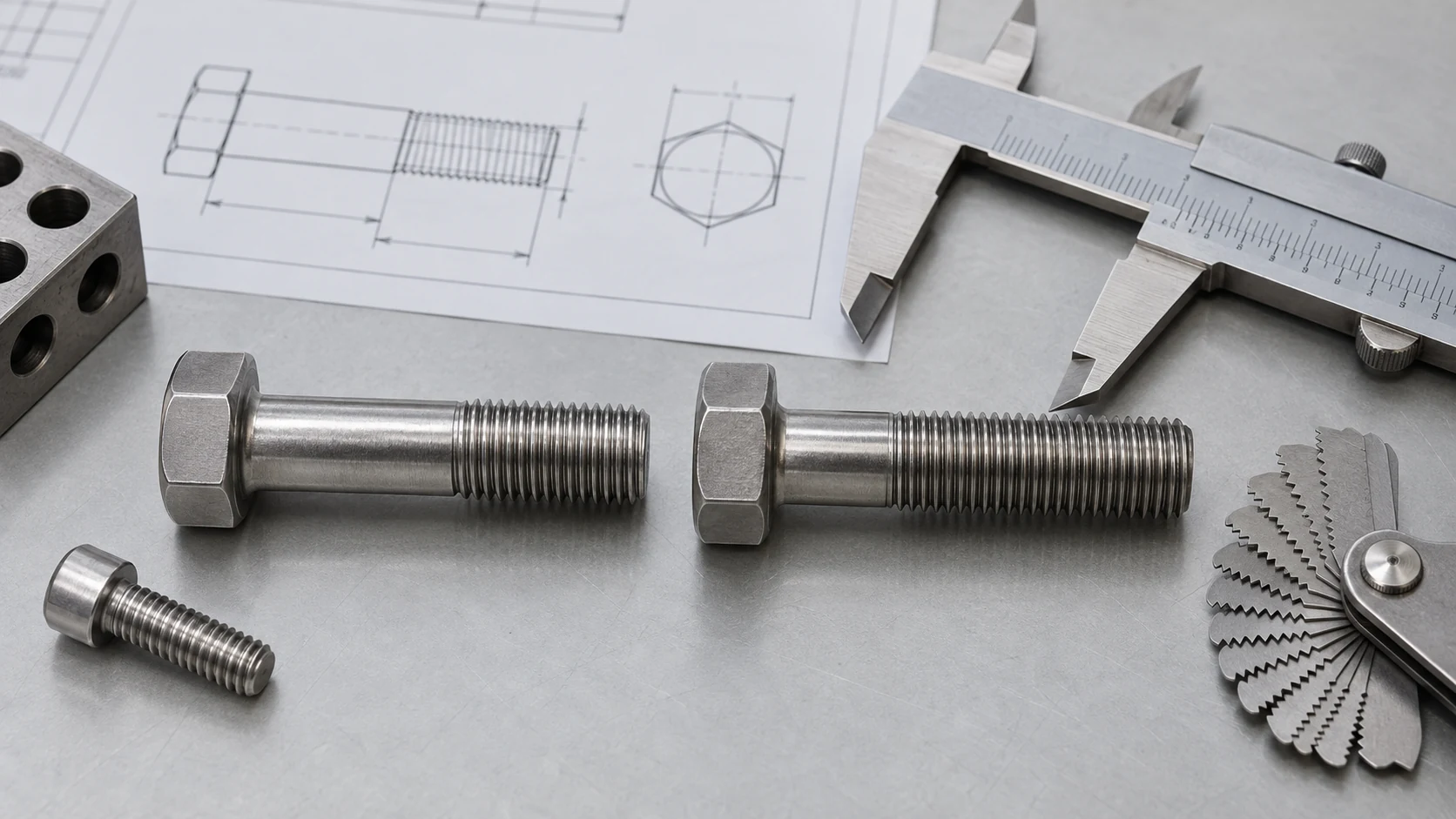
In commercial fastener discussions, terms such as equivalent, replacement, corresponding standard and superseded by are often used loosely. Two standards may describe the same general fastener family but still differ in selected dimensional or technical details.
Possible areas of difference include:
- Head height
- Width across flats
- Thread length
- Unthreaded shank length
- Washer outside diameter
- Washer thickness
- Chamfer geometry
- Tolerances
- Product designation rules
If the fastener is used in an existing assembly, drawing-controlled project or restricted installation space, compare the actual standard dimensions before approving a DIN-to-ISO substitution.
Dimensions Buyers Should Verify
| Feature | Why It Matters |
|---|---|
| Thread Diameter & Pitch | Must match the mating thread and application specification. |
| Overall Length | Affects engagement, assembly depth and joint design. |
| Thread Length | DIN and ISO products of the same nominal size may require verification of threaded and unthreaded portions. |
| Head Dimensions | Width across flats, head height and head diameter can affect tooling and available space. |
| Drive Geometry | Relevant for socket, recessed and specialty screw products. |
| Washer Dimensions | Outside diameter, inside diameter, thickness and chamfer style affect bearing area and fit. |
| Tolerance / Product Grade | Important for assembly compatibility and engineering drawings. |
Universal values are not listed here. Exact dimensions belong to the individual standard or product specification.
Material, Property Class and Finish Are Separate Requirements
A dimensional standard such as DIN 933 or ISO 4017 does not by itself completely define the material and every purchasing requirement. An RFQ may also need to specify the following:
Material
- Stainless Steel 304 / A2
- Stainless Steel 316 / A4
- Carbon Steel
- Alloy Steel
- Special material where required
Mechanical Requirement
- Property Class 8.8
- Property Class 10.9
- Property Class 12.9
- Stainless steel property class according to the applicable standard
Surface Requirement
- Plain or passivated stainless steel
- Zinc plating
- Hot-dip galvanizing
- Zinc flake
- Black oxide
- Project-specified finish
Not every finish is suitable for every material or product. Review Stainless Steel & Special Alloy Materials, Carbon Steel & Alloy Steel Materials and Surface Treatment & Finishing for related selection guidance.
What to Specify When Ordering DIN or ISO Fasteners
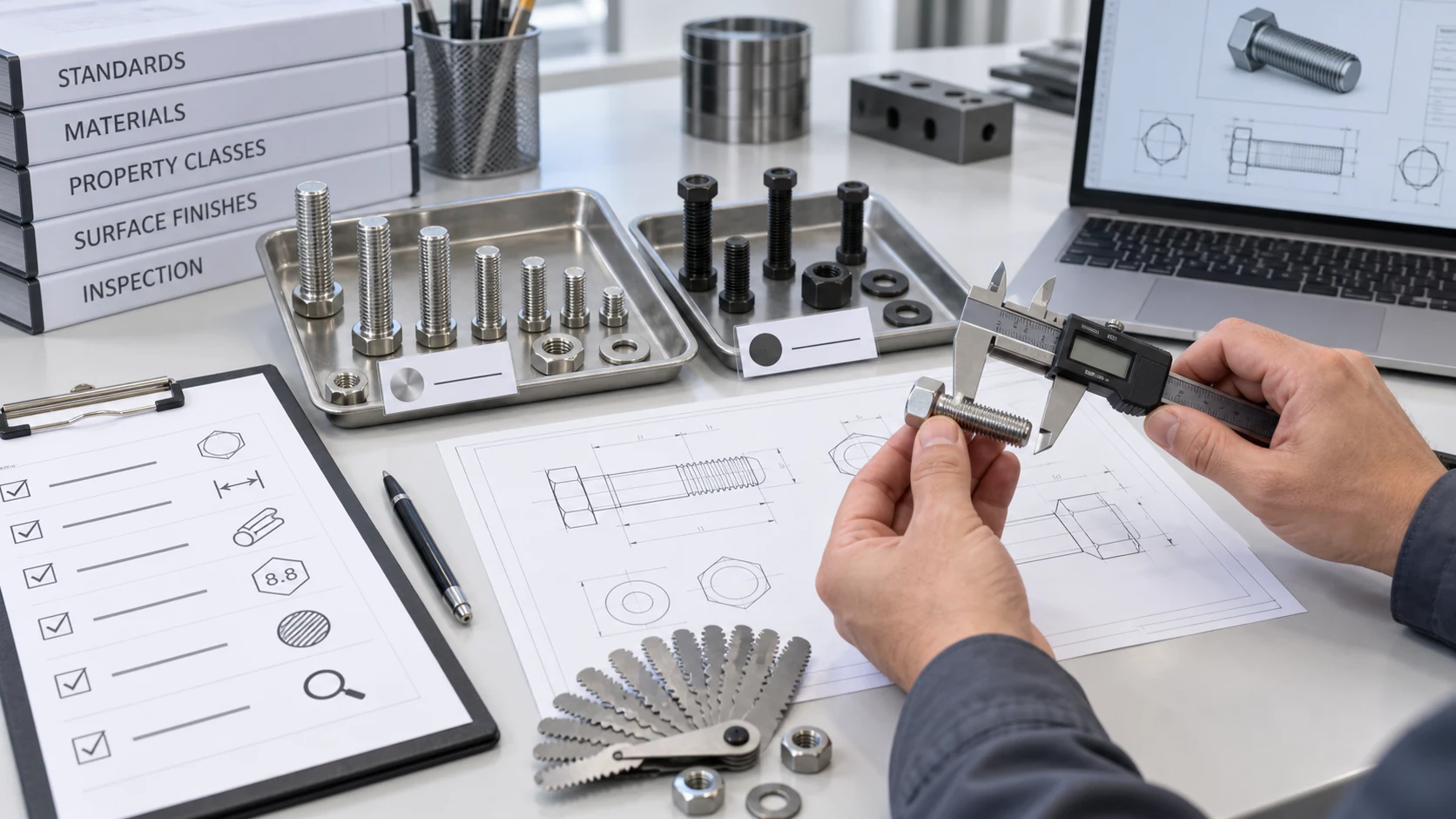
- Product standard and standard number
- Size and thread specification
- Product length and required thread length
- Material or stainless steel grade
- Property class or mechanical requirement
- Surface treatment or finish
- Quantity
- Inspection or documentation requirements
- Drawing or project specification where applicable
If an older DIN number appears on an existing drawing, do not automatically change it to an ISO number during purchasing. Confirm whether the customer permits an equivalent or corresponding ISO product and verify any dimensional differences first.
FAQ
Are DIN and ISO fasteners interchangeable?
Not automatically. Many DIN and ISO standards describe corresponding product families, but dimensional details can differ. Verify the applicable standard, dimensions and assembly requirements before substitution.
Why do suppliers still use DIN numbers?
DIN designations remain widely recognized in international fastener trade, distributor systems and existing engineering drawings. Buyers often continue using traditional DIN numbers even where an ISO reference is now available.
Is DIN 933 the same as ISO 4017?
DIN 933 and ISO 4017 are commonly treated as corresponding specifications for fully threaded hex head fasteners, but buyers should still verify the required dimensions, material, property class and other technical requirements rather than assuming complete interchangeability.
Is DIN 912 the same as ISO 4762?
DIN 912 is the traditional designation widely associated with hexagon socket head cap screws, while ISO 4762 is the commonly used ISO reference. Existing drawings may still specify DIN 912, so confirm the actual requirement before changing standards.
What information should I provide when requesting a DIN or ISO fastener quote?
Provide the standard number, size, thread, length, material, property class where applicable, surface finish, quantity and any inspection or documentation requirements. A drawing should also be provided where the product is project-specific.
Need Product or Technical Support?
Share your fastener, material, standard or application requirements with VALTOR.