
What Torque Specifications Often Miss in Bolted Joints
Torque is one of the most familiar values in a bolted-joint specification, yet a torque number alone does not define how an assembly will behave. The resulting clamp load can change with thread friction, bearing-surface condition, coating, lubrication, locking features, installation speed and reuse. For stainless steel assemblies, galling can add another source of uncertainty. This article explains what buyers and engineers should define around a torque requirement so the value reflects the actual fastener and joint conditions.
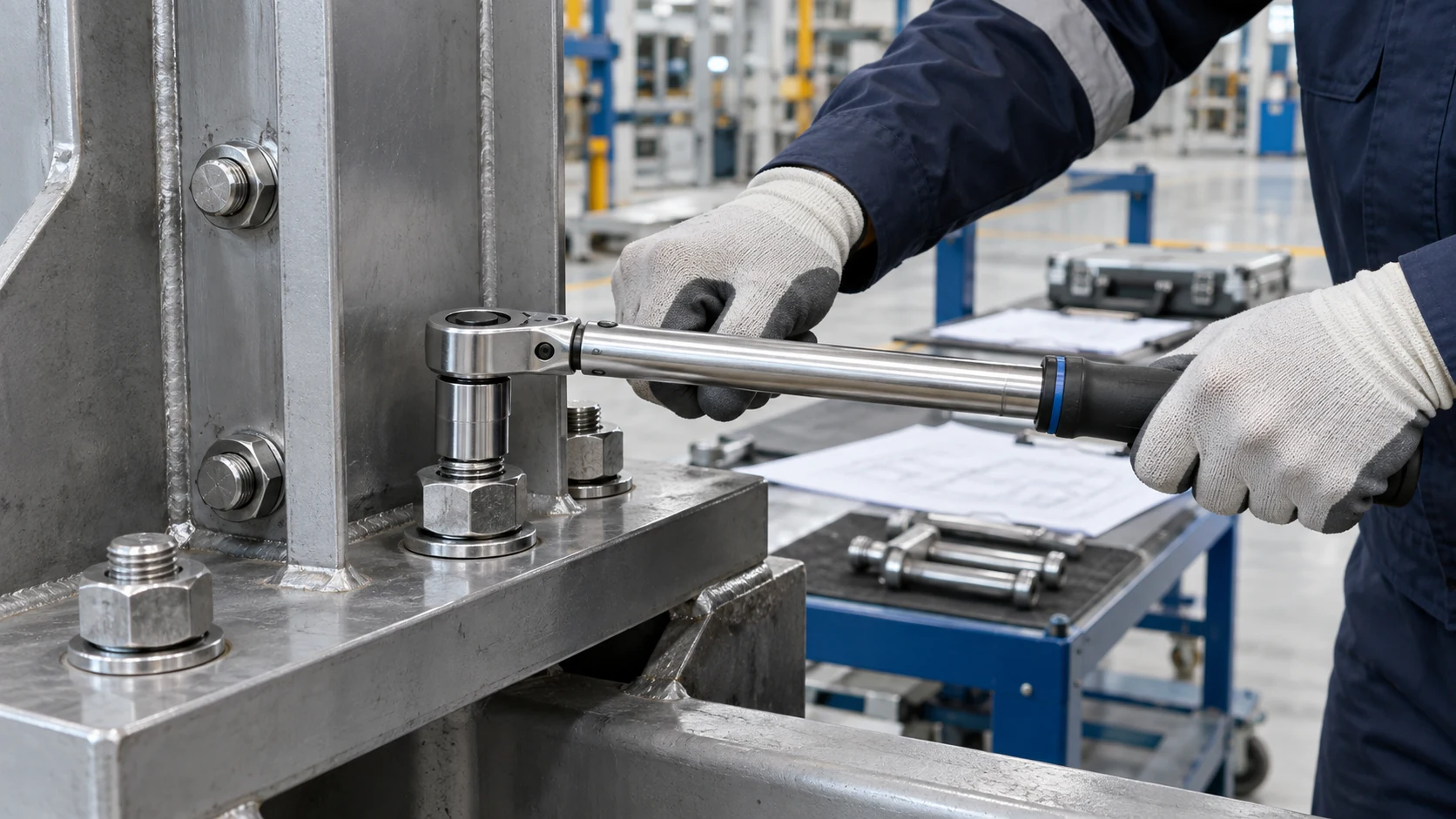
1. Torque Is an Input — Preload Is the Joint Objective
The purpose of tightening most bolted joints is not simply to reach a torque number. The engineering objective is normally to create a suitable clamping force, or preload, that holds the joint members together under the expected service conditions.
Torque is the rotational input applied by the installation tool. Preload is the tensile force created as the fastener stretches and clamps the joint. Torque control is widely used because it is practical during assembly, but it remains an indirect method of controlling preload.
Key Takeaways
- Torque is an installation input, not a direct measurement of bolt preload.
- Friction in threads and bearing surfaces strongly influences the torque-preload relationship.
- Changing coating or lubrication can change assembly behavior even when the fastener size and strength remain the same.
- Prevailing-torque locking features consume part of the applied installation torque.
- Stainless steel threaded assemblies may require galling considerations.
- Critical bolted joints may require more controlled tightening methods than a simple torque value.
2. Why Friction Matters More Than Many Specifications Show
Applied torque is distributed across several resistances in the assembly. Friction occurs in the mating threads, under the bolt head or nut, at washer interfaces and across coated bearing surfaces. Only part of the installation input contributes to fastener stretch and useful clamping force.
If friction changes, the same applied torque may produce a different preload. A meaningful tightening requirement should therefore be connected to the coating, lubrication, washer condition, mating surfaces and installation method rather than treated as an isolated number.
A torque value copied from another application may be misleading if the original fastener finish, lubrication condition or bearing surface was different.
3. Surface Treatment Can Change Assembly Behavior
Changing the fastener finish can change friction conditions. Zinc plating, zinc flake coating, black oxide, hot-dip galvanizing, stainless steel surface condition and specified sealers or topcoats may influence thread friction, bearing-surface friction, dimensional fit and tightening response.
A bolt qualified or assembled under one coating condition should not automatically be assumed to behave identically after the coating system changes. The assembly consequences should be reviewed even when the fastener size, geometry and mechanical grade remain unchanged. See Surface Treatment & Finishing for related finish information.
4. Lubrication Is Not a Minor Detail
Lubrication can significantly change how a threaded assembly responds to torque. The condition may come from an intentional thread lubricant, a factory-applied lubricant, a coating topcoat, assembly paste, oil contamination or a deliberately dry assembly.
Adding lubricant to a joint originally specified as dry can change the torque-preload relationship. Removing lubrication from a system designed around lubricated assembly can also change behavior. The installation requirement and the actual assembly condition must therefore describe the same system.
A torque value should ideally identify whether the assembly condition is dry, lubricated or controlled by a specified coating / lubrication system.
5. Stainless Steel Threads Require Galling Awareness
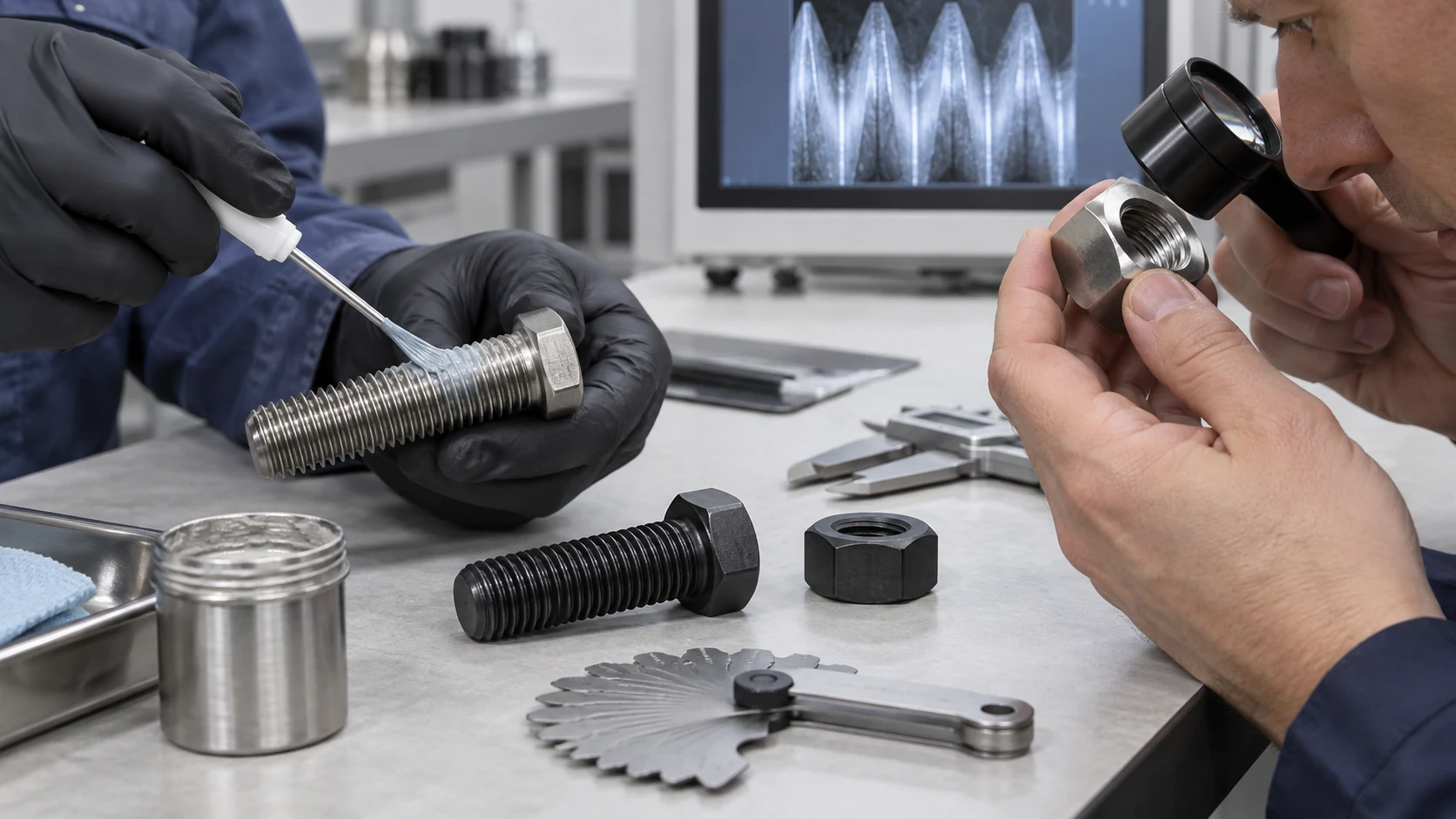
Austenitic stainless steel threaded fasteners can be susceptible to galling under certain assembly conditions. High installation speed, high contact pressure, dry metal-to-metal contact, rough or damaged threads, unsuitable mating conditions and repeated tightening can influence the risk.
Galling is adhesive wear that can increase installation resistance, damage threads and in severe cases cause seizure. It does not occur in every stainless assembly. Suitable thread condition, controlled assembly speed, appropriate lubrication where permitted, compatible mating components and correct installation practice can help manage the risk.
Lubricant or anti-seize selection must follow the application, environment and engineering specification; there is no universal product recommendation for every stainless joint.
A sudden increase in tightening resistance in a stainless assembly is not always evidence that the required preload has been achieved. Thread galling can create resistance without producing the intended joint condition.
6. Prevailing-Torque Nuts Change the Torque Picture
All-metal prevailing-torque nuts, nylon-insert lock nuts and other controlled prevailing-torque designs introduce rotational resistance before or during clamping. This resistance is not the same as useful joint preload.
Part of the installation torque may be consumed by the locking feature. A standard torque value for a free-running nut should not automatically be applied to a prevailing-torque nut without considering the applicable specification or assembly requirement. Prevailing torque, tightening torque and resulting clamp load are related but not identical concepts.
For product context, see All-Metal Lock Nuts and Nylon Lock Nuts.
7. Bearing Surfaces Matter Too
Friction does not occur only in the threads. Important bearing interfaces include the area under the bolt head, under the nut, between a washer and the joint surface, under flanged fastener heads and across coated structural surfaces.
Washer type, washer hardness, coating, surface roughness and seating geometry can influence tightening behavior. Replacing a plain washer with a different design may change more than load distribution; it may also alter the bearing friction and seating response.
When tightening requirements are important, review the bolt, nut, washer and joint surface as one assembly rather than treating the bolt torque as an isolated number.
8. Reuse Can Change the Original Assembly Conditions
After installation and removal, the joint may no longer have the same friction or locking characteristics as during the first assembly. Coatings may be worn, bearing surfaces polished, threads damaged, lubricant redistributed, prevailing torque changed, surfaces deformed or the assembly contaminated.
This does not establish a universal rule that fasteners may or may not be reused. Reuse depends on the fastener type, application, governing standard, locking feature, engineering requirement and condition after removal. The original tightening specification should not automatically be assumed valid for repeated assembly cycles.
9. “More Torque” Does Not Mean “More Safety”
Insufficient preload can cause problems in some joints, but excessive tightening can also create risk. Possible consequences include excessive fastener stress, thread damage, joint-surface deformation, stripped internal threads, excessive embedment or seating, and damage to softer mating materials.
The objective is not maximum torque. The objective is a controlled and repeatable joint condition with preload appropriate to the joint design.
10. When Torque Control Alone May Not Be Enough
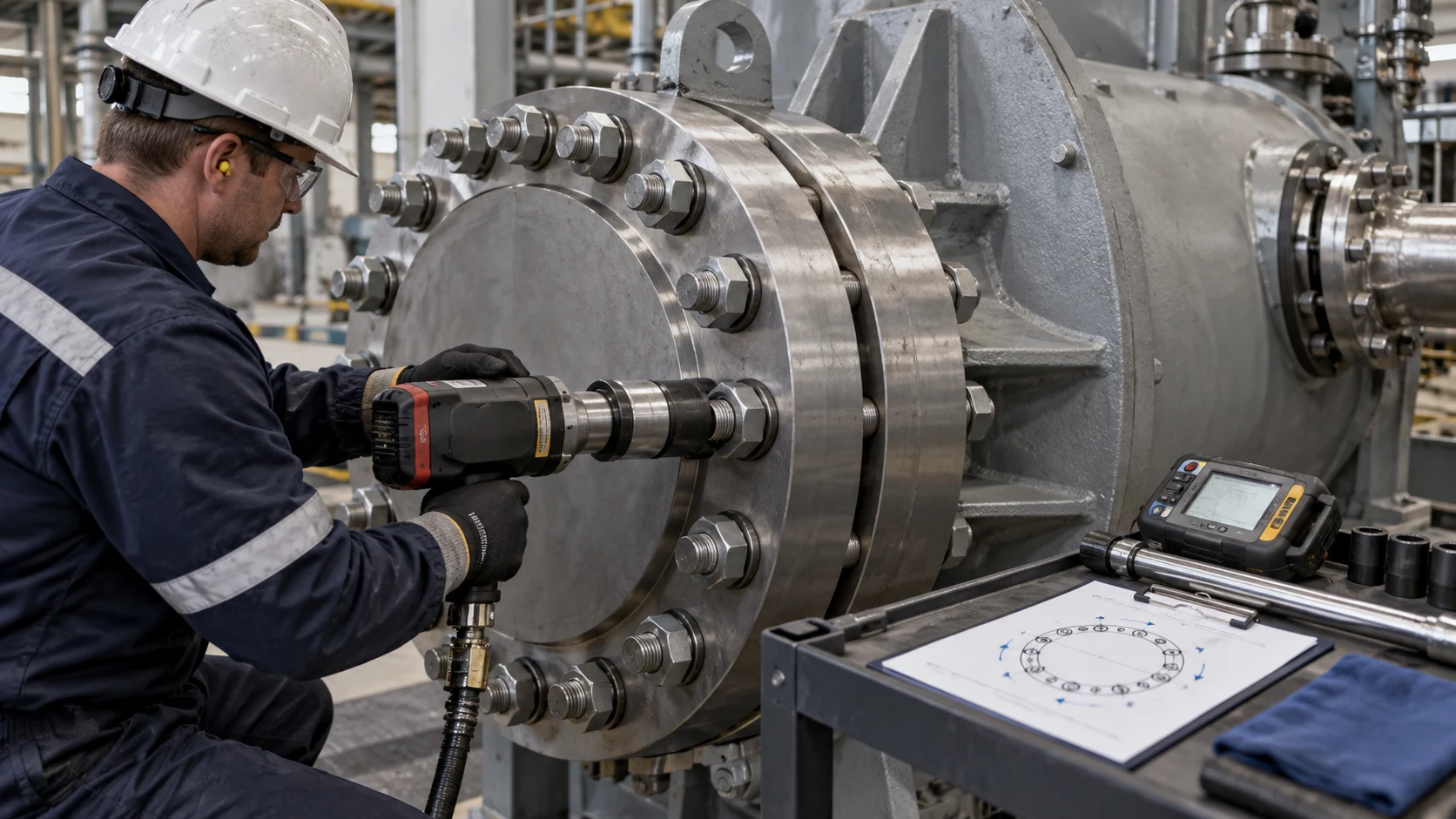
Torque-controlled tightening is practical and widely used. Some critical joints may nevertheless require more direct or controlled installation methods according to the engineering requirement. Depending on the joint, these may include torque-angle tightening, direct tension indicators, hydraulic bolt tensioning, calibrated tension-control methods or elongation and tension measurement.
No single method is universally superior. The suitable approach depends on joint design, fastener type, access, required preload accuracy, project specification and service criticality. The point is not that torque tightening is inadequate; it is that higher-control applications may require additional methods.
11. What Should Be Defined Behind a Torque Specification?
| Condition | Why It Matters |
|---|---|
| Fastener Size / Type | Defines the basic joint and fastener geometry |
| Material / Property Class | Influences mechanical limits and fastener behavior |
| Thread Condition | Affects friction and assembly consistency |
| Surface Finish | Can change thread and bearing-surface friction |
| Lubrication Condition | Strongly influences torque-preload relationship |
| Nut Type | Prevailing-torque nuts introduce additional rotational resistance |
| Washer / Bearing Surface | Changes friction and seating behavior |
| Mating Material | Soft or coated materials may respond differently during tightening |
| Installation Method | Tool type and tightening sequence affect repeatability |
| Reuse Condition | Previously installed components may not behave like new parts |
A torque value is meaningful only when the fastener, finish, lubrication, mating surfaces and installation method behind that value are understood.
12. Practical Questions Before Releasing a Torque Requirement
- What fastener and property class is being tightened?
- Is the assembly dry, lubricated or controlled by a coating system?
- Has the surface finish changed from the original design?
- Is a prevailing-torque locking nut involved?
- What washer or bearing surface is used?
- Are stainless threads at risk of galling?
- Is the fastener new or reused?
- Does the joint use soft, coated or dissimilar mating materials?
- Is torque alone sufficient for the joint criticality?
- Is the tightening requirement supported by the applicable engineering specification?
FAQ
Does the same torque always produce the same bolt preload?
No. The relationship between torque and preload depends strongly on friction in the threads and bearing surfaces, along with coating, lubrication and assembly conditions.
Should torque values change when the coating changes?
Potentially, yes. A different coating or topcoat can change friction behavior. Tightening requirements should be reviewed when the surface system changes.
Can lubrication cause a bolt to be over-tightened?
If a torque value established for a dry assembly is used after lubrication changes the friction condition, the resulting preload may differ significantly. The tightening requirement should therefore match the intended lubrication condition.
Why can stainless steel nuts and bolts seize during tightening?
Some stainless threaded assemblies can experience galling, an adhesive wear process that increases friction and may lead to thread seizure. Material condition, surface finish, speed and lubrication can influence the risk.
Can I use the same torque for a nylon lock nut or all-metal lock nut?
Not automatically. Prevailing-torque locking features add rotational resistance, so the assembly requirement should account for the specific nut design and applicable specification.
Is the highest possible tightening torque safer?
No. The objective is appropriate and controlled preload, not maximum torque. Excessive tightening can damage the fastener, threads or joint components.
Need to Review a Bolted Joint Requirement?
Share your fastener specification, material, finish, locking method and application conditions with VALTOR for technical review.