
Shoulder Bolts
Precision Socket Shoulder Screws for Pivot, Guide, Spacer & Locating Applications
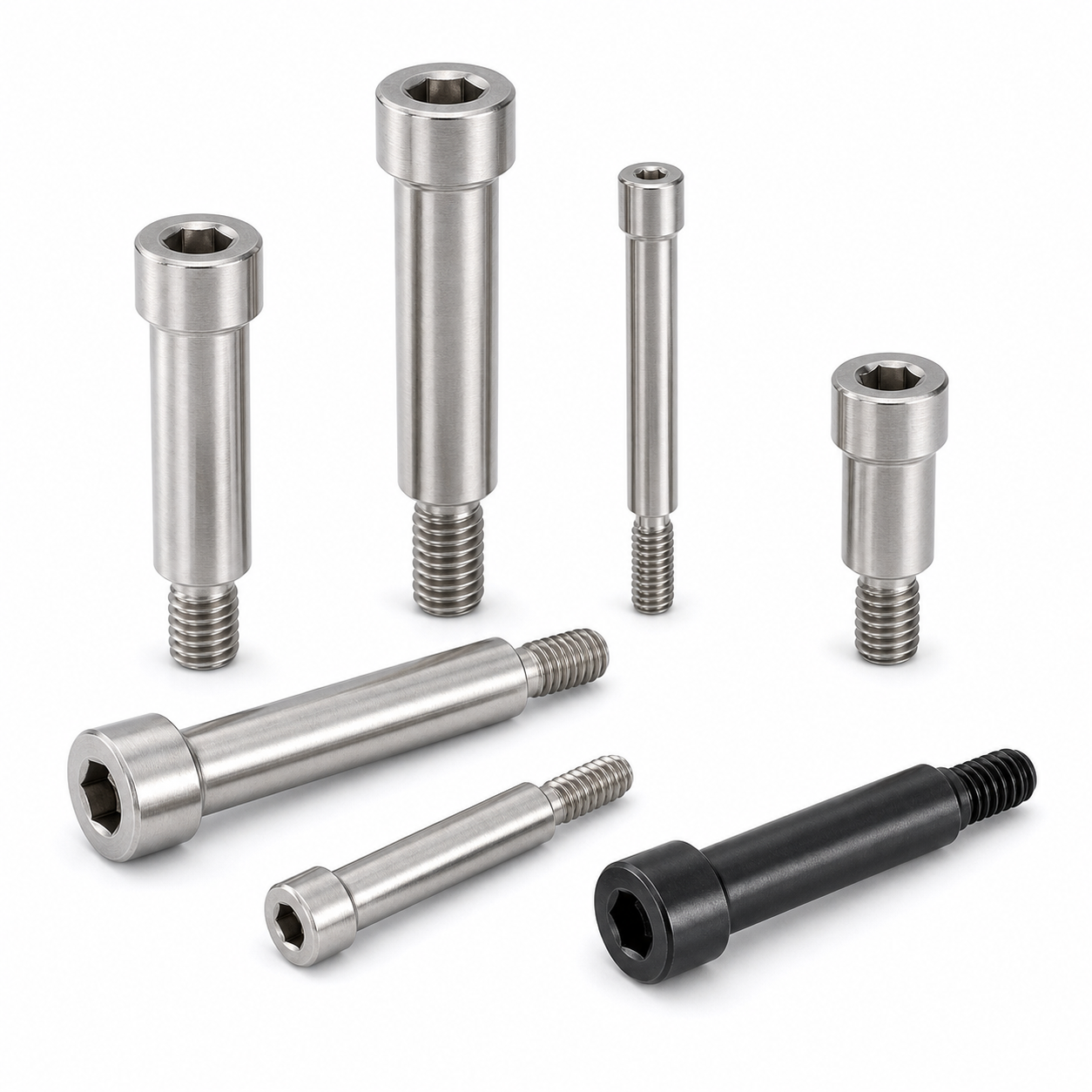
Shoulder Bolts, also known as Socket Shoulder Screws or Stripper Bolts, combine a cylindrical Hex Socket Head, precision unthreaded shoulder and smaller-diameter threaded end. The smooth shoulder acts as a functional pivot, guide, spacer, bearing surface or locating feature while the reduced thread retains the fastener.
Product Overview
The precision shoulder is not simply an unthreaded bolt shank. It is a controlled cylindrical functional surface used for pivoting, sliding, guiding, spacing and locating in machinery, tooling and automation assemblies.
Shoulder diameter is intentionally larger than thread diameter. The physical step establishes the shoulder seating surface, while the smaller threaded end provides retention in a tapped component. Correct selection keeps the moving or guided component on the smooth shoulder rather than directly on the screw thread.
Buyers should specify standard or custom configuration, shoulder diameter and length, thread size, pitch and length, head and socket geometry, material, shoulder tolerance, surface finish or roughness, hardness, quantity and any drawing or sample requirements.
Technical Specifications
Shoulder Diameter, Shoulder Length & Precision Fit Selection
Stainless Steel, Alloy Steel & Size Options
Precision Shoulder & OEM Manufacturing
Shoulder diameter, length, tolerance, finish, hardness and concentricity; thread diameter, pitch, length, metric coarse/fine or custom UNC/UNF.
Head diameter/height, hex socket and optional plain or knurled side. Radius, relief, runout and step geometry are controlled for seating and stress transition.
Ground shoulders, tighter drawing tolerances, special finish, material or heat treatment are subject to feasibility review. Send all functional dimensions, surface requirements, quantity and drawing/sample.
Protective bags, boxes, export cartons, pallets, precision-surface protection, customer labels, part numbers and authorized private label.
Shoulder, Thread & Dimensional Quality
Inspection may cover shoulder diameter and length, f9 or customer tolerance, roundness, cylindricity, concentricity, surface roughness, thread profile and GO/NO-GO fit, socket geometry, step seating, burrs, material and hardness. Order documentation may include MTC, raw-material, dimensional, tolerance, roughness, hardness and thread reports plus third-party support.
Applications
Precision shoulder functions for controlled motion, guidance, spacing and location.
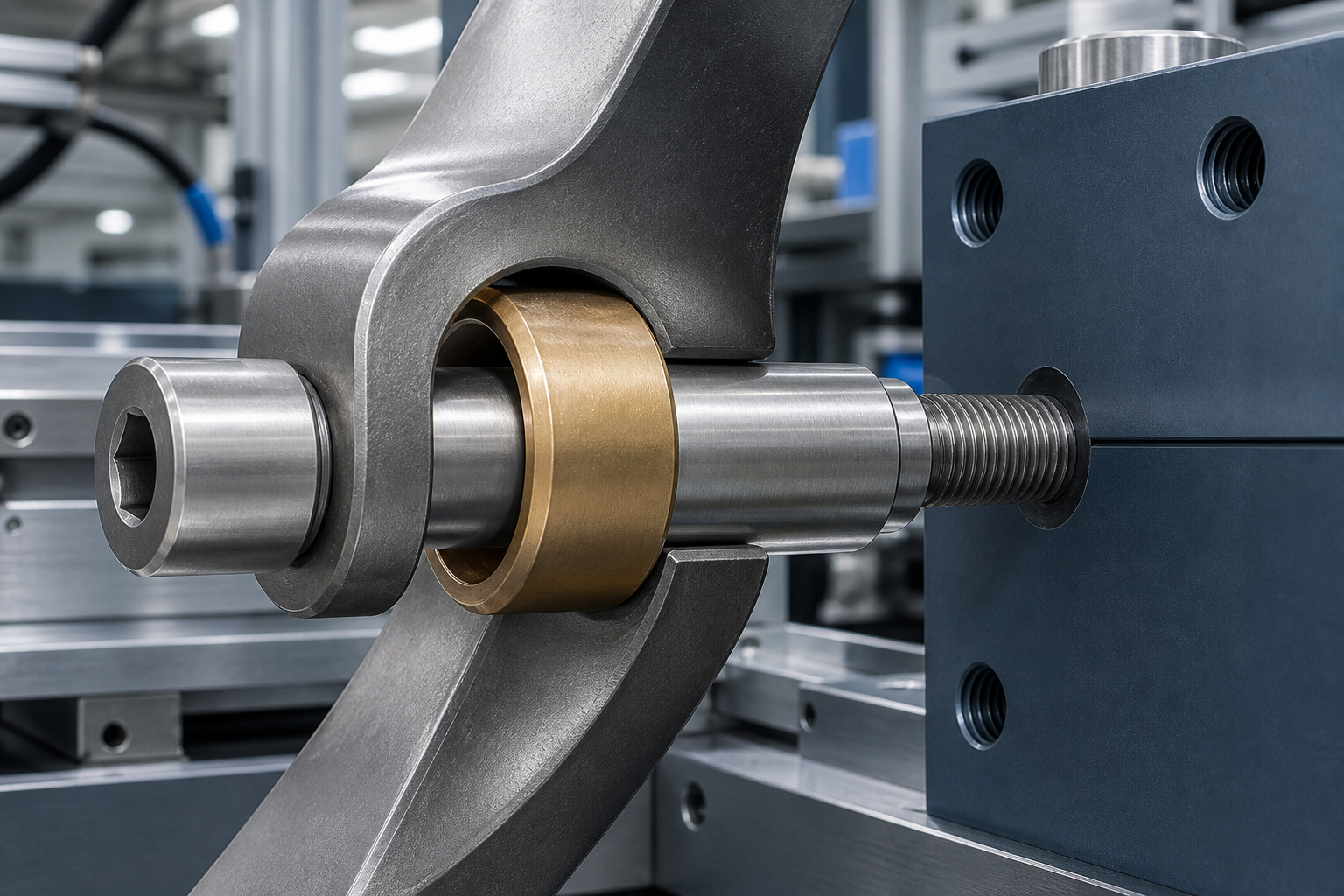
The shoulder acts as a fixed pivot shaft while the threaded end retains the fastener in the stationary component.
Shoulder Screws or Stripper Bolts guide and limit movement of tooling plates and fixtures.
The smooth precision shoulder supports compatible rollers, bushings, pulleys or bearing components.
Controlled shoulders provide repeatable guidance, spacing and locating in industrial tooling.
Standard ISO 7379 and custom products can be specified by diameter, length, tolerance, material, thread and surface requirement.
Frequently Asked Questions
What is a Shoulder Bolt?
A Shoulder Bolt has a head, a precision unthreaded cylindrical shoulder and a smaller-diameter threaded end. The shoulder can function as a pivot, guide, spacer, bearing surface or locating feature while the thread retains the fastener.
What is the difference between a Shoulder Bolt and a normal Socket Head Cap Screw?
A normal Socket Head Cap Screw is primarily a clamping fastener. A Shoulder Bolt includes a precision larger-diameter smooth shoulder and reduced thread for pivoting, guiding, spacing and locating functions.
What standard applies to Socket Shoulder Screws?
ISO 7379 is the principal international standard for metric Hexagon Socket Head Shoulder Screws. ISO 7379:1983 remains current after reconfirmation in 2025 and covers nominal shoulder diameters from 6.5 through 25 mm.
What does f9 mean on an ISO 7379 Shoulder Screw?
f9 is the dimensional tolerance zone applied to the precision shoulder diameter. Allowable variation depends on nominal shoulder size, so the corresponding ISO limits and mating-bore requirement must be selected together.
What information is required when ordering custom Shoulder Bolts?
Specify shoulder diameter and length, thread size, pitch and length, material, shoulder tolerance, surface finish or hardness, head and drive geometry, quantity and any drawing or sample.
Related Products
Share shoulder diameter and length, thread, material, tolerance, surface finish, hardness, drawing and quantity with VALTOR.