
Fastener Surface Treatment Selection: Finishes and Corrosion Protection
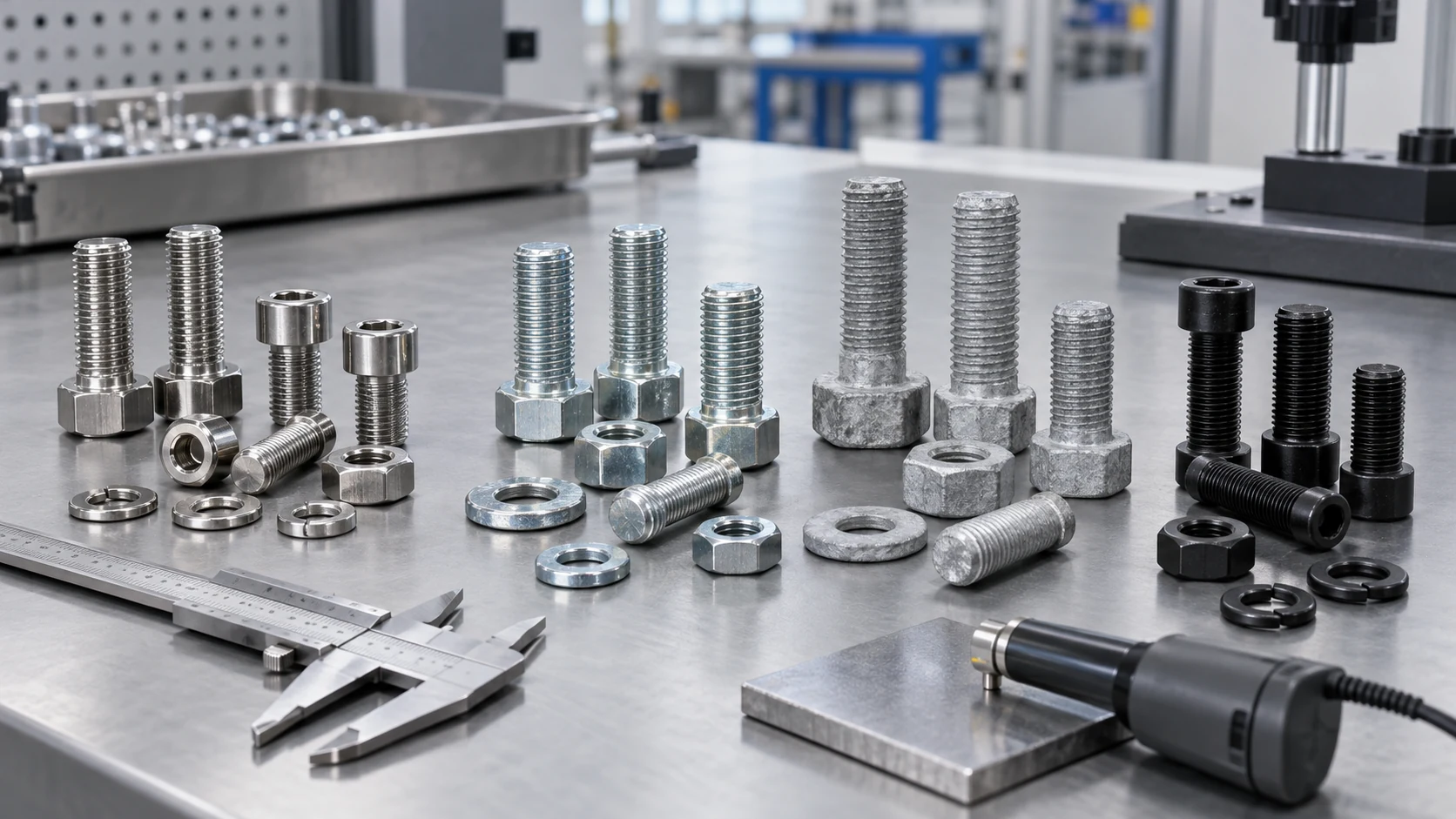
Surface treatment plays an important role in protecting fasteners from corrosion, improving appearance and meeting project requirements. The correct finish depends on the base material, operating environment, required service life, installation conditions and applicable specification. Stainless steel fasteners may require cleaning, passivation or another specified finishing process, while carbon steel products often depend on protective systems such as zinc plating, hot dip galvanizing, zinc flake coating or black oxide. Each option has different implications for corrosion exposure, coating thickness, thread fit, assembly and inspection. Selecting a finish therefore requires more than naming a coating. Buyers should review the complete combination of fastener material, product geometry, environment and project requirements before production. This guide explains a practical selection process for engineers, distributors, construction buyers and OEM procurement teams without treating any single finish as a universal solution.
Overview
Fastener surface treatment can influence corrosion resistance, appearance, friction characteristics and long-term performance. However, a coating or finish cannot be selected independently from the fastener material. The most suitable result comes from reviewing the combination of material, surface treatment and application environment.
A quotation request should specify both the fastener material and required surface finish. For example, "carbon steel bolt" alone is not enough information for accurate coating selection.
Key Takeaways
- Surface treatment selection depends on the fastener material and service environment.
- Stainless steel and carbon steel fasteners normally require different protection strategies.
- Coating selection can affect dimensions, thread fit and assembly requirements.
- Outdoor, marine and industrial environments require different corrosion considerations.
- Buyers should specify finish requirements clearly before production.
Why Surface Treatment Matters
Surface treatments may provide corrosion protection, improved appearance, controlled friction characteristics, improved surface durability and compatibility with application requirements. The required function should be defined before a process is selected because appearance alone does not indicate suitability for the service environment.
Surface treatment improves protection but does not change the base material into a different material grade.
Relationship Between Base Material and Surface Finish
The base material determines which finishing processes can be considered and which technical risks must be reviewed. Not every finish is suitable for every fastener product.
| Base Material | Common Surface Treatment Considerations |
|---|---|
| Stainless Steel | Passivation; electropolishing where specified; clean surface condition. |
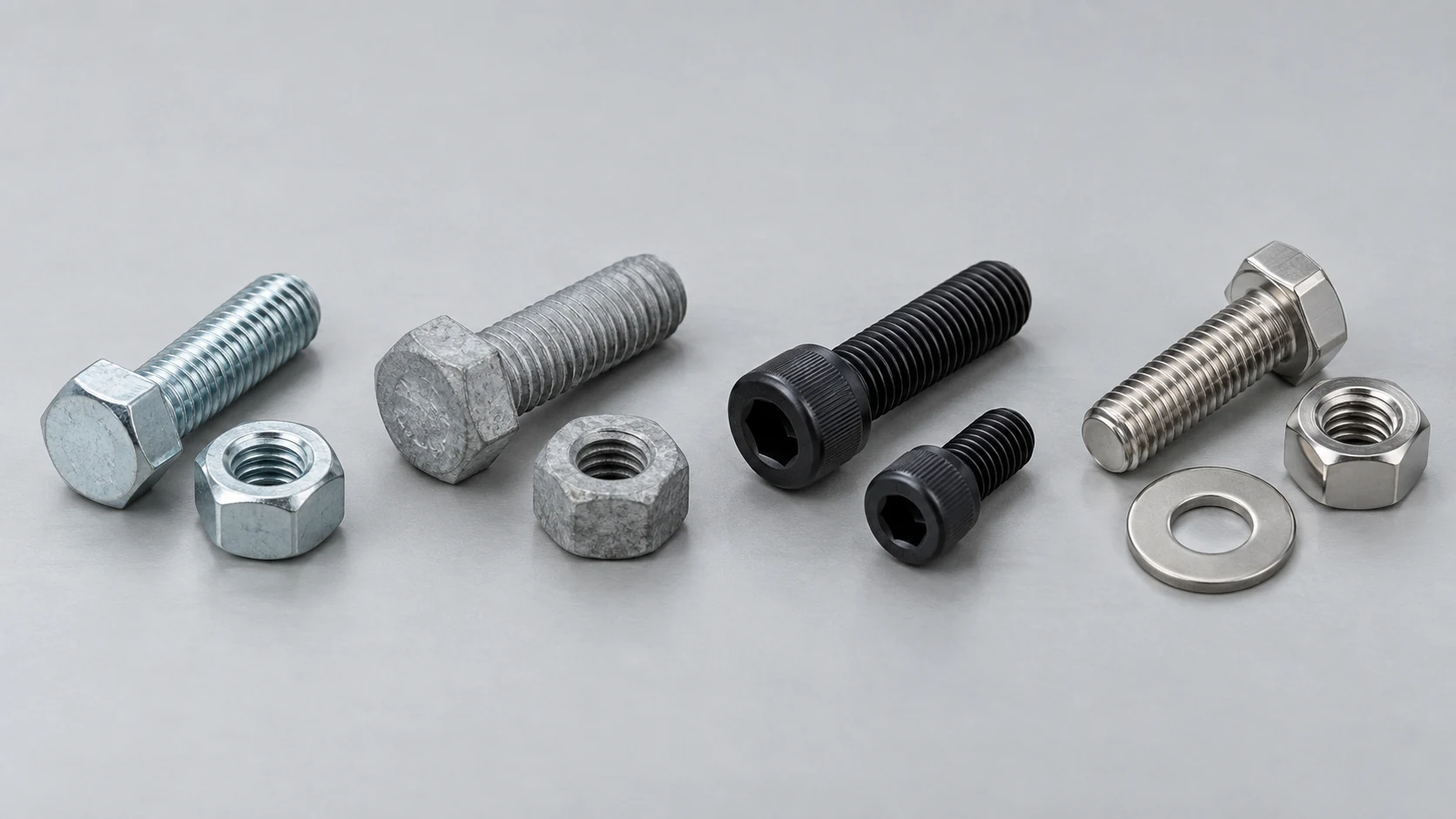
| Carbon Steel | Zinc plating; hot dip galvanizing; zinc flake coating; black oxide. |
| Alloy Steel | Zinc plating; zinc flake; special coatings depending on product and project requirements. |
Common Fastener Surface Treatment Options
Zinc Plating
Zinc plating is a common protective finish for carbon steel fasteners used in general industrial applications, indoor equipment and protected environments. Buyers should review corrosion exposure, coating thickness requirements and possible dimensional impact.
Hot Dip Galvanizing
Hot dip galvanizing applies a thicker zinc coating and is commonly considered for construction, outdoor structures and steel frameworks. Coating thickness, thread allowance and assembly compatibility should be confirmed before production.
Zinc Flake Coating
Zinc flake is a modern coating system often selected where higher corrosion protection and controlled coating thickness are required, including automotive-related hardware and demanding industrial applications. Confirm specification requirements, friction characteristics and the approved coating system.
Black Oxide
Black oxide is a conversion coating used for selected steel fasteners where appearance and moderate protection are required, such as machinery, indoor equipment and precision components. Its suitability depends on the environment and any required post-treatment.
Passivation for Stainless Steel
Passivation is a chemical surface treatment used to improve surface cleanliness and corrosion-resistance consistency of stainless steel fasteners and precision components. Requirements should be linked to the product specification and service environment. See Surface Treatment & Finishing for available process context.
Surface Treatment Selection by Environment
Environmental exposure should be assessed together with base material, geometry, installation and project specifications. The following considerations are starting points rather than universal solutions.
| Environment | Possible Considerations |
|---|---|
| Indoor / Controlled Environment | Plain stainless steel or suitable basic finishes depending on material and operating conditions. |
| Outdoor General Exposure | Consider actual corrosion exposure, drainage, maintenance and specified coating requirements. |
| Coastal / Marine | 316 stainless steel or other corrosion-resistant materials may be considered; coating selection depends on the application. |
| Construction Steel Structures | Hot dip galvanizing or specified protective coatings may be considered with compatible threads and mating parts. |
| Industrial Chemical Environment | Material and coating selection requires review of the actual chemicals, concentrations, temperature and service conditions. |
Dimensions and Thread Considerations
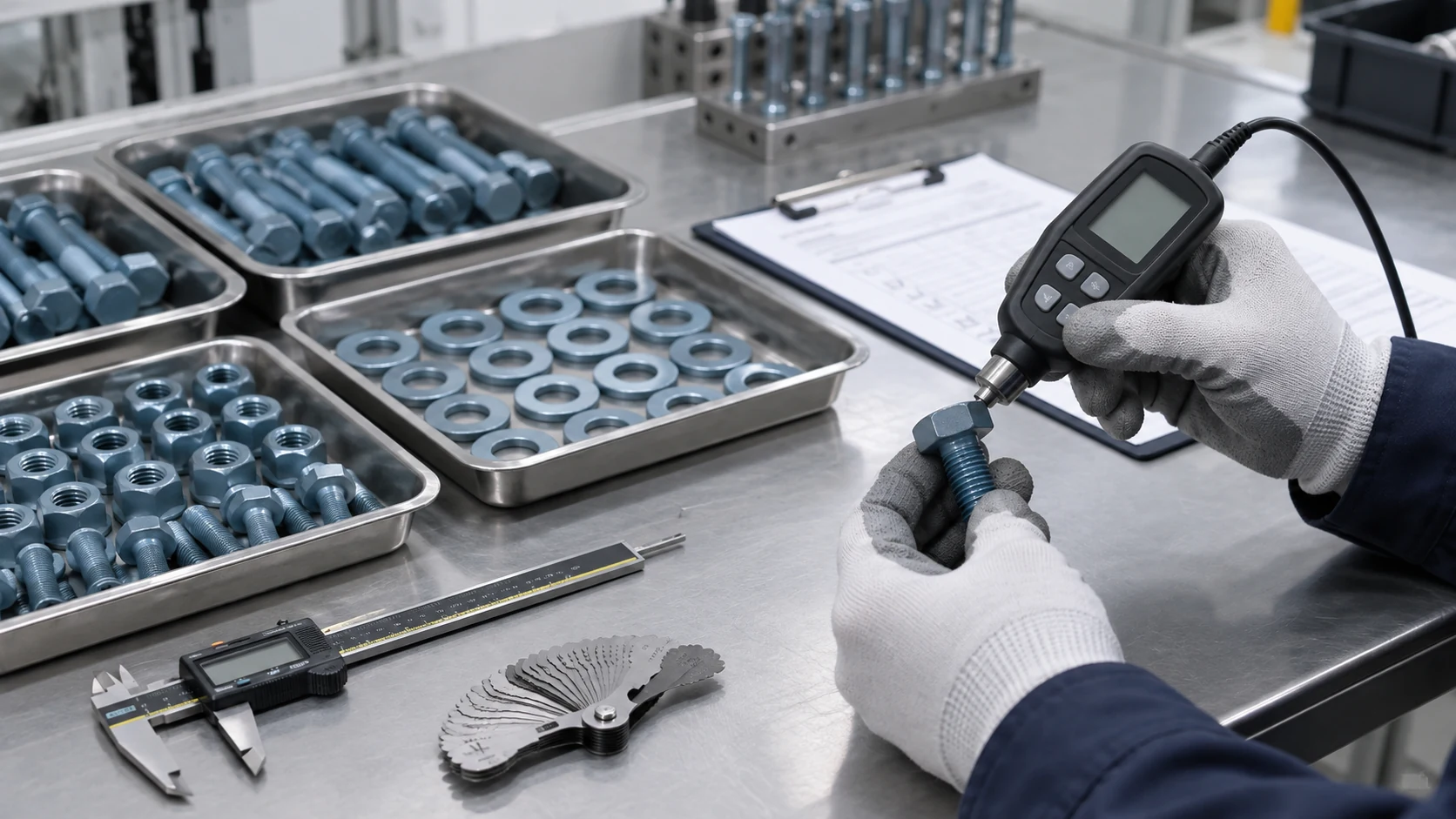
Surface treatment can influence thread fit, dimensional tolerance, assembly compatibility and friction characteristics. Buyers should review internal and external threads, coating thickness, required final dimensions and installation conditions before approving a coating process.
For threaded fasteners, specify whether dimensions and gauges apply before or after coating and confirm the mating component requirements.
Purchasing Checklist for Surface-Treated Fasteners
- Base material
- Required surface finish
- Application environment
- Corrosion exposure
- Dimensional requirements
- Thread compatibility
- Quantity
- Documentation requirements
Clear coating requirements help prevent incorrect substitutions and production issues.
FAQ
Do stainless steel fasteners need surface treatment?
Some stainless steel applications require passivation or cleaning processes depending on specification and service requirements.
What is the difference between zinc plating and hot dip galvanizing?
They use different processes and provide different coating characteristics. Selection depends on environment, dimensions and project requirements.
Is zinc flake coating better than zinc plating?
Not always. The appropriate coating depends on corrosion requirements, application conditions and specification.
Can surface treatment change fastener dimensions?
Yes. Coating thickness and process requirements should be considered, especially for threaded components.
What finish should be used for outdoor fasteners?
The correct finish depends on exposure conditions, material selection and project requirements.
Does VALTOR supply different surface treatment options?
Yes, according to product requirements, material selection and project specifications.
Need Product or Technical Support?
Share your fastener, material, standard or application requirements with VALTOR.