
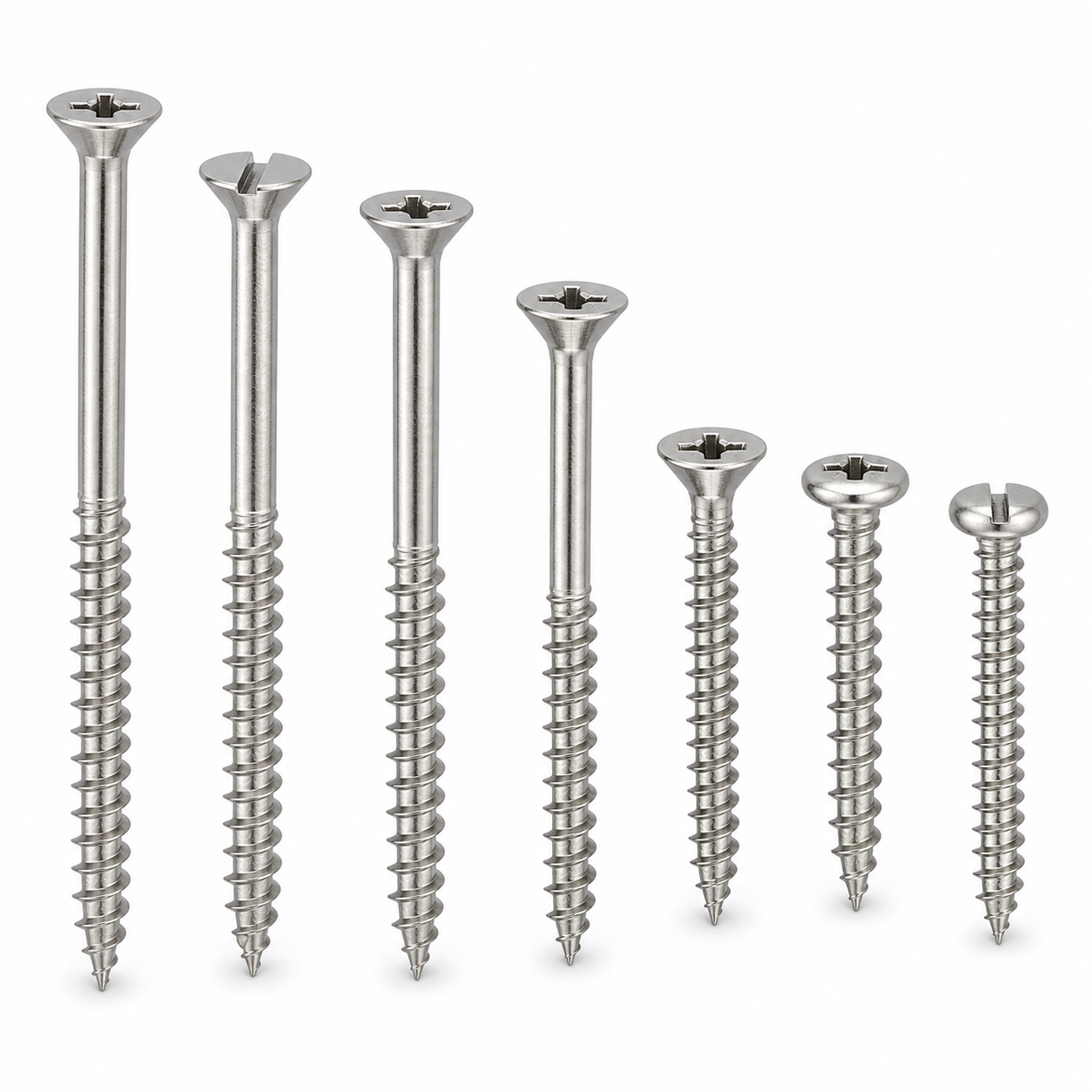
Wood Screws
Stainless Steel Wood Screws for Timber, Furniture & Wood Assemblies
VALTOR supplies traditional Wood Screws for solid wood, timber, furniture and suitable panels in countersunk, raised countersunk and round-head families. Cross recessed, slotted and selected modern 6-lobe drives are available with traditional partial thread, smooth shank and sharp wood point.
Product Overview
Traditional Wood Screws are designed for fastening solid wood, timber, furniture components and compatible wood products. Their sharp point and wood-thread geometry support starting and engagement, while many traditional designs use a partially threaded body with a smooth upper shank. Different softwoods, hardwoods and panels require suitable screw diameter, pilot-hole preparation and edge distance.
The smooth shank can pass through an upper component while the threaded section engages the base wood, helping draw the joint together when the geometry is suitable. Full or extended thread versions may also be supplied where required, but neither thread form guarantees performance without considering wood density, component thickness and installation.
Buyers should specify head, drive, diameter, length, thread length, material, finish, wood species, component thickness, application, quantity and any DIN or drawing requirement. DIN geometry should only be claimed where the actual head, drive and dimensions comply.
Technical Specifications
Wood Thread, Pilot Hole & Joint Selection
Technical note: These traditional DIN Wood Screw families are intended outside applications requiring structural construction approval. Use an appropriately approved Structural Wood or Timber Screw with verified documentation for load-bearing design.
Material, Head & Size Options
Drive, Thread Length & OEM Manufacturing
Wood Fit, Installation & Quality Control
Applications
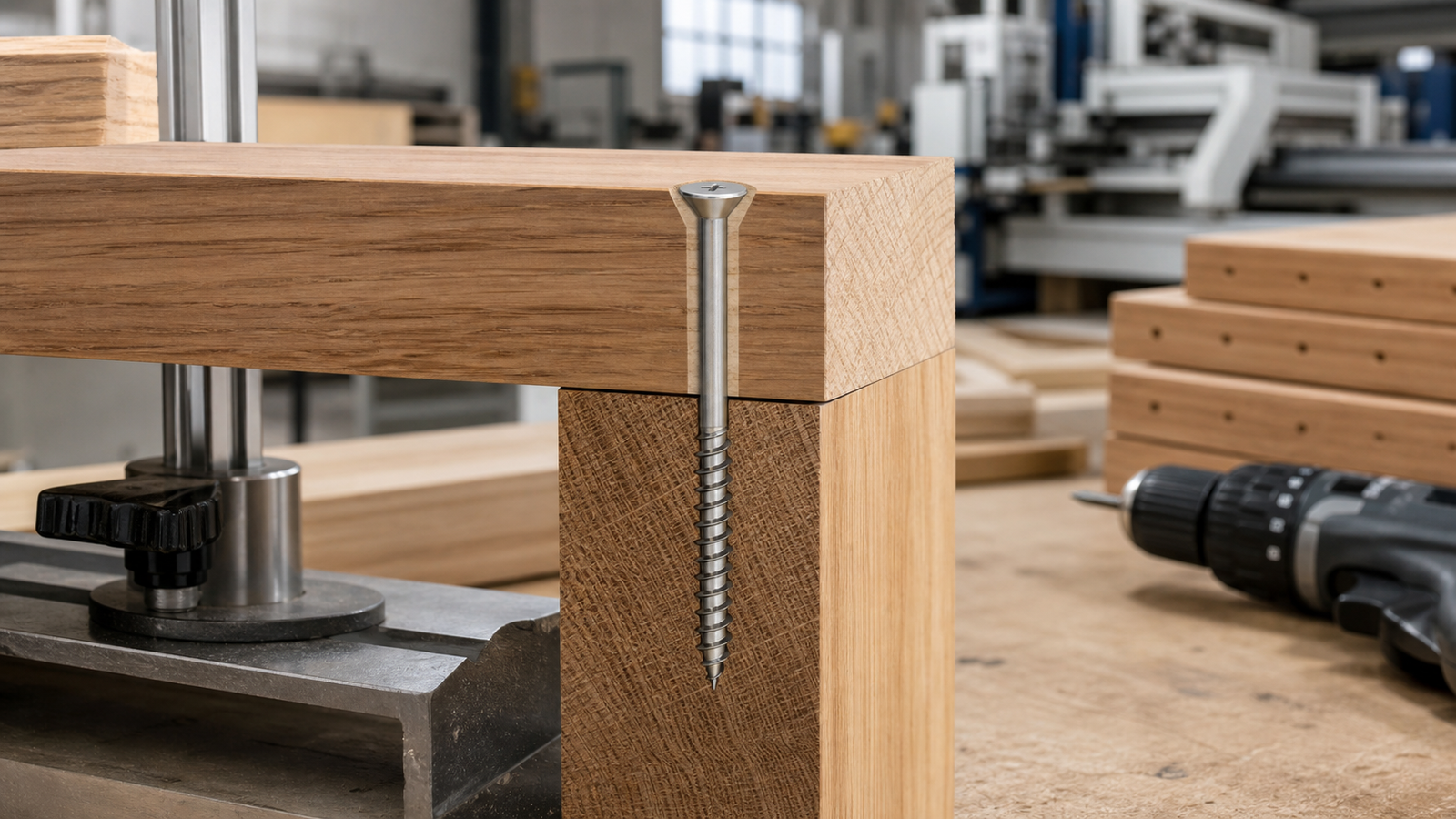
Direct fastening for non-structural timber components and general wood assemblies.
Brackets, fittings, hinges and hardware on solid wood and suitable components.
304 or 316 stainless options selected for applicable corrosion exposure.
Compatible assemblies with correct diameter, pilot hole and edge distance.
Specified head, drive, thread length, grade and packaging for equipment and furniture production.
Frequently Asked Questions
What is the difference between Wood Screws and Chipboard Screws?
Traditional Wood Screws are a broad family for solid wood and often use a partial thread with smooth shank. Chipboard Screws typically use a slim core and deep coarse thread optimized for particleboard and MDF.
Do Wood Screws need pilot holes?
Pilot holes are especially useful in hardwood, dense timber, larger diameters, stainless-steel installations and locations close to edges.
What sizes can VALTOR supply?
Common Wood Screws are approximately 3–8 mm in diameter and 10–150 mm long, with broader 2–10 mm coverage depending on standard and head.
What is the difference between DIN 7997 and DIN 97?
DIN 7997 specifies cross-recessed countersunk Wood Screws in 2–8 mm, while DIN 97 covers slotted countersunk flat-head Wood Screws in 1.6–10 mm.
Should I choose 304 or 316 stainless steel?
304 suits many general corrosion-resistant assemblies, while 316 is commonly selected for more demanding outdoor, humid or coastal conditions.
Related Products
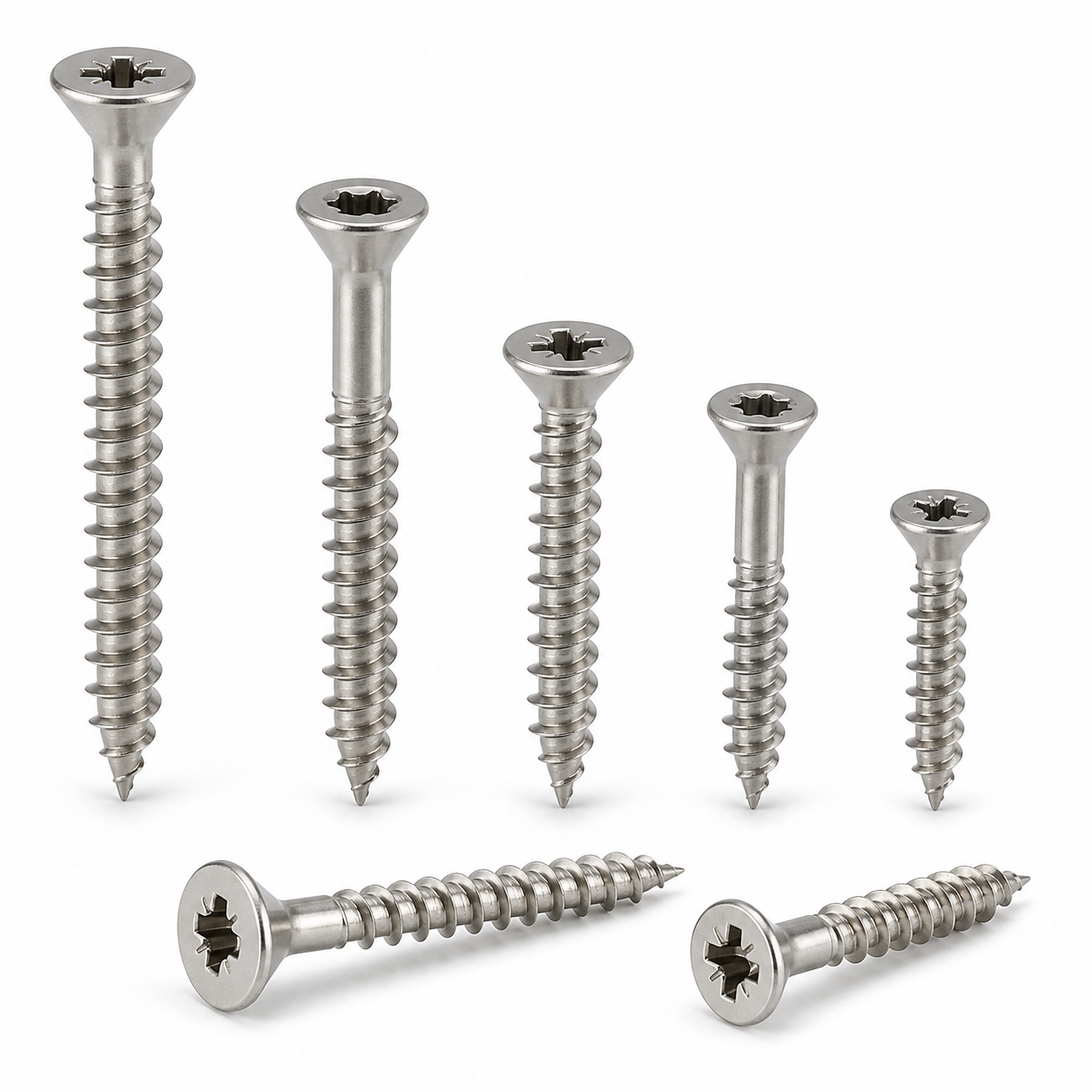
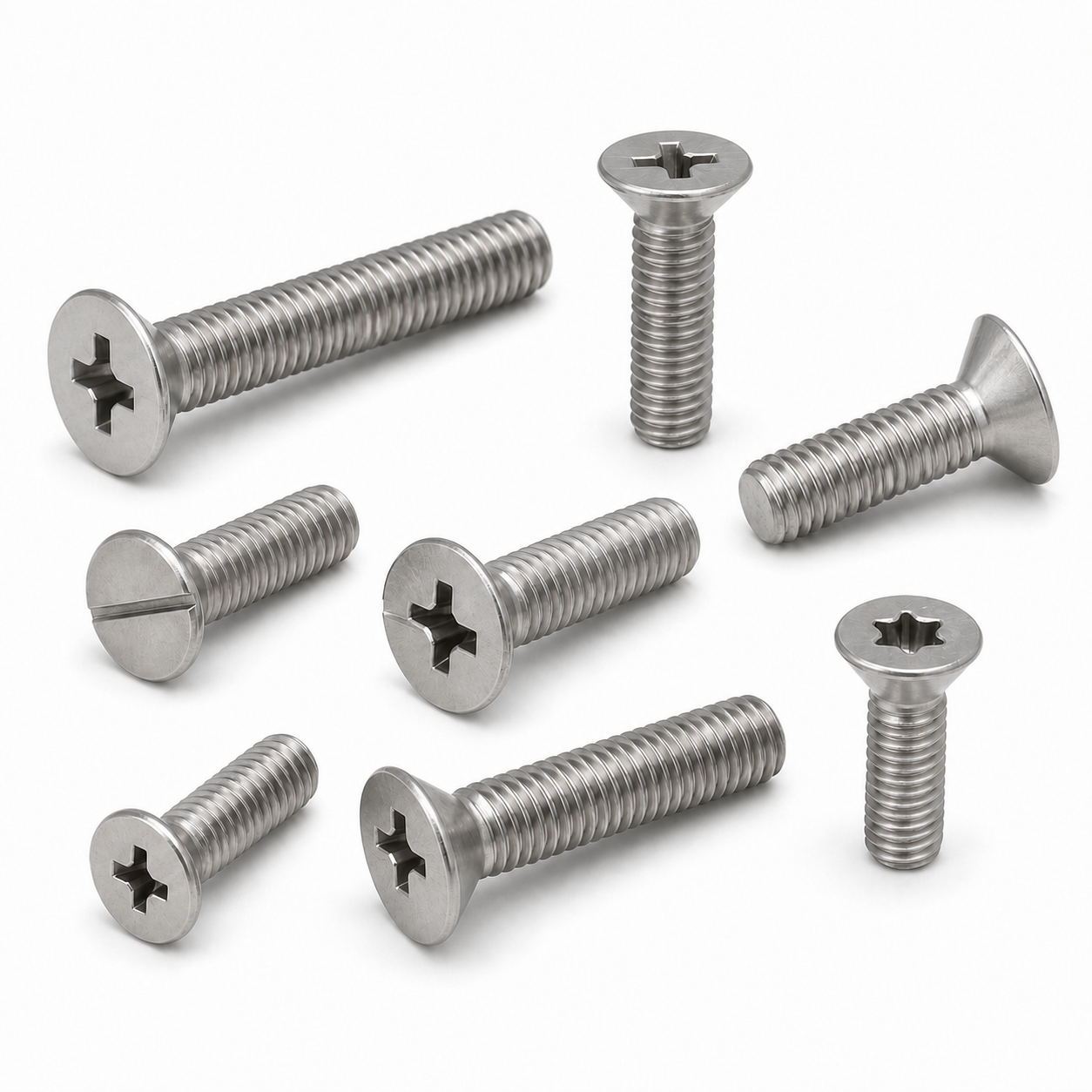
Share your head, drive, size, thread length, material, wood component and quantity for a customized quotation.