
2205 Duplex vs 2507 Super Duplex Stainless Steel Fasteners: Material Selection Guide
2205 Duplex and 2507 Super Duplex stainless steels are commonly considered when conventional austenitic grades such as 304 and 316 may not provide the required combination of corrosion resistance and mechanical strength. Both materials combine austenitic and ferritic stainless structures and can offer improved resistance to chloride-related corrosion and stress corrosion cracking in suitable service conditions. They are not interchangeable by default, and 2507 should not be treated as an automatic upgrade for every project. The correct choice depends on the actual chloride level, temperature, chemical concentration, mechanical load, fabrication route, service life and governing project specification. Buyers should therefore compare material requirements together with the fastener standard, dimensions, property requirements, inspection plan and required documentation before approving either grade for marine, offshore, chemical or industrial use.
Overview
Duplex stainless steels contain both austenitic and ferritic phases, providing a balance of corrosion resistance, strength and toughness. 2205 Duplex is widely used for demanding industrial applications where improved corrosion resistance over 316 stainless steel is required. 2507 Super Duplex has higher alloy content and is evaluated for more aggressive chloride, marine and chemical environments.
Material selection should be based on the actual operating environment, not only the material name. Project specifications, temperature, chemicals and required service life should always be reviewed.
Key Takeaways
- 2205 Duplex provides a balanced combination of corrosion resistance, strength and cost effectiveness.
- 2507 Super Duplex contains higher alloy content and is designed for more demanding corrosion environments.
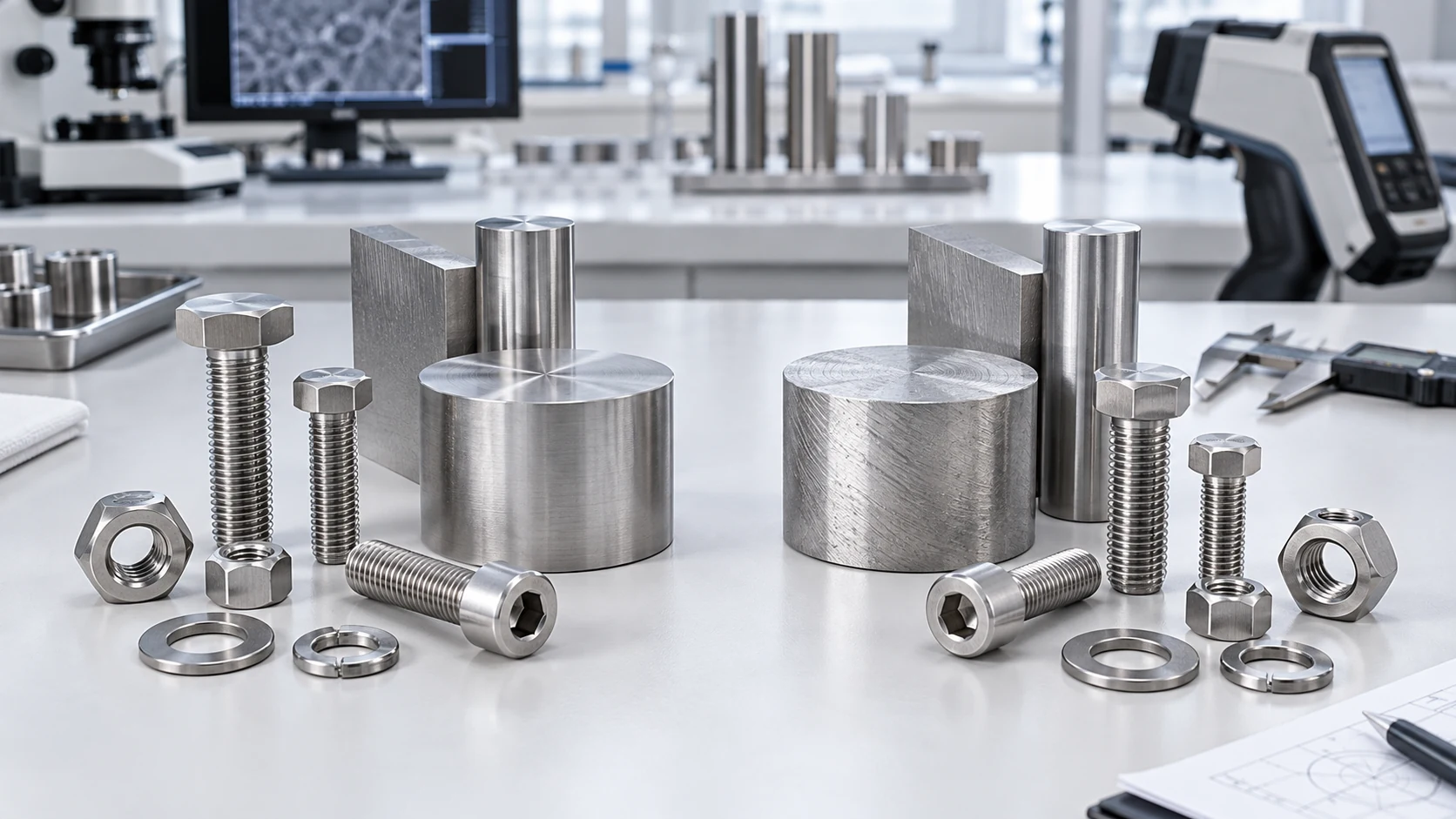
- Both materials require proper specification control because appearance alone cannot identify alloy grade.
- Marine, offshore and chemical applications should consider chloride exposure, temperature and mechanical requirements.
- Material certificates and inspection requirements should be confirmed during purchasing.
What Is Duplex Stainless Steel?
Duplex stainless steel combines austenitic and ferritic structures. This dual-phase structure can provide higher strength than common austenitic grades, improved resistance to chloride-related localized corrosion and better resistance to stress corrosion cracking than many conventional stainless steels under suitable conditions.
Duplex materials are commonly selected between standard stainless steels and higher-alloy materials, depending on the severity of the application. Their suitability still depends on product form, processing, heat history, temperature and the complete service environment.
2205 Duplex Stainless Steel Fasteners
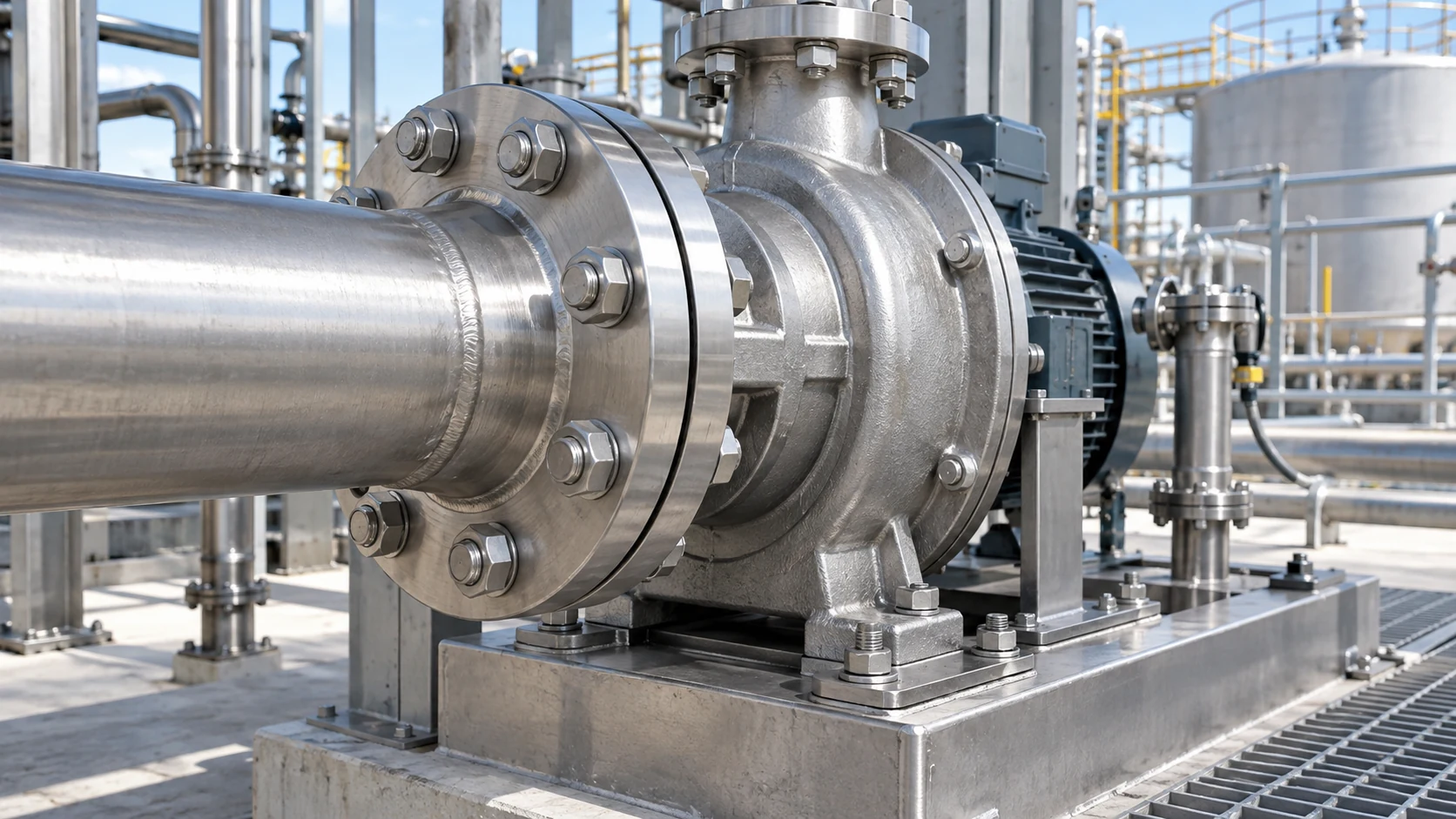
2205 is one of the most widely used duplex stainless steels. It is commonly evaluated for marine equipment, offshore structures, chemical processing, pressure equipment and industrial piping systems where greater strength and corrosion resistance than conventional austenitic stainless steel may be required.
Its practical advantage is a balanced combination of corrosion performance, mechanical strength, market availability and cost. For many demanding applications, 2205 can provide a cost-performance balance before a higher-alloy grade is justified. The final decision should still follow the applicable project specification and service assessment.
2507 Super Duplex Stainless Steel Fasteners
2507 Super Duplex contains higher chromium, molybdenum and nitrogen than 2205. Its higher alloy content generally provides a higher PREN value and stronger resistance to localized corrosion in severe chloride-bearing environments.
Typical evaluation areas include offshore platforms, seawater systems, chemical processing and desalination equipment. Selection still depends on the actual environment, temperature, mechanical requirements, manufacturing feasibility, availability and project cost. 2507 is not automatically the best choice where 2205 already satisfies the engineering requirement.
2205 vs 2507 Comparison Table
| Selection Factor | 2205 Duplex | 2507 Super Duplex |
|---|---|---|
| Material Type | Duplex stainless steel | Super duplex stainless steel |
| Corrosion Resistance | High resistance for many demanding industrial environments | Higher resistance for severe chloride and marine environments |
| Strength | Higher than many conventional stainless steels | Generally higher mechanical performance |
| Typical Applications | Chemical processing, marine equipment, industrial systems | Offshore, seawater, severe chemical environments |
| Cost Consideration | Usually more economical | Higher alloy content increases cost |
| Selection Approach | Suitable for many demanding applications | Selected when additional corrosion resistance is required |
Application Selection Guide
General Industrial Environments
Consider 2205 where the application requires improved corrosion resistance and strength beyond common austenitic grades, subject to the project specification.
Coastal and Marine Exposure
Evaluate 2205 or 2507 according to chloride exposure, wetting conditions, crevices, temperature and required service life.
Offshore Seawater Systems
These systems often require evaluation of 2507 or a higher-alloy material, but the final choice must follow the actual design and corrosion assessment.
Chemical Environments
Review chemical type, concentration, contaminants, temperature and cleaning conditions before selecting either alloy.
Choose the lowest alloy grade that safely satisfies the complete engineering requirement. Do not select 2507 only because its alloy content is higher, and do not assume 2205 is suitable for every marine environment.
When Higher Alloy Materials May Be Required
Some extreme corrosion, chemical or temperature conditions may require evaluation of 904L, 1.4529 / UNS N08926, C-276 / UNS N10276 or another project-specified corrosion-resistant alloy. These materials are selected for specific service conditions and may have different availability, manufacturing and cost implications.
See Stainless Steel & Special Alloy Materials for additional material-selection context.
Purchasing Checklist for Duplex Stainless Steel Fasteners
- Confirm the exact alloy grade.
- Specify the fastener standard.
- Confirm dimensions and thread requirements.
- Define mechanical requirements.
- Request material documentation when required.
- Confirm surface condition and finish.
- Confirm inspection requirements.
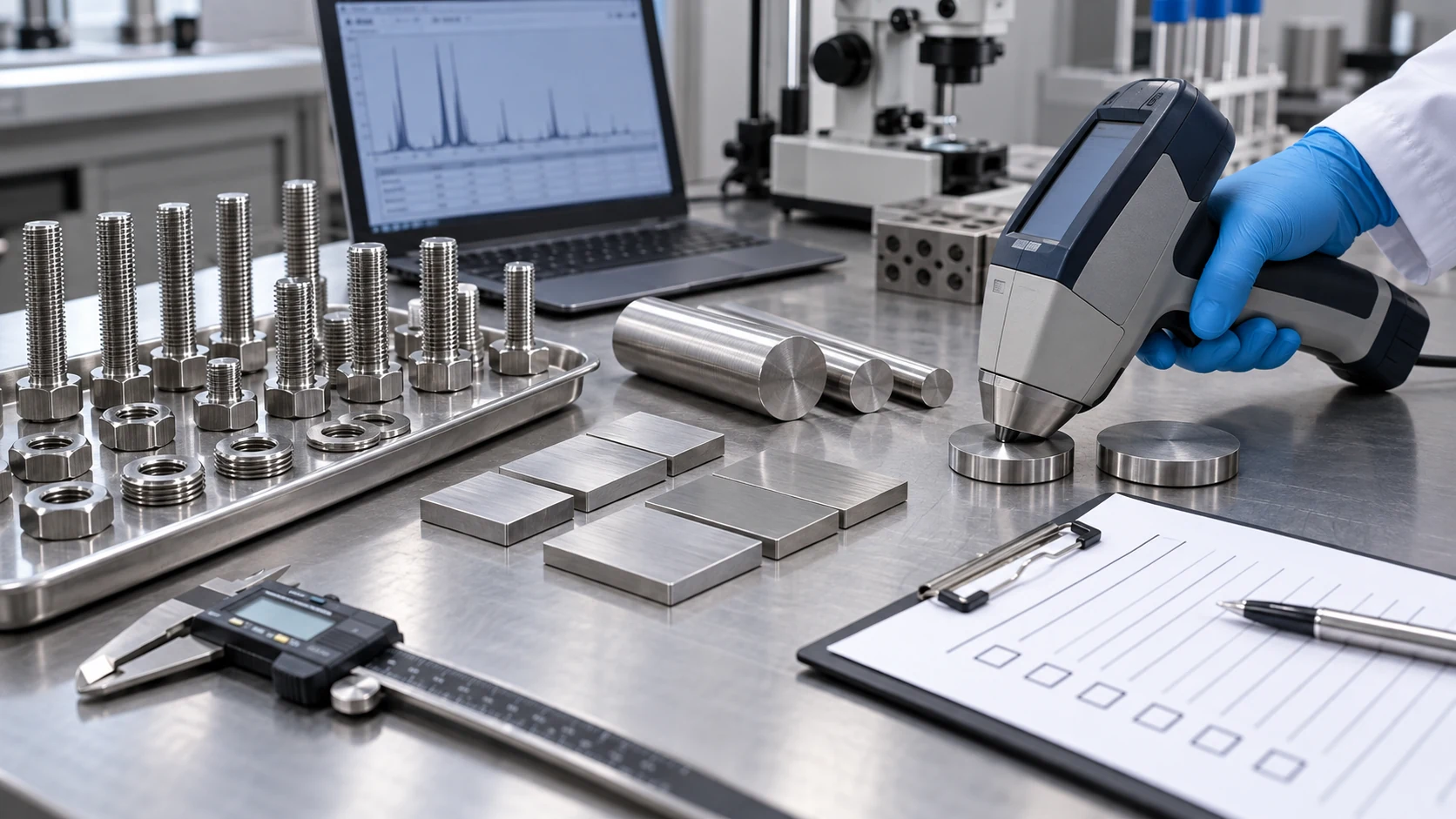
Where material identity is critical, state the required certificate, traceability and verification requirements in the RFQ rather than relying on visual appearance.
FAQ
Is 2507 always better than 2205?
No. 2507 provides higher corrosion resistance, but 2205 may provide the appropriate balance of performance and cost for many applications.
Can duplex stainless steel replace 316 stainless steel?
In many demanding environments duplex stainless steels may provide improved resistance and strength, but the correct choice depends on application requirements.
Are duplex stainless steel fasteners magnetic?
Duplex stainless steels generally show magnetic characteristics because of their ferritic phase content.
Can appearance identify 2205 or 2507?
No. Alloy grade should be confirmed through material documentation or testing when required.
What industries commonly use duplex fasteners?
Common applications include marine, offshore, chemical processing, energy and industrial equipment.
Need Product or Technical Support?
Share your fastener, material, standard or application requirements with VALTOR.