
A Bolt and Nut Can Fit Together and Still Be the Wrong Pair
When a nut turns smoothly onto a bolt, it is tempting to assume that the two components are correctly matched. That only proves that the threads can engage. A reliable bolted assembly also depends on mechanical compatibility, material selection, thread tolerance, surface condition, locking function and the service environment. A bolt with a higher strength requirement does not automatically form a suitable joint with any nut of the same thread size. Likewise, stainless steel components, galvanized fasteners and prevailing-torque nuts introduce additional considerations that cannot be confirmed by hand assembly alone. This article explains what experienced buyers and engineers review before treating a bolt and nut as a complete matched fastening system.
1. Thread Compatibility Is Only the First Check
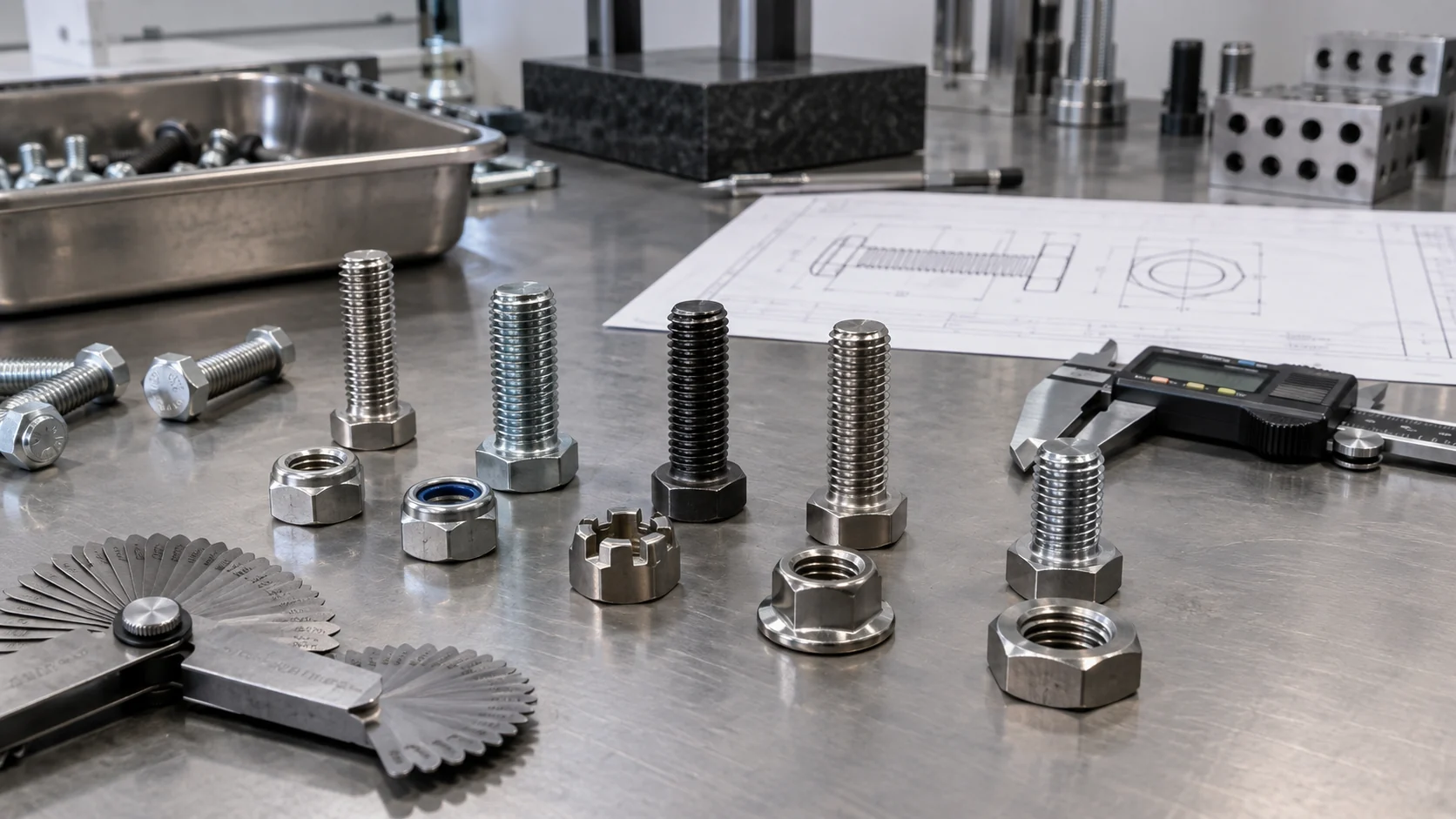
When a nut turns smoothly onto a bolt, it confirms that the two threads can engage. That is an essential first check, but it does not confirm that the components form a complete engineering match.
The basic thread review should include nominal diameter, thread pitch, thread form, internal and external thread compatibility, and the applicable tolerance or fit requirement. Two components described as M10 may still require confirmation of coarse or fine pitch, thread tolerance, coating condition and the actual mating requirement.
Hand assembly can reveal an obvious interference or pitch mismatch. It cannot establish the bolt and nut mechanical requirements, material system, locking function or suitability for the service environment.
Key Takeaways
- Thread engagement confirms geometry, not complete engineering compatibility.
- Bolt and nut mechanical requirements should be reviewed as a matched system.
- Material grade and mechanical property designation are different specification layers.
- Surface treatment can change final thread fit and assembly behavior.
- Lock nuts have functional requirements beyond basic thread compatibility.
- The correct pair should be evaluated together with the joint, environment and installation method.
2. Mechanical Compatibility Matters
A bolt and nut should be selected so that their mechanical requirements are appropriate for the intended joint. For applicable carbon and alloy steel metric fasteners, buyers commonly encounter bolt property classes such as 8.8, 10.9 and 12.9. The mating nut has its own applicable mechanical requirements.
A higher-strength bolt does not automatically mean that any nut with the same thread can be used. In a mismatched system, the nut or engaged threads may become the limiting part of the connection. The correct pairing depends on the applicable product standards, fastener type and joint design rather than a universal grade-matching shortcut.
Property class defines mechanical requirements. It should not be treated as a raw-material grade, and bolt and nut requirements should be checked according to the applicable product standard and joint design.
For related terminology and selection context, see Understanding Fastener Property Classes: 8.8, 10.9 and 12.9.
3. Stainless Steel Uses a Different Specification Logic
Stainless steel fasteners are often specified using alloy grades and stainless fastener property designations rather than the same terminology commonly used for applicable carbon-steel 8.8, 10.9 and 12.9 products. Common purchasing language may include 304, 316, A2, A4 and duplex grades for more demanding applications.
A2 is commonly associated with 304-family stainless fasteners, while A4 is commonly associated with 316-family stainless fasteners. These descriptions should not be treated as universally identical in every specification context. The applicable stainless fastener standard, material or property designation, thread condition, service environment and assembly method still need to be confirmed.
For a focused material comparison, see 304 vs 316 Stainless Steel Fasteners: Material Selection Guide and the Stainless Steel & Special Alloy Materials page.
4. Same Material Does Not Automatically Mean the Best Pair
It is common to pair stainless steel bolts with stainless steel nuts, but using the same general material family does not eliminate every assembly consideration. The actual grade, applicable property designation, thread condition, surface finish, installation speed, permitted lubrication and galling risk can all influence the mating system.
Austenitic stainless steel threaded components can experience galling under unsuitable assembly conditions. This does not mean every stainless assembly will gall, that mixed stainless grades always prevent galling, or that lubrication is a universal solution. The material pair and installation method should be reviewed for the actual application.
“Both parts are stainless steel” is not a complete mating specification. The actual grade, thread condition, surface condition and installation requirements still matter.
5. Mixed Materials Can Be Intentional — but Must Be Reviewed
Real assemblies may deliberately combine a stainless steel bolt with a carbon steel nut, a stainless fastener with an aluminum component, stainless hardware with galvanized steel, or a coated carbon steel bolt with a coated nut. These combinations are not automatically wrong.
The appropriate question is not simply, “Are the materials the same?” It is, “Are these materials appropriate together in this specific joint and environment?” Mechanical compatibility, galvanic interaction, environmental exposure, coating condition, mating surfaces and maintenance requirements can all affect the answer.
Material compatibility should be reviewed as part of the service system. For more context, see Why Stainless Steel Fasteners Corrode in Service — and What the Specification Often Misses.
6. Surface Treatment Can Change a Previously Good Thread Fit
A bolt and nut may fit correctly before coating but behave differently after surface treatment. Zinc plating, hot-dip galvanizing, zinc flake systems and other specified coatings can affect external thread buildup, internal thread condition, final fit, friction behavior and the required mating nut condition.
Hot-dip galvanizing is a practical example: a comparatively substantial zinc layer means thread fit and mating conditions must be considered as part of the completed coated assembly. The correct allowance and mating approach depend on the governing specification and product requirements; they should not be inferred from the uncoated pair alone.
When a bolt and nut will be supplied with a coating system, evaluate the final coated pair rather than relying only on the fit of the uncoated components.
See Surface Treatment & Finishing for related process information.
7. Nut Style Changes the Function of the Assembly
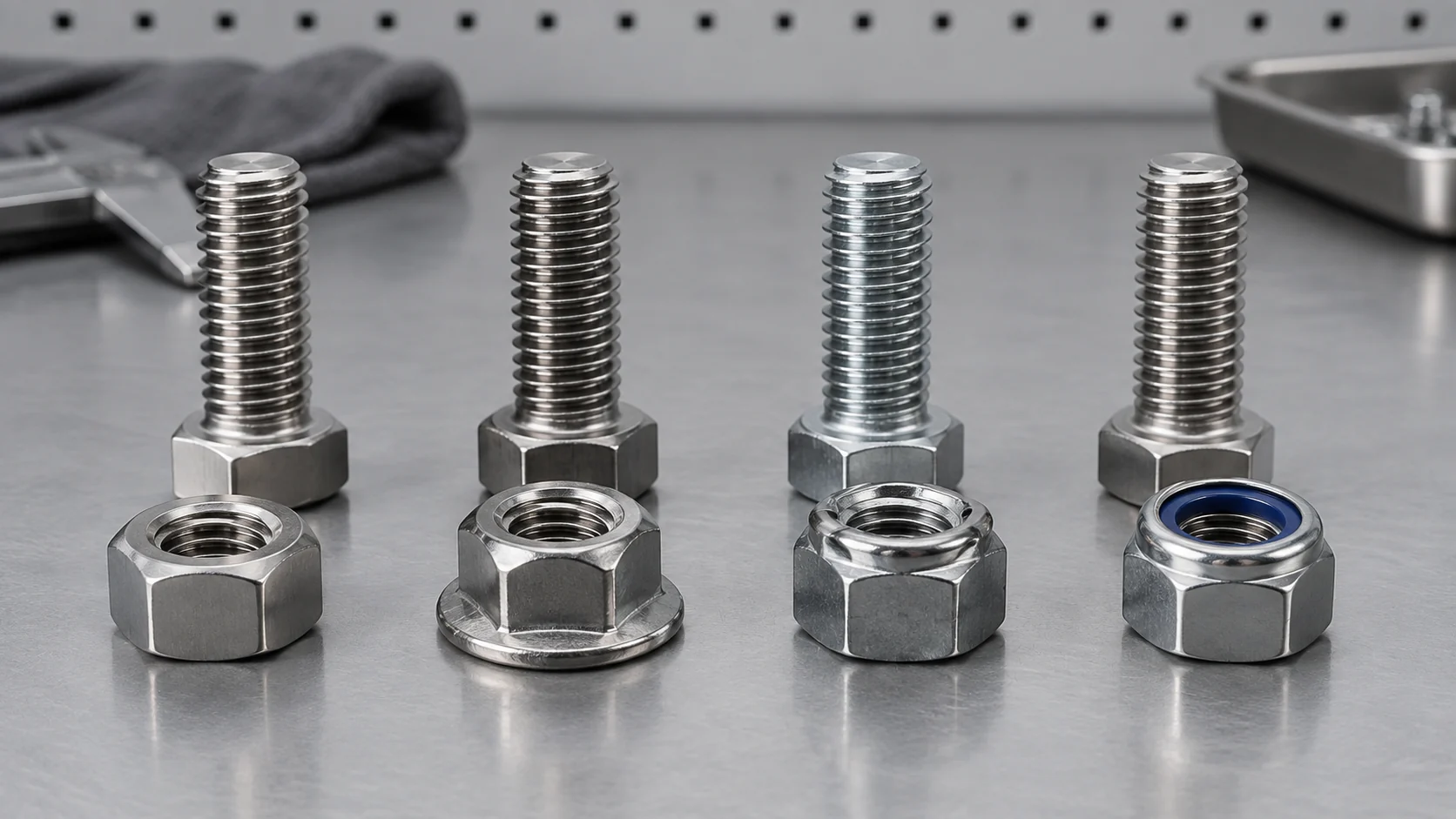
A standard hex nut, flange nut, jam or thin nut, nylon-insert lock nut and all-metal prevailing-torque nut are not interchangeable simply because they share a thread.
Standard Hex Nut
Provides general fastening when selected with the applicable matched bolt and joint requirements.
Flange Nut
Includes an integrated bearing flange and may change the bearing area, seating and friction conditions of the assembly.
Jam Nut / Thin Nut
Has different geometry and should not automatically replace a standard full-height nut where the original mechanical function is required.
Nylon-Insert Lock Nut
Adds a polymer locking element. Suitability depends on the actual product, specification, temperature, environment and installation requirement.
All-Metal Prevailing-Torque Nut
Uses metallic deformation or locking geometry to create prevailing resistance. Its behavior and suitability must be assessed according to the governing requirement and application.
Relevant product pages include Flange Nuts, Nylon Lock Nuts and All-Metal Lock Nuts.
8. Locking Resistance Is Not the Same as Clamp Load
Prevailing-torque nuts create rotational resistance before or during clamping. Part of the torque applied during installation is used to overcome the locking feature. That resistance should not be confused directly with useful clamp load in the joint.
If a locking nut replaces a free-running nut, the tightening strategy should be reviewed rather than assuming identical assembly behavior. The nut design, lubrication or coating condition, installation method and governing specification all matter. For a focused explanation, see What Torque Specifications Often Miss in Bolted Joints.
9. Bearing Surface and Washer Choice Also Affect the Pair
The bolt and nut do not operate alone. The complete system may also contain plain washers, spring or locking washers, wedge-lock washers, flange bearing surfaces, coated plates or softer mating materials.
These elements can affect load distribution, seating, friction, available thread engagement and installation height. Changing the nut style or washer arrangement may therefore alter the complete joint even when the bolt and thread specifications remain unchanged.
10. Thread Engagement Is Part of the System
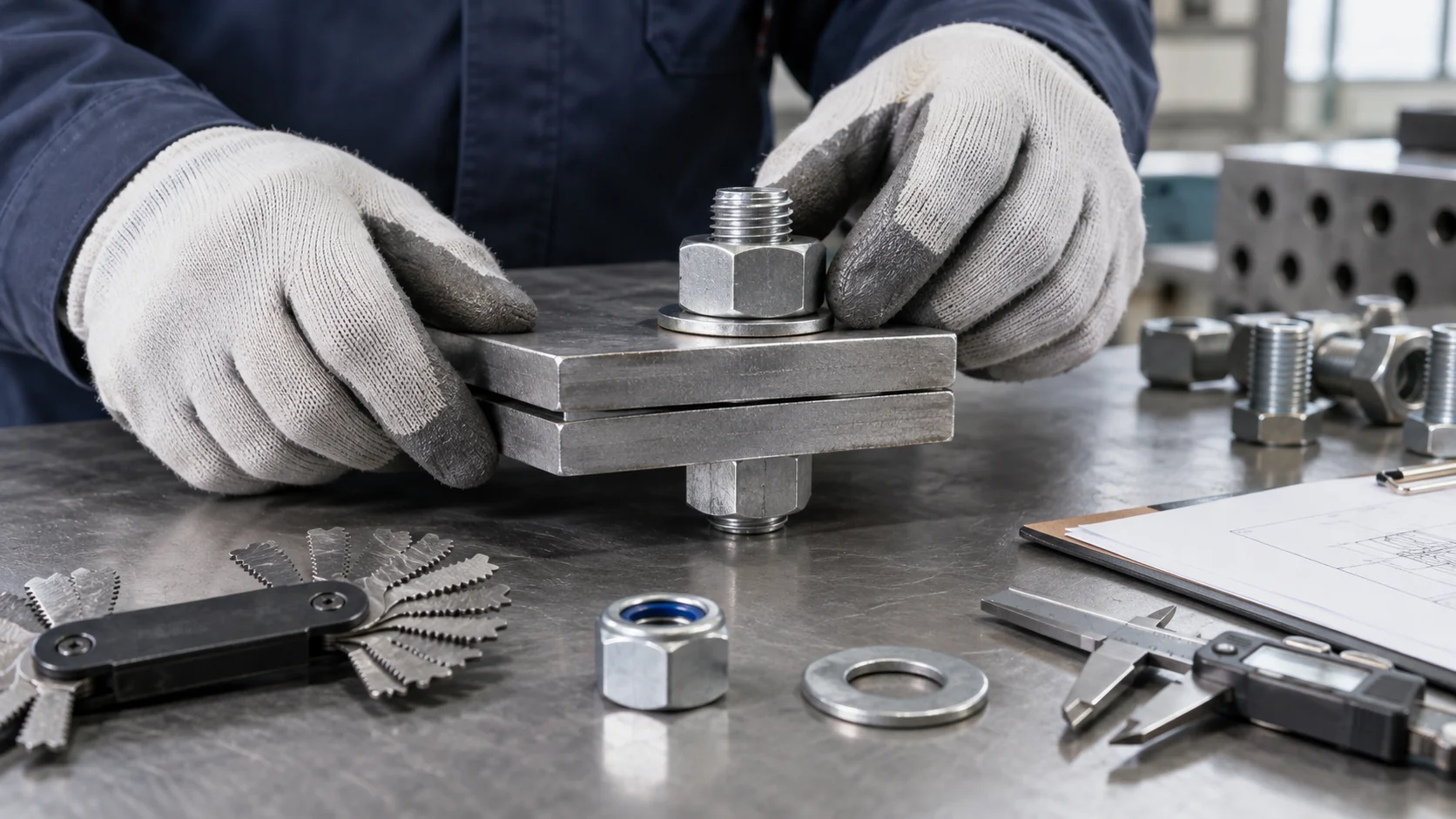
A nut can thread onto a bolt and still have an unsuitable engagement condition. The review may need to include available thread length, nut position, incomplete threads near the shank, bolt length, washer stack, joint thickness and any specified protrusion requirement.
There is no universal number of engaged threads that suits every connection. The required engagement depends on fastener type, material, applicable standard, joint design and engineering requirement.
Selecting a longer bolt is not always the correct fix. Thread length, unthreaded shank position, washer stack and joint geometry should be reviewed together.
11. A Practical Bolt-and-Nut Matching Checklist
What to Confirm Before Treating a Bolt and Nut as a Matched Pair
| Check | Why It Matters |
|---|---|
| Thread Diameter | Confirms nominal mating size |
| Thread Pitch | Prevents coarse / fine thread mismatch |
| Thread Tolerance | Affects final fit and assembly |
| Bolt Mechanical Requirement | Defines required fastener performance |
| Nut Mechanical Requirement | Must be suitable for the intended matched system |
| Material | Affects strength, corrosion and assembly behavior |
| Surface Finish | Can change thread fit and friction |
| Nut Style | Defines bearing and locking function |
| Locking Feature | Changes installation behavior |
| Washer / Bearing Surface | Influences seating and joint behavior |
| Thread Engagement | Must suit the actual joint design |
| Service Environment | Affects material and corrosion compatibility |
They Fit — What Else Should You Check?
| What You See | What Still Needs Confirmation |
|---|---|
| Same M10 thread | Pitch and thread tolerance |
| Nut turns freely | Mechanical compatibility |
| Both are stainless | Grade, property designation and galling conditions |
| Both are coated | Final coated thread fit |
| Lock nut fits the bolt | Locking function and installation requirements |
| Correct nominal size | Thread engagement and joint geometry |
Thread compatibility tells you whether the parts can assemble. Engineering compatibility tells you whether they should be assembled together.
FAQ
If a nut screws onto a bolt, does that mean they are correctly matched?
No. Successful thread engagement confirms basic geometry, but mechanical requirements, material, finish, nut function and service conditions must also be appropriate for the assembly.
Can a high-strength bolt use any nut with the same thread size?
Not automatically. The nut must have suitable mechanical requirements for the intended bolt and joint according to the applicable specification.
Should stainless steel bolts always use stainless steel nuts?
Not in every application. Material combinations should be selected according to mechanical requirements, corrosion environment, galling considerations and the complete joint design.
Why can a bolt and nut stop fitting after coating?
Surface treatment adds material to threaded surfaces and can change final fit. Coating thickness, thread allowance and mating conditions should therefore be reviewed as a complete system.
Can I replace a standard hex nut with a lock nut?
Only after confirming that the locking function, nut geometry, installation behavior and applicable specification are suitable for the joint.
Are A2 and A4 the same type of designation as 8.8 and 10.9?
No. A2 and A4 are commonly used stainless fastener material/property designations, while 8.8 and 10.9 belong to a different mechanical property classification system used for applicable carbon and alloy steel fasteners.
Need to Confirm a Bolt and Nut Combination?
Send VALTOR the bolt, nut, material, finish and application requirements for technical review.