
When a Fastener Sample Passes but Mass Production Still Goes Wrong
Sample approval is an important milestone in a fastener or custom hardware project, but it is not the end of technical validation. A sample can confirm geometry, fit, appearance or basic function. It does not automatically confirm that the same result can be maintained across hundreds or thousands of parts. Production method, tooling, material condition, process capability, inspection frequency, surface treatment and packaging can all change when a project moves from sample development to repeat production. This article explains what buyers and suppliers should clarify before treating an approved sample as the final definition of mass production.
1. A Good Sample Proves Possibility — Not Repeatability
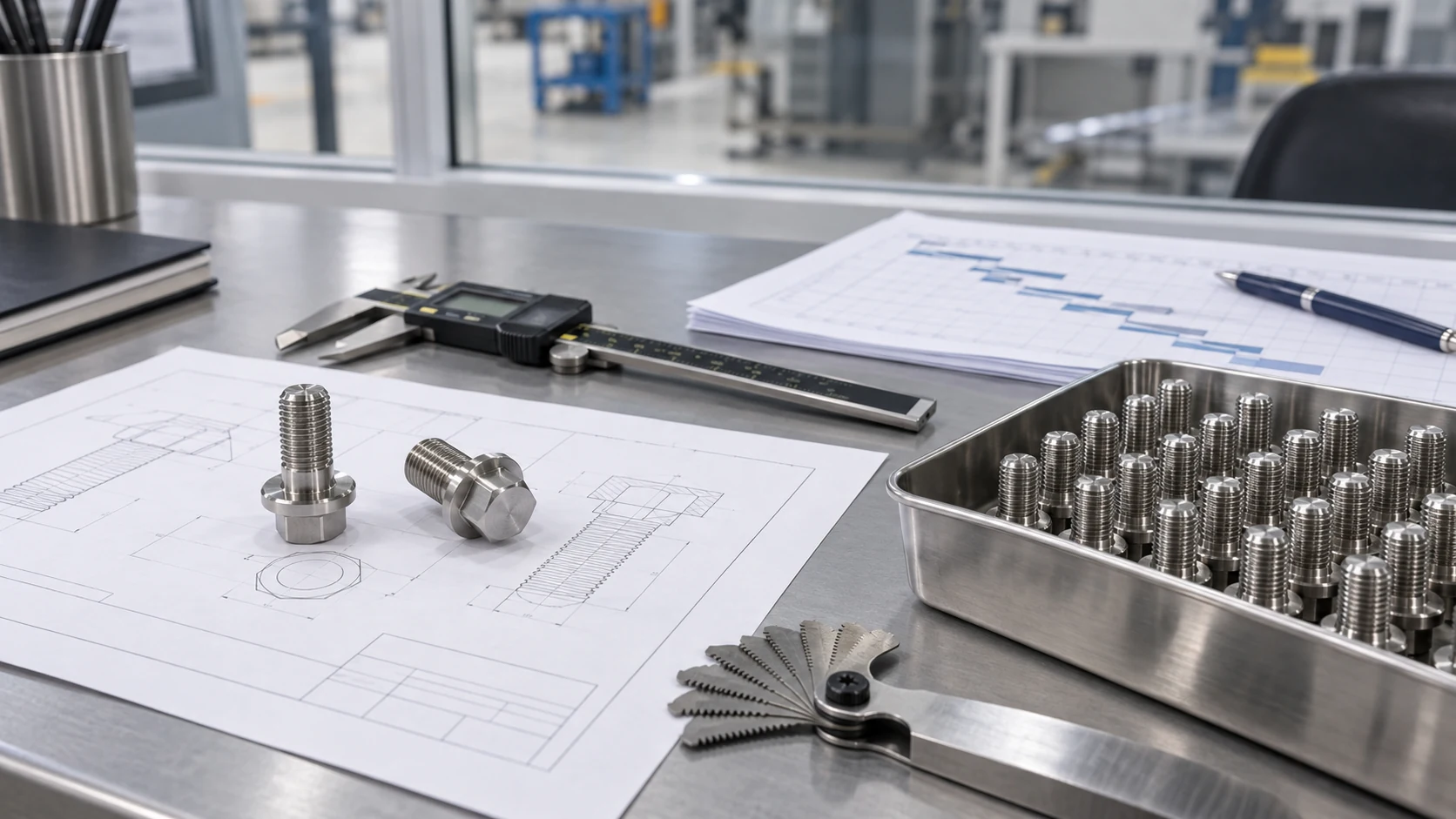
A successful sample proves that the required part can be produced. It can demonstrate geometry, fit, appearance or a basic functional result. It does not by itself prove process stability, dimensional consistency across a batch, repeatable material condition, stable surface appearance, repeatable assembly performance or repeatable packaging condition.
Sample approval and production process approval are related, but they are not the same thing. The first answers whether one result is acceptable. The second requires a plan for maintaining the agreed result over the intended production quantity.
Key Takeaways
- A passing sample confirms one result, not the stability of an entire production process.
- Prototype and mass-production manufacturing routes may be different.
- Critical dimensions and acceptance criteria should be defined before repeat production.
- Material, finish and inspection requirements should remain consistent between sample and production.
- Packaging, traceability and batch control become more important when quantity increases.
2. The Sample and Mass Production May Use Different Manufacturing Routes
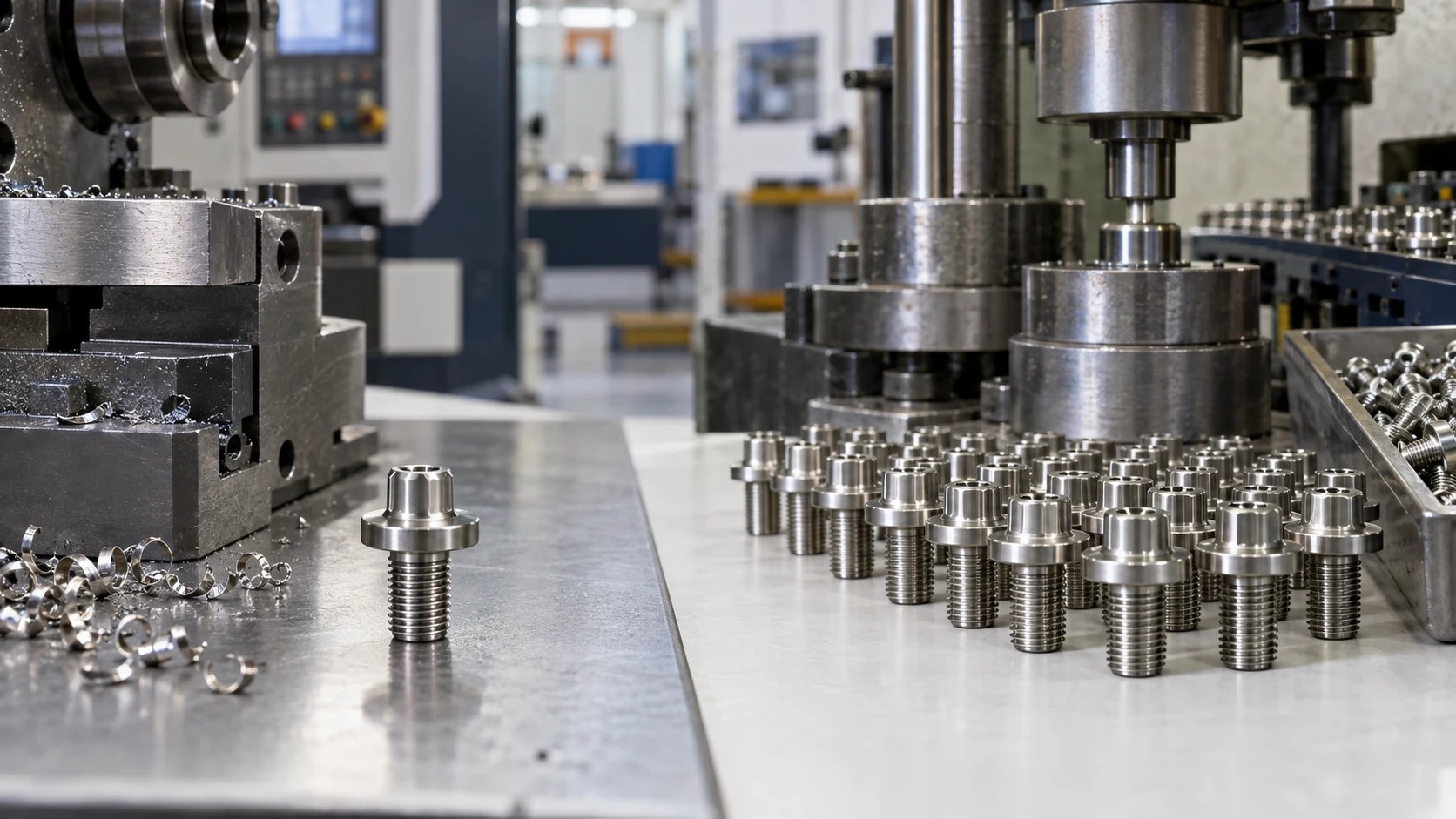
This distinction is especially important for custom fasteners and OEM hardware. A prototype may be produced by CNC machining, simple turning, manual secondary operations or low-volume tooling. Repeat production may instead use cold heading, cold forming, forging, stamping, thread rolling, dedicated tooling or a combination of processes.
Prototype methods usually prioritize speed, geometry verification and low quantity. Production methods prioritize repeatability, efficiency, tooling stability, material utilization and consistent output. Changing the manufacturing route is not automatically negative: different processes can produce a functionally equivalent part, but any process-related differences that affect the finished component should be reviewed before final approval.
A CNC-machined prototype may reproduce geometry very accurately, but a production part made by cold forming or forging can show different radii, surface texture, grain flow or tooling marks while still meeting the intended specification.
3. What Exactly Was Approved in the Sample?
The phrase “Sample Approved” can be ambiguous unless both sides understand what was actually approved. The approval may cover overall geometry, fit with mating components, critical dimensions, material, surface finish, appearance, functional performance, packaging, markings or documentation.
A customer may visually approve a sample while the supplier assumes dimensional approval. In another project, the sample may confirm geometry only, while final material, heat treatment, coating and packaging will differ during production. The approval record should therefore state what the submitted sample represents and which requirements remain to be finalized.
Sample approval should reference the drawing or specification that defines what the sample represents. Visual approval alone is rarely enough for a custom production part.
4. Critical Dimensions Need Different Attention
Not every dimension carries the same production risk. Some dimensions mainly affect appearance, while others directly control assembly, fit, thread engagement, bearing surface, installation clearance, functional movement or compatibility with mating components.
For a custom fastener or hardware component, critical characteristics may include thread diameter and pitch, shoulder diameter, shoulder length, under-head length, head height, drive depth, hole diameter, concentricity where relevant and mating-interface dimensions. Acceptable tolerances depend on the controlling drawing, product function, manufacturing process and any applicable standard; arbitrary tolerances should not be assumed.
Sample Approval vs Production Control
| Characteristic | Sample Stage | Mass Production Stage |
|---|---|---|
| Overall Geometry | Sample confirms design feasibility | Production requires repeatable tooling/process control |
| Critical Dimensions | Measured on individual sample | Require defined inspection method and frequency |
| Thread Fit | Can be checked on sample | Requires repeatable thread control across batches |
| Surface Finish | Sample shows target appearance | Production needs defined acceptance range |
| Material | Sample material should be confirmed | Production requires consistent grade and traceability where specified |
| Packaging | Usually limited at sample stage | Must protect full production quantity during storage and transport |
5. Appearance Can Change Without the Product Being Wrong
A prototype and a mass-produced component can show small visual differences because of the manufacturing route. Forming marks, tooling marks, radius shape, surface texture, color variation after finishing, minor polishing differences and forging or stamping flow marks may vary even when the product meets the agreed functional requirements.
This does not excuse actual defects. Acceptable process-related variation must be distinguished from cracks, incorrect geometry, burrs that affect function, damaged threads, unacceptable coating defects or dimensions outside specification. When appearance matters, the cosmetic acceptance criteria should be defined before production rather than judged only after a full batch is complete.
6. Material and Surface Treatment Must Stay Under Control
The sample stage sometimes uses the easiest available route to confirm geometry. A prototype may use available 304 material, be supplied uncoated, receive temporary polishing or show a machined surface instead of the final formed surface. The production requirement may instead call for 316, 2205, alloy steel, passivation, zinc plating, zinc flake coating or another project-specified finish.
The final production specification should separately confirm material grade, material condition where relevant, surface finish, coating system and documentation requirement. Buyers can review the existing Stainless Steel & Special Alloy Materials, Carbon Steel & Alloy Steel Materials and Surface Treatment & Finishing pages for related selection guidance.
7. One Good Part Does Not Define Process Capability
Inspection of one prototype answers, “Did this part meet the requirement?” Mass-production quality control must also answer, “Can the process continue producing parts within the agreed requirements?”
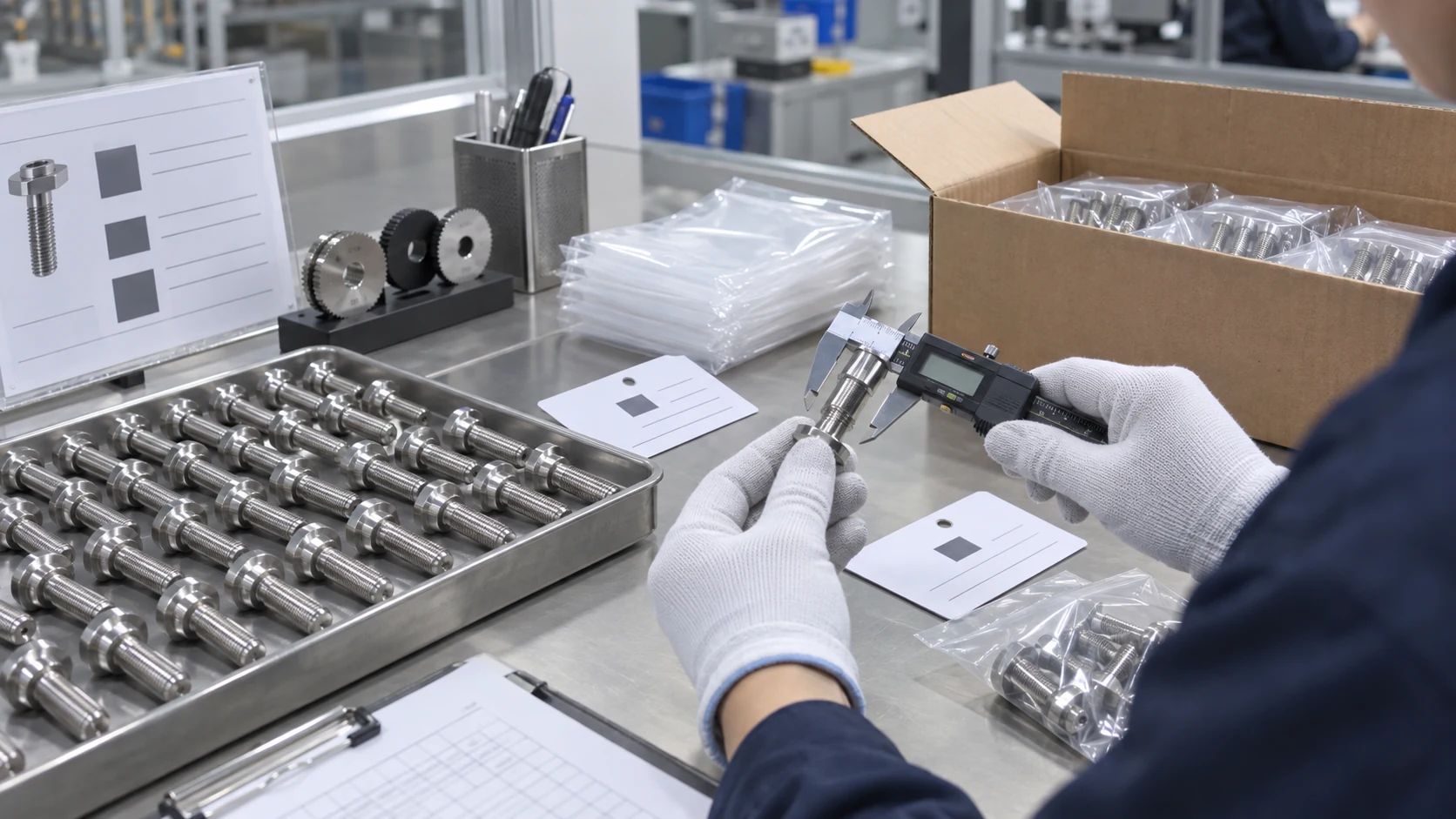
First-piece inspection confirms the initial setup. In-process checks help identify change during a run, while final inspection reviews the completed lot against the agreed criteria. Thread gauges, dimensional measurement, visual checks and batch identification should be applied according to product risk and the defined inspection plan.
The inspection plan should focus more attention on characteristics that affect fit, function and assembly rather than treating every dimension as equally critical.
8. Sample Quantity Is Too Small to Reveal Every Production Risk
A small sample quantity may not reveal tooling wear, material-batch variation, process drift, coating variation, handling damage, mixed parts or packaging damage. This does not mean every production lot will experience these issues. It means larger quantities introduce control points that do not exist when only a few samples are produced.
Repeatability should therefore be managed through the production and inspection process rather than assumed from prototype success.
9. Packaging Changes When Quantity Increases
One or two samples can be individually wrapped, hand carried and carefully protected. Mass production may involve inner bags, boxes, cartons, pallets, bulk packaging, export handling and container transport. These changes can introduce concerns such as thread damage, surface scratching, mixed sizes, mixed batches, moisture exposure, damaged coatings or incorrect labels.
Packaging should be treated as part of delivery quality, especially for finished stainless parts, coated fasteners, precision components and OEM parts. The required protection and identification should be agreed before finished production is waiting to ship.
10. Traceability Becomes More Important in Repeat Production
With samples, identifying the material and production history is relatively simple. Production batches may require batch identification, material documentation, inspection records, production-lot separation or other traceability information. These requirements should be agreed before production; not every order automatically includes the same documentation or traceability scope.
11. What Should Be Frozen Before Mass Production?
| Requirement | What Should Be Confirmed |
|---|---|
| Controlling Drawing | Approved revision and any agreed changes |
| Manufacturing Route | Any process-related features that affect the final product |
| Critical Dimensions | Dimensions affecting fit, function and assembly |
| Material | Final production material grade |
| Mechanical Requirement | Property class or project-specific requirement where applicable |
| Surface Condition | Final finish, coating or passivation requirement |
| Sample Approval Scope | What characteristics the approved sample represents |
| Inspection | Critical characteristics and required inspection method |
| Documentation | MTC, inspection records or other required documents |
| Packaging | Protection, identification and shipment requirements |
A good sample proves that the product can be made. A good production plan proves that it can be made repeatedly and consistently.
FAQ
Does an approved sample guarantee mass production quality?
No. Sample approval confirms specific characteristics of the submitted part. Repeat production also depends on manufacturing stability, inspection control, material consistency and agreed acceptance criteria.
Can mass production use a different process from the sample?
Yes, particularly for custom parts. A prototype may be machined for speed, while repeat production may use cold forming, forging, stamping or another scalable process. Any process-related differences that affect the finished product should be reviewed before production.
Should every dimension on a custom part be inspected equally?
Not necessarily. Critical dimensions that affect fit, function and assembly usually require greater control. Inspection requirements should follow the drawing, application and agreed acceptance criteria.
Can the final production material differ from the sample material?
Only when this has been clearly agreed. A prototype may occasionally use an alternative material for geometry validation, but the final production material must be confirmed before the order is released.
Should packaging be approved during the sample stage?
For projects where surface protection, batch control or special packing is important, packaging requirements should be discussed before mass production rather than after finished parts are ready.
Moving From Sample to Production?
Send VALTOR your approved drawing, sample requirements, material, quantity and inspection expectations for production review.