
Stainless Steel Fastener Galling: Why Threads Seize and How to Prevent It
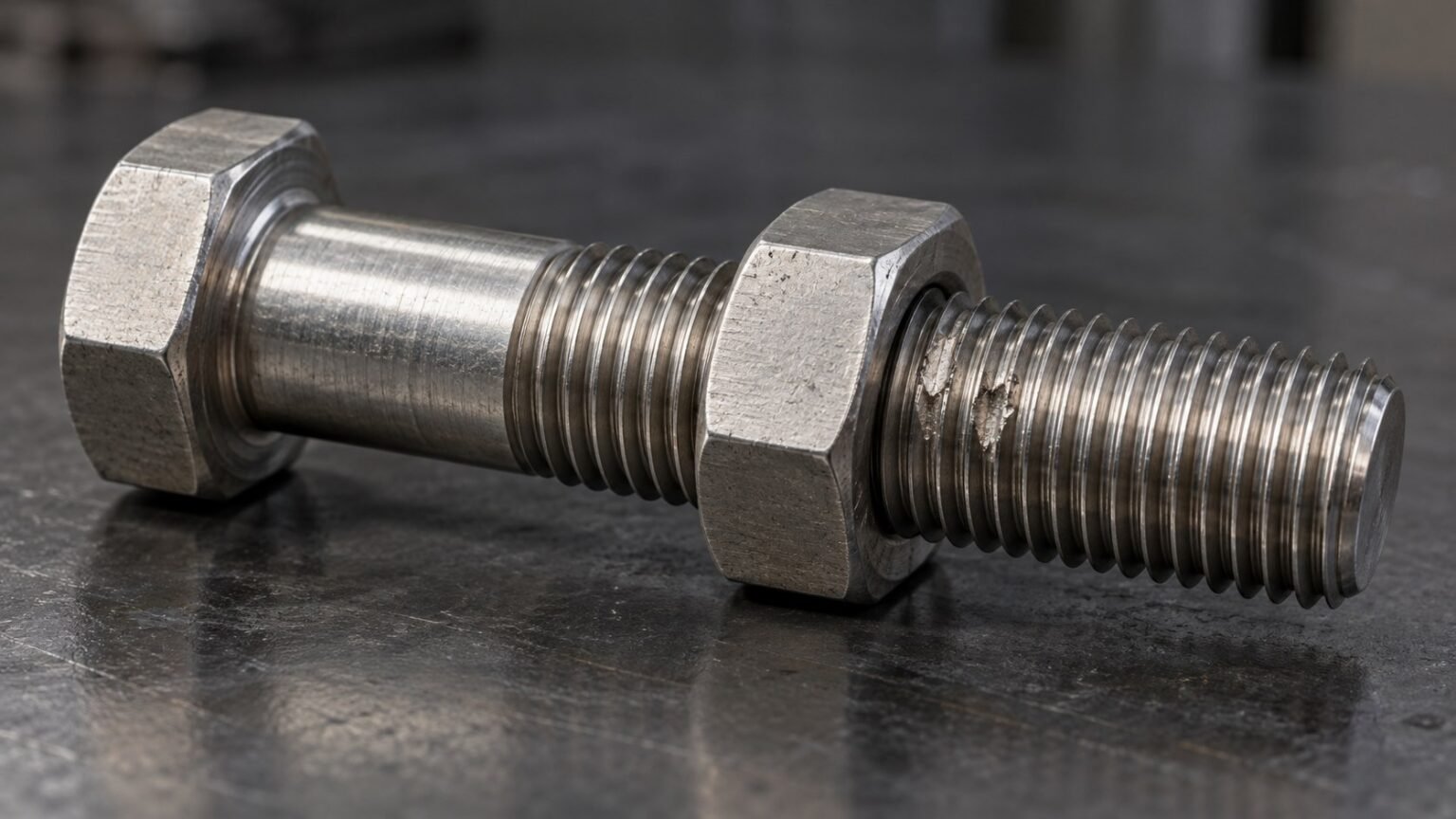
Stainless steel bolts and nuts can sometimes suddenly become difficult to turn during installation and then lock together completely. This condition is known as thread galling, and it is also commonly described as thread seizing or cold welding.
Galling is mainly caused by excessive friction, contact pressure and adhesive wear between mating thread surfaces. Austenitic stainless steels such as 304 and 316 can both be affected.
Proper lubrication, controlled installation speed, clean threads and appropriate tightening procedures can significantly reduce the risk.
Technical Summary
Stainless steel fastener galling is an adhesive wear process that can cause mating bolt and nut threads to seize during tightening. 304 and 316 stainless steel can both gall. The main prevention methods are suitable lubrication, controlled installation speed, clean and undamaged threads, and tightening procedures matched to the actual friction condition.
What Is Thread Galling?
Thread galling is a form of adhesive wear that occurs between two sliding metal surfaces under pressure.
When a stainless steel bolt is tightened into a nut or threaded hole, the mating thread surfaces slide against one another while carrying increasing contact pressure.
Stainless steel naturally develops a thin passive oxide layer that contributes to its corrosion resistance. During tightening, local contact between microscopic high points on the threads can damage this surface layer. If friction becomes sufficiently high, exposed metal surfaces may begin to adhere.
The process can quickly become self-accelerating:
- Thread surfaces rub under pressure.
- Local surface films are damaged.
- Friction increases.
- Additional heat is generated.
- Small areas of metal transfer between the mating threads.
- The threads become increasingly difficult to rotate.
- The bolt and nut may finally seize completely.
Once severe galling has occurred, simply applying more torque normally makes the situation worse. Threads may strip, the fastener may fracture, or the assembly may have to be cut apart.
Why Are Stainless Steel Fasteners More Prone to Galling?
Austenitic stainless steels combine good corrosion resistance with relatively ductile surfaces and a tendency toward adhesive wear under certain sliding conditions.
This is why commonly used stainless fasteners such as the following can be more sensitive to galling than many conventional plated carbon-steel fasteners:
- A2 / 304 stainless steel bolts and nuts.
- A4 / 316 stainless steel bolts and nuts.
- Stainless steel threaded rods.
- Stainless steel prevailing-torque locknuts.
However, stainless steel does not automatically gall every time it is tightened. The risk increases when several unfavorable conditions occur together.
| Condition | Why It Increases Galling Risk |
|---|---|
| High installation speed | Generates more frictional heat. |
| Dry stainless-to-stainless threads | Higher friction and direct surface interaction. |
| Prevailing-torque locknuts | Continuous thread resistance increases friction. |
| Long thread engagement | More sliding contact occurs during tightening. |
| Fine threads | Increased thread contact and tighter clearances may increase sensitivity. |
| Damaged or dirty threads | Produces localized interference and higher contact stress. |
| Excessive tightening | Raises thread contact pressure. |
| Repeated installation/removal | Existing surface damage can increase future galling risk. |
Does 316 Stainless Steel Gall Less Than 304?
Not necessarily. Both 304 and 316 are austenitic stainless steels, and both can experience thread galling.
316 provides better corrosion resistance than 304 in many chloride-containing or marine environments because of its alloy composition, but choosing 316 instead of 304 should not be considered a complete galling-prevention strategy.
A specification such as A2-70 or A4-70 primarily describes stainless steel group and mechanical property requirements. It should not be interpreted as a guarantee that the fastener will not seize during assembly.
If galling is a serious concern, the complete fastening system should be evaluated, including:
- Bolt and nut material combination.
- Thread condition and tolerance.
- Lubrication or coating.
- Tightening speed.
- Required preload.
- Installation tool.
- Operating environment.
For some demanding applications, using mating components with different hardness or material characteristics can help reduce adhesive wear.
Duplex stainless steel or other suitable material combinations may also be considered, but corrosion resistance, mechanical requirements and galvanic compatibility must still be evaluated. Duplex stainless steel is not a universal galling-prevention solution.
1. Use a Suitable Thread Lubricant or Anti-Seize Compound
Lubrication is one of the most effective methods for reducing stainless steel galling.
A suitable lubricant creates a separating film between the mating thread surfaces and reduces the coefficient of friction during installation.
Depending on the application, possible solutions may include:
- Anti-seize compounds.
- Molybdenum-disulfide-based lubricants.
- PTFE-based lubricating systems.
- Manufacturer-specified thread lubricants.
- Engineered low-friction surface coatings.
A lubricated fastener can generate substantially different preload from a dry fastener at the same tightening torque. Therefore, a torque value developed for dry threads should not automatically be applied to a lubricated assembly.
For structural, pressure-containing, machinery or other preload-sensitive joints, tightening parameters should be based on the actual fastener, lubricant, coating and joint condition.
2. Reduce Installation Speed
High-speed tightening is one of the common contributors to stainless steel thread seizure.
Fast installation increases sliding speed between the threads and can generate heat rapidly. For stainless steel fasteners, a slow and continuous tightening motion is generally preferable to extremely high-speed installation.
Impact tools can create unfavorable conditions because of repeated high-energy loading and rapid thread movement. Where galling risk is significant, installers should consider:
- Lower tool RPM.
- Smooth continuous tightening.
- Controlled torque tools.
- Avoiding unnecessary impact installation.
This is especially important for large-diameter stainless fasteners, long thread engagement and assemblies requiring substantial preload.
3. Keep Threads Clean and Undamaged
A bolt and nut may meet the correct dimensional and material specifications and still experience installation problems if the threads have been damaged during handling.
Common problems include:
- Thread dents.
- Burrs.
- Metal chips.
- Abrasive particles.
- Contamination.
- Damaged thread starts.
- Distorted nut threads.
These defects create localized interference between the mating surfaces and can sharply increase friction.
Before installation, critical stainless steel fasteners should therefore be inspected for obvious thread damage and contamination. Quality and inspection requirements should identify the checks relevant to the order.
Packaging also matters. For export and project supply, proper separation and protection during transportation can prevent thread damage before the fasteners ever reach the construction site or assembly line.
4. Avoid Forcing a Fastener That Begins to Bind
One of the earliest signs of galling is an unexpected increase in tightening resistance.
If a stainless steel bolt begins tightening normally but suddenly becomes much more difficult to turn before reaching the expected joint condition, continuing to apply more torque can turn minor surface damage into complete seizure.
The correct response depends on the application, but installers should generally avoid simply forcing the fastener through the resistance. The joint, thread condition, lubrication and mating component should be checked before continuing.
This is particularly important during automated assembly, where a machine may continue applying torque even after abnormal friction develops.
5. Be Careful With Stainless Steel Locknuts
Prevailing-torque locknuts create intentional resistance during installation.
This locking action is useful for resisting loosening, but it also means that friction exists throughout a larger portion of the tightening process. When both the bolt and locking nut are stainless steel, the additional friction can increase galling risk.
This does not mean stainless steel locknuts should never be used. Instead, the locking method, surface treatment, installation speed and lubrication requirements should be considered during fastener selection.
For applications repeatedly experiencing seized stainless locknuts, changing only the bolt grade may not solve the underlying problem.
6. Consider Thread Design and Engagement Length
Thread geometry can also influence galling behavior.
Coarse threads are often more tolerant of handling damage and contamination than fine threads, while fine threads with tighter clearances can be more sensitive. Actual clearance depends on the thread specification and tolerance, not pitch alone.
Long engagement lengths also create more sliding distance before the fastener reaches final preload.
This means an assembly involving a long run-down, fine thread, dry stainless surfaces and high-speed power installation combines several conditions that can increase galling risk. Changing one factor may help, but reliable prevention usually comes from controlling the fastening system as a whole.
What Should You Do If a Stainless Steel Bolt Has Already Seized?
Once severe galling has locked the threads together, reversing the nut is often difficult or impossible. Applying substantially more torque can result in:
- Stripped threads.
- Twisted bolts.
- Fractured fasteners.
- Damaged equipment or components.
Depending on the joint, removal may require cutting the bolt, splitting the nut or otherwise mechanically removing the fastener.
For this reason, prevention is much less costly than dealing with a fully seized assembly. If multiple fasteners from the same application repeatedly seize, investigate the installation process rather than simply replacing each failed bolt.
Check the lubricant, installation speed, thread condition, nut design, material pairing and tightening procedure.
Practical Galling-Prevention Checklist
Threads
- Are the male and female threads clean?
- Are there burrs or visible thread damage?
- Does the bolt enter the nut smoothly by hand?
Material
- Are the specified stainless steel grades suitable for the environment?
- Is stainless-to-stainless contact necessary?
- Would an alternative mating material or hardness combination be appropriate?
Lubrication
- Is an approved lubricant or anti-seize compound required?
- Has the torque specification been adjusted for the lubricated condition?
Installation
- Is the tightening speed controlled?
- Is an impact tool actually necessary?
- Is the specified preload or torque appropriate for the joint?
Locking Method
- Is a prevailing-torque nut being used?
- Does the locking system significantly increase installation friction?
Stainless Steel Galling: Frequently Asked Questions
Why do stainless steel bolts and nuts seize together?
Stainless steel threads can seize when high pressure and sliding friction cause surface damage and adhesive metal transfer between the mating threads. Continued tightening generates additional friction and heat until the threads lock together.
Are 304 stainless steel fasteners prone to galling?
Yes. 304 is an austenitic stainless steel and can experience thread galling, particularly during dry, high-speed or high-friction installation.
Can 316 stainless steel bolts also gall?
Yes. The improved corrosion resistance of 316 does not eliminate galling. Installation conditions remain important.
Does anti-seize prevent stainless steel galling?
A suitable anti-seize compound or lubricant can substantially reduce galling risk by lowering thread friction. However, lubrication also changes the torque-to-preload relationship, so tightening specifications may need to be adjusted.
Can an impact wrench cause stainless steel fasteners to seize?
High installation speed and impact tightening can increase friction and heat, making galling more likely. Controlled low-speed tightening is generally preferable when galling is a concern.
Are stainless steel locknuts more likely to gall?
Prevailing-torque locknuts can be more susceptible because their locking feature creates additional friction throughout installation.
Does galling mean the fastener material is defective?
Not necessarily. A bolt and nut can meet dimensional, material and mechanical requirements and still gall if the assembly conditions produce excessive friction and adhesive wear.
Can duplex stainless steel reduce galling?
Different hardness or material combinations, including certain duplex stainless steel pairings, can help in some applications. However, the complete joint must still be evaluated for corrosion resistance, mechanical performance and installation requirements.
Selecting Stainless Steel Fasteners for Galling-Sensitive Applications
When stainless steel fasteners will be used in equipment that requires high preload, repeated assembly, long thread engagement or demanding installation conditions, galling should be considered during the purchasing stage—not only after installation problems appear.
A supplier should be able to discuss more than the nominal bolt size. Useful information includes:
- Stainless steel grade.
- Mechanical property class.
- Thread standard and tolerance.
- Mating nut material.
- Surface condition.
- Coating or lubrication requirements.
- Application environment.
- Required tightening method.
VALTOR supplies stainless steel bolts, nuts, screws, washers and custom fasteners in common grades including 304 and 316, as well as selected special stainless and duplex materials for demanding applications.
For projects where thread galling is a concern, providing the application, installation method, required material and fastener specification allows the fastening solution to be evaluated more accurately before production.
Key Takeaway
Stainless steel thread galling is caused by friction, contact pressure and adhesive wear between mating surfaces during assembly. 304 and 316 stainless steel fasteners can both be affected.
The most effective prevention strategy is not simply changing from one common stainless grade to another. Instead, control the factors that create excessive friction: use suitable lubrication, install at controlled speed, keep threads clean and undamaged, avoid unnecessary high-friction locking conditions, and use torque values appropriate to the actual surface and lubrication condition.
Managing these factors during fastener specification and installation can greatly reduce seized threads, damaged bolts and costly assembly problems.
Need Help Selecting Stainless Steel Fasteners?
If your application involves high preload, repeated assembly, stainless-to-stainless threads or demanding corrosion conditions, share the fastener specification, material requirement and installation conditions with VALTOR. We can help evaluate suitable stainless steel grades, thread configurations and supply options for your project.