
Fastener Specification Risks: What Buyers Should Resolve Before Production
Many fastener supply problems become visible during production or final inspection, but the actual cause often exists much earlier. A drawing may conflict with a referenced standard. A material description may be incomplete. A coating may change thread fit, or a sample may be approved without defining how repeat production will be controlled. Once production has started, correcting these issues can require rework, replacement or a new production run. The purpose of this article is not to create a longer RFQ form. It is to identify the technical decisions that should be clear before a supplier releases an order to production. Resolving the controlling drawing, material, mechanical requirements, threads, finish, inspection plan and documentation at the right stage gives both buyer and manufacturer the same definition of the product and reduces the chance that reasonable but different interpretations reach the factory floor.
Overview
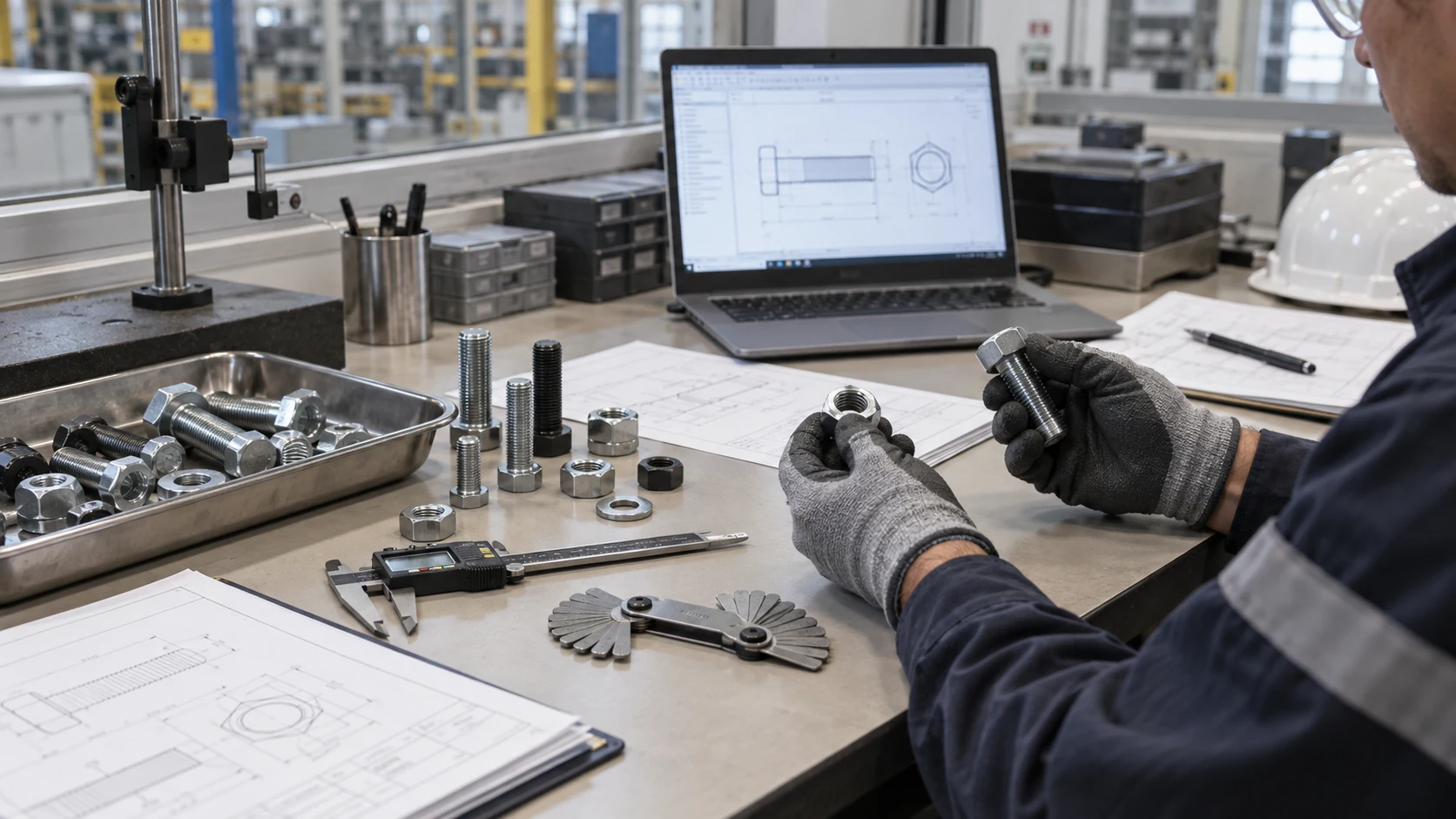
A technically complete fastener order is more than product, size and quantity. The supplier may also need to understand the governing drawing or standard, critical dimensions, material grade, mechanical requirements, thread details, surface condition, assembly requirements, inspection criteria and required documentation. The goal is not unnecessary paperwork. It is to remove ambiguity where different interpretations can produce different products.
If two technically reasonable suppliers can interpret the same inquiry differently, the specification is probably not complete enough yet.
Key Takeaways
- A standard number does not solve a conflict with a customer drawing.
- A product name such as "stainless bolt" or "anchor bolt" is not enough to define the final product.
- Material grade, strength requirement and surface treatment are separate decisions.
- Coating thickness and thread fit should be considered before production, not during final assembly.
- Special alloys should be reviewed for material form, dimensions and manufacturing feasibility before quotation is treated as final.
- Inspection and documentation requirements must be agreed before production if they affect manufacturing or verification.
1. When the Drawing and Standard Do Not Agree
A drawing may reference a DIN or ISO standard while showing head dimensions, thread length, chamfer, washer geometry, tolerance, overall length or special machining features that differ from that standard. The supplier should not silently decide which requirement has priority. The buyer should clarify whether the drawing overrides the standard, whether the standard controls only unspecified dimensions, or whether the product is intentionally modified from the standard.
"DIN 933, according to drawing" is still ambiguous if the drawing changes DIN 933 dimensions but does not identify which dimensions are intentional exceptions.
Where possible, mark drawing-controlled dimensions clearly and use the standard for the remaining unspecified characteristics.
2. Product Names Are Not Specifications
Names such as Hex Bolt, Stainless Screw, Anchor Bolt, Machine Screw and Flange Bolt describe product families. They do not define full or partial thread, coarse or fine pitch, head and drive style, flange geometry, washer arrangement, tolerance, point type, material or finish.
| Buyer Description | What Is Still Missing |
|---|---|
| Stainless Steel Bolt | Grade, standard, size, thread, head style, length and finish. |
| M10 Hex Bolt | Standard, length, thread length, material and property requirement. |
| Anchor Bolt | Anchor type, base material, dimensions, installation method and application. |
A quotation based on an incomplete name may be commercially valid but technically wrong for the actual application.
3. Material Grade and Mechanical Property Are Different Decisions
304, 316, 2205 and 2507 are material or alloy designations. Classes 8.8, 10.9 and 12.9 define mechanical property requirements for applicable carbon and alloy steel fasteners. These systems should not be mixed. A buyer may specify a material grade without defining required mechanical performance, or request class 10.9 without considering steel grade, heat treatment, finish and application environment.
Material answers "what is it made from?" Property class answers "what mechanical performance is required?" They are related, but they are not the same specification.
Review Stainless Steel & Special Alloy Materials and Carbon Steel & Alloy Steel Materials.
4. Surface Treatment Can Change Assembly Conditions
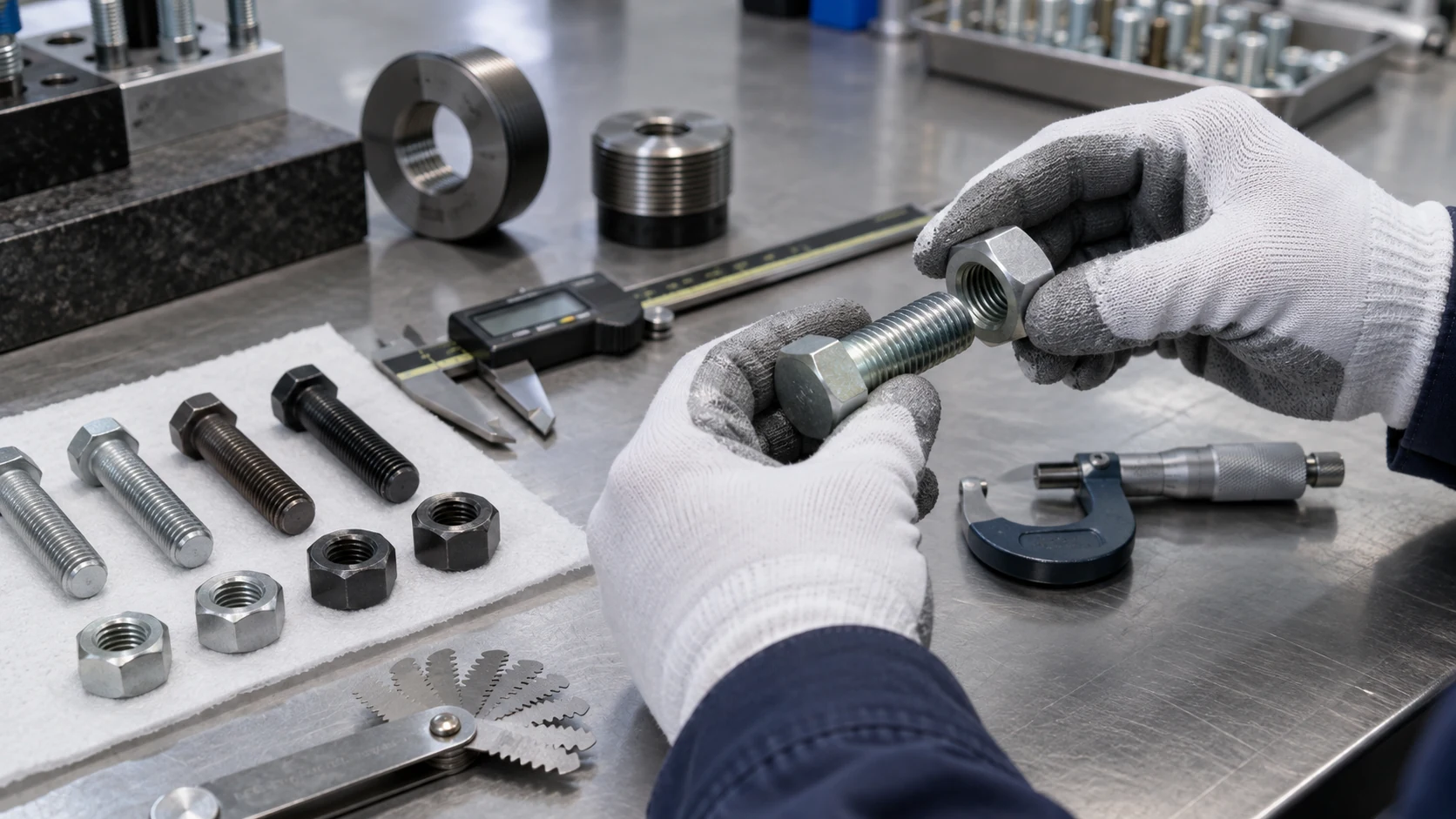
Surface treatment affects more than appearance and corrosion protection. It can influence thread fit, dimensional tolerance, friction, nut-and-bolt compatibility and installation behavior. Hot-dip galvanizing is a practical example because a comparatively thick coating can affect threaded assemblies. Buyers and suppliers should review thread allowance, mating nut condition, final coated dimensions and project requirements. Zinc plating, zinc flake, black oxide and passivation serve different purposes and should not be treated as interchangeable finishes.
See Surface Treatment & Finishing.
5. Special Materials Must Be Checked for Manufacturability
Replacing 304 with 2205, 2507, 904L, 1.4529 / UNS N08926 or C-276 / UNS N10276 is not simply a material-price substitution. Raw-material and bar or wire-form availability, cold-forming feasibility, machining difficulty, tooling, forging route, minimum practical quantity, lead-time structure and achievable geometry may all change. A shape that is straightforward in 304 may need a different production route in a special alloy.
These materials are available according to product geometry, quantity, material sourcing and manufacturing feasibility. Review Stainless Steel & Special Alloy Materials.
6. A Sample Does Not Automatically Define Mass Production
Sample approval is useful, but it does not automatically define every production condition. Buyers should identify critical dimensions, what was actually checked, whether the sample used the intended production process, applicable tolerances, inspection frequency, finish and material documentation, and acceptable cosmetic differences. A machined sample may demonstrate geometry successfully while repeat production later uses cold forming, forging, stamping or another process. Approval should therefore be tied to an agreed drawing and specification rather than visual acceptance alone.
7. Inspection and Documentation Must Be Defined Before Production
Some requirements can be verified after production; others affect how material must be sourced, controlled or tested from the beginning. Examples include MTC requirements, raw-material traceability, PMI where specified, hardness or mechanical testing, coating verification, dimensional inspection reports and third-party inspection. If introduced only after production, the required traceability may not be reconstructable and the intended verification may no longer be possible.
"Provide all certificates at shipment" is not sufficient if the required certificate or inspection depends on controls that must begin at raw-material or production stage.
See Quality Assurance.

8. What Should Be Frozen Before the Order Is Released?
| Item | What Should Be Clear |
|---|---|
| Product Definition | Drawing, standard and product configuration. |
| Critical Dimensions | Dimensions and tolerances that control fit or function. |
| Thread Requirement | Diameter, pitch, tolerance, thread length and mating condition. |
| Material | Exact grade or approved alternative. |
| Mechanical Requirement | Property class or project-specific performance where applicable. |
| Surface Requirement | Finish, coating system and assembly-related requirements. |
| Sample Status | What the approved sample represents. |
| Inspection | Inspection method and required records. |
| Documentation | MTC, test reports, PMI or third-party requirements where applicable. |
| Packaging | Project-specific packaging or identification requirements. |
The objective is not to freeze every insignificant detail. It is to freeze the details where different interpretations can change the product.
Final Buyer Checklist Before Production
- Is there one clear controlling drawing or standard?
- Have conflicts between drawing and standard been resolved?
- Is the material grade confirmed?
- Are mechanical requirements separately defined where necessary?
- Are thread and mating requirements clear?
- Has the surface finish been checked for dimensional or assembly impact?
- Has special-material manufacturability been reviewed?
- Is the approved sample tied to a written specification?
- Are inspection requirements defined?
- Are documentation requirements agreed before production?
FAQ
Should the drawing or the fastener standard take priority?
There is no universal answer. If the drawing intentionally modifies a standard product, the buyer and supplier should confirm which drawing dimensions override the standard before production.
Is a product sample enough to approve mass production?
A sample is useful, but approval should also reference the required drawing, material, tolerance, finish and inspection criteria so the production requirement is not based only on visual comparison.
When should inspection requirements be confirmed?
Before production whenever the requirement affects material traceability, testing, manufacturing control or third-party verification.
Can a special stainless steel grade simply replace 304 or 316?
Not automatically. Special grades may require different material forms, tooling or manufacturing processes, so feasibility should be reviewed first.
Why can surface treatment create assembly problems?
Some coatings change final dimensions, thread fit or friction conditions. Threaded components should therefore be reviewed as a complete mating system where finish buildup is relevant.
Need Help Reviewing a Fastener Specification?
Send VALTOR your drawing, standard, material and application requirements for technical review before quotation or production.