
The Hidden Risks Behind Fastener Specifications: What Experienced Buyers Check Before Production
Many fastener problems are not caused during manufacturing — they are often hidden in unclear specifications before production begins. A drawing, material grade or standard number may define only part of the requirement. Missing details about application, tolerance, finish, inspection and documentation can create delays, quality disputes and unexpected costs. This article explains the specification points that experienced buyers and engineers review before production starts.
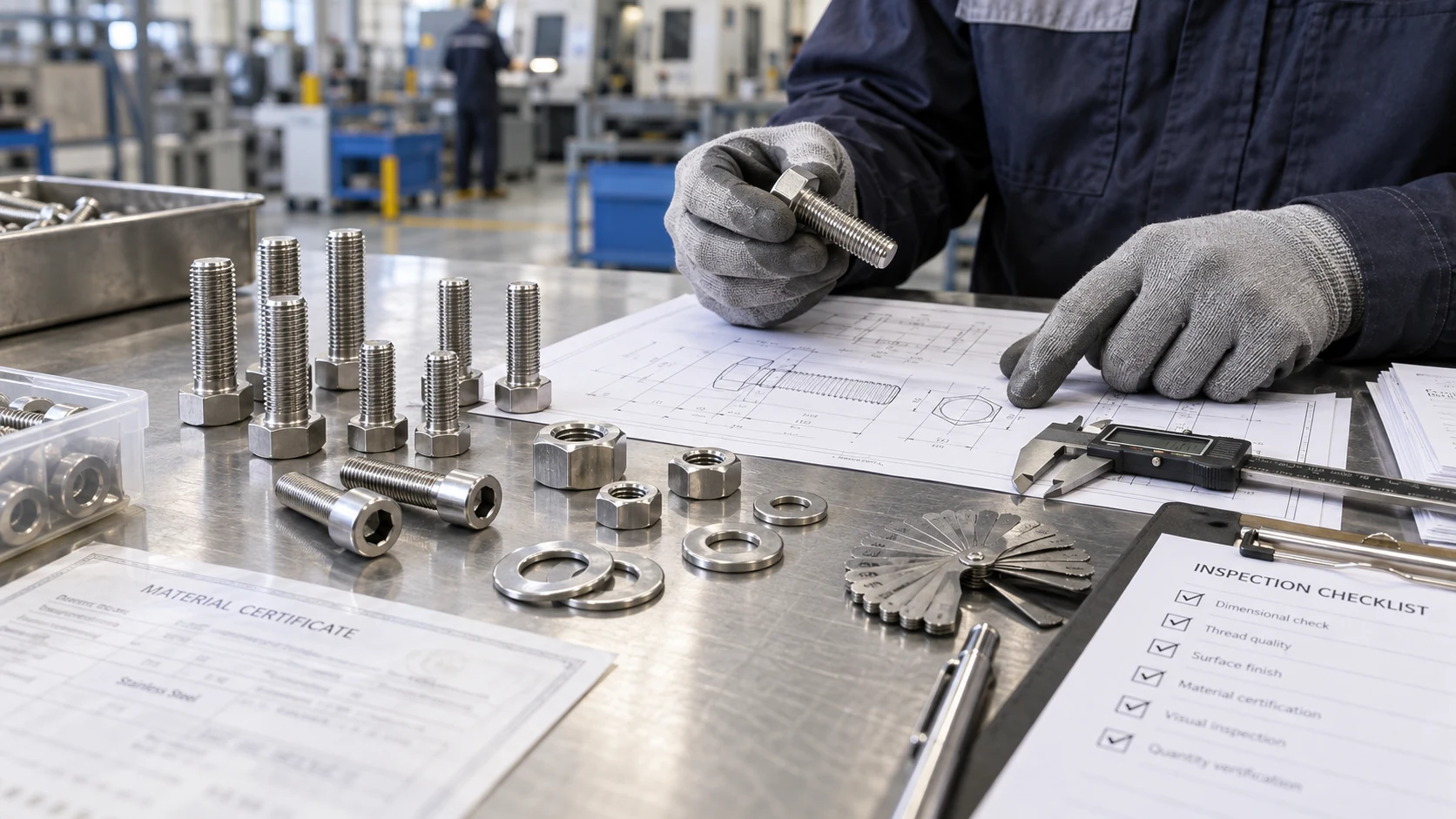
1. A Fastener Problem Often Starts Before Manufacturing
Incomplete specifications, unclear requirements, missing technical details and communication gaps can create risk before material is ordered or tooling is prepared. A product name may describe the general fastener family without defining the exact standard, thread, material, performance, surface condition or acceptance requirement.
An experienced buyer looks for these gaps early because a technically reasonable interpretation by the supplier may still differ from the buyer’s intent. A professional supplier does more than manufacture the stated product. They identify unresolved points, explain which details affect feasibility or cost and help establish a common definition before production begins.
Key Takeaways
- A product name alone rarely defines a complete fastener requirement.
- Material selection must consider application conditions.
- Standards and drawings often require additional clarification.
- Early technical communication reduces production risks.
2. Material Specification Is More Than Stainless Steel
The term “stainless steel” is not a complete material specification. 304, 316, Duplex stainless steels and special alloys can differ in corrosion behavior, strength, forming or machining characteristics, raw-material availability and cost. The correct choice depends on the environment, application and service conditions rather than the material name alone.
This article does not repeat the detailed alloy comparison in 304 vs 316 Stainless Steel Fasteners: Material Selection Guide. The practical sourcing point is that the requested grade should be connected to the actual exposure, mechanical duty, mating materials and project specification. Where a special alloy is requested, the supplier may also need to confirm material form and manufacturing feasibility.
3. Standards Need Practical Interpretation
DIN, ISO and ASTM standards provide important requirements for product dimensions, threads, materials, mechanical properties, tolerances or testing, depending on the standard. They reduce ambiguity, but a project may still need confirmation of dimensions, tolerance, mechanical requirements, finish and inspection criteria.
A referenced standard can conflict with a customer drawing, or a buyer may intend the standard to control only characteristics not shown on the drawing. A standard number is therefore a strong starting point, but it is not always the complete purchasing requirement. Priority between the drawing, standard and project specification should be clear before production.
4. Drawings Can Still Leave Important Questions
A drawing may define product geometry very clearly while omitting material grade, surface requirement, tolerance level, inspection method or packaging requirement. These details can affect manufacturing route, final dimensions, acceptance and delivery condition even when the shape itself is unambiguous.
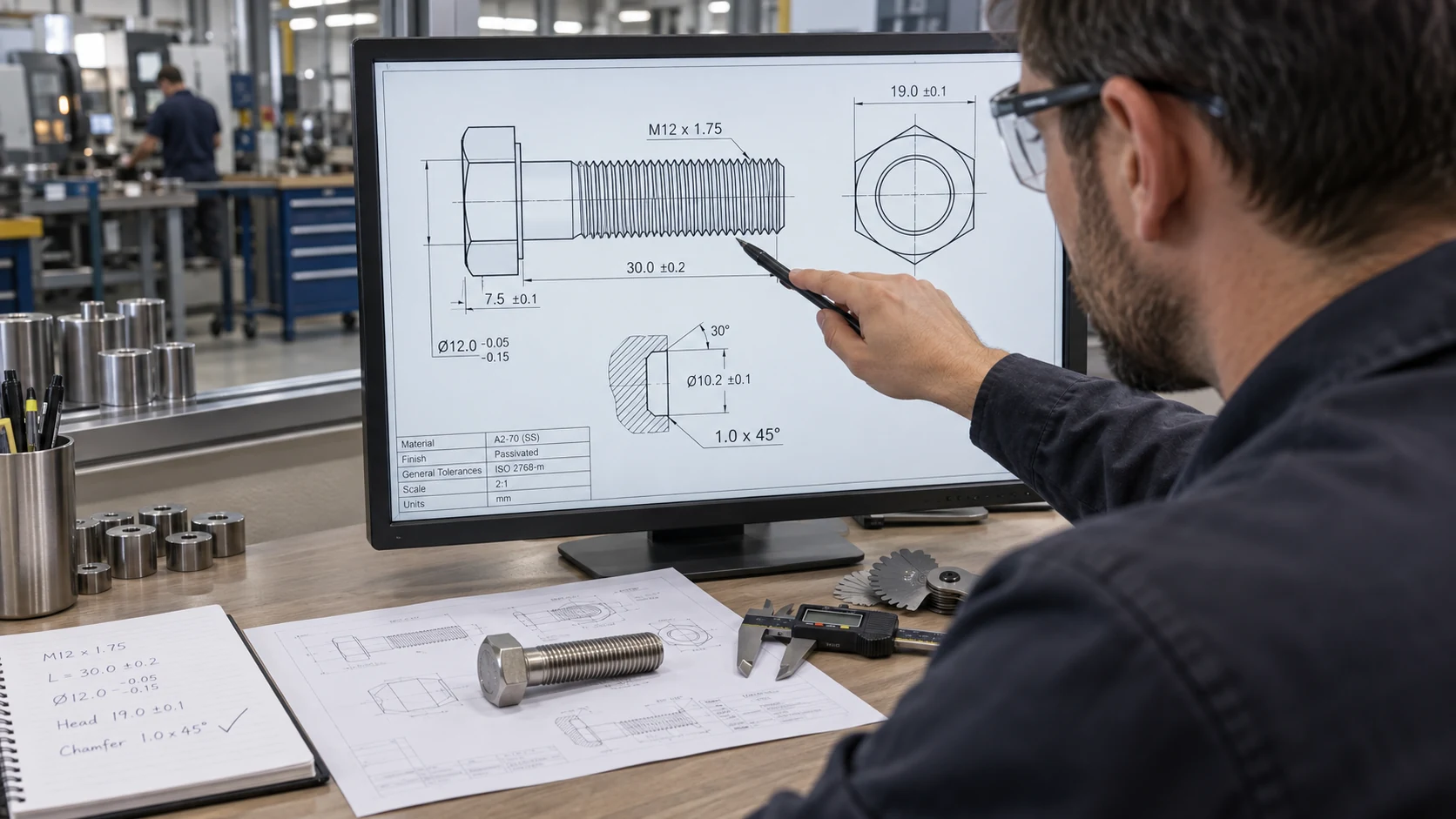
A complete drawing should define not only product geometry, but also the manufacturing and acceptance requirements.
5. Tolerance and Inspection Requirements
For standard fasteners, many dimensional and acceptance requirements are already defined by the applicable product and inspection standards. OEM and custom components require additional attention because functional dimensions, mating features and critical tolerances may be unique to the assembly.
The buyer and supplier should identify which dimensions require routine dimensional inspection, how threads will be checked, whether functional testing is needed and what documentation must accompany the order. Inspection effort should be proportional to product risk. Undefined acceptance criteria can create disputes even when parts are manufactured consistently.
- Dimensional inspection: critical diameters, lengths, head geometry and custom features.
- Thread inspection: pitch, tolerance, thread length and mating condition.
- Functional testing: assembly or performance checks where the application requires them.
- Documentation: inspection records, material certificates or other agreed evidence.
6. Surface Finish Is Part of Performance
Surface requirements should be explicit because passivation, cleaning and coating requirements can influence corrosion resistance, assembly performance, appearance and long-term reliability. “Plain” or “standard finish” may not communicate the expected condition for a controlled project.
The appropriate process depends on the base material and application. This section does not duplicate Fastener Surface Treatment Selection: Finishes and Corrosion Protection; it highlights why the selected process, final appearance, coating condition and any post-treatment acceptance criteria should be agreed before production.
7. Packaging and Traceability
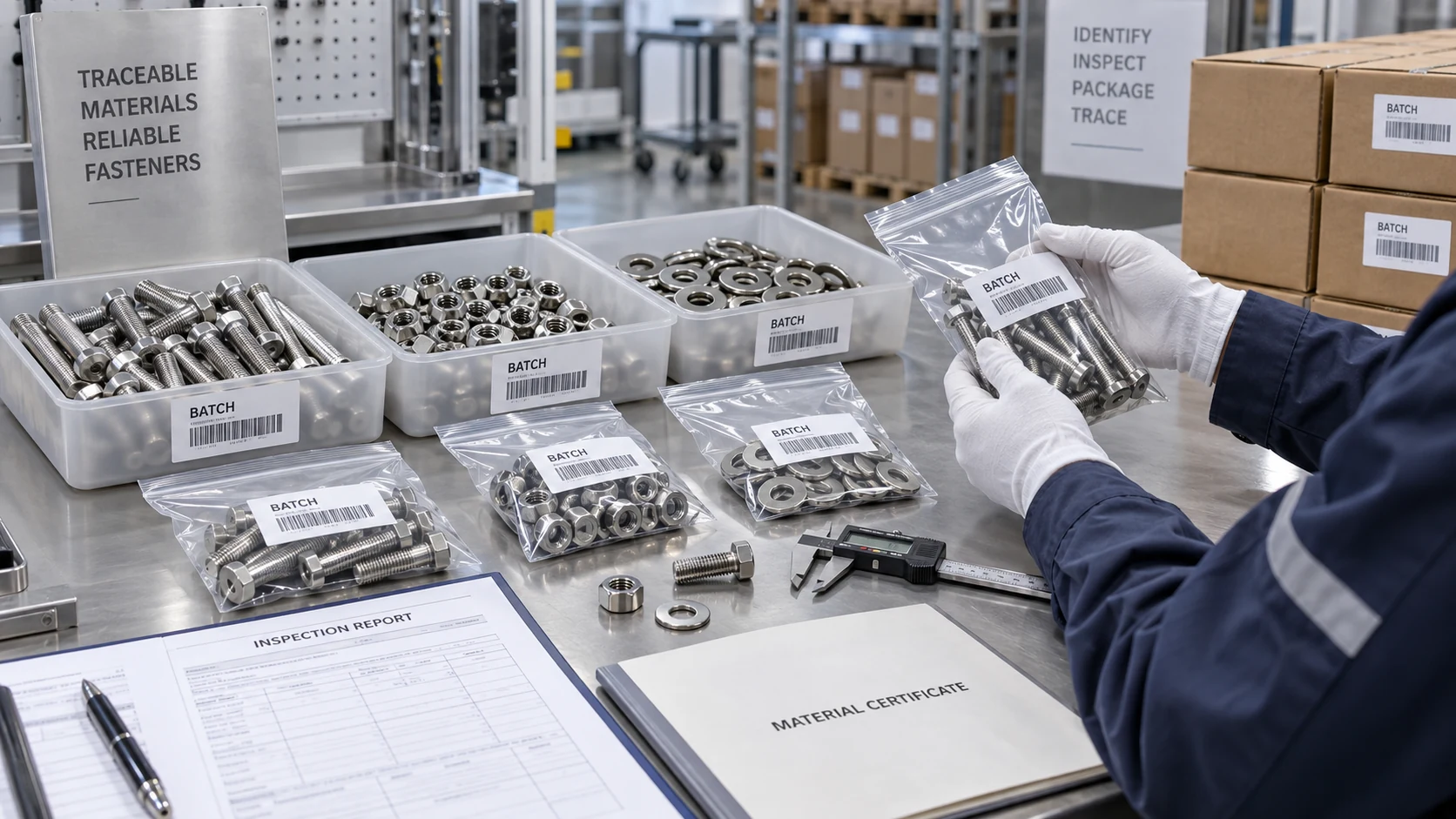
OEM customers, engineering projects and industrial users may need batch identification, material traceability, packaging protection and repeat-order consistency. These requirements affect how products are separated, labeled, documented and protected during storage and transport.
Packaging should protect threads, finished surfaces and mixed sizes from damage or confusion. Batch references can connect delivered parts with inspection or material documentation where traceability is required. For repeat orders, consistent identification also helps the buyer compare the new supply with the approved specification.
Common Specification Gaps Before Production
| Missing Information | Possible Result |
|---|---|
| Material grade unclear | Incorrect corrosion performance |
| Standard unclear | Different product interpretation |
| Tolerance undefined | Assembly problems |
| Finish not specified | Appearance or corrosion issues |
| Inspection requirements missing | Quality disputes |
| Packaging requirements missing | Damage or traceability problems |
FAQ
Is a standard number enough for fastener production?
A standard provides important technical requirements, but industrial applications often require additional information about material, finish, inspection and application conditions.
Why do suppliers ask detailed questions before quotation?
Because missing information can affect material selection, manufacturing process, cost and final product performance.
Can a drawing replace all technical communication?
A drawing is important, but application conditions and quality requirements may still require additional confirmation.
Need Product or Technical Support?
Share your fastener, material, standard or application requirements with VALTOR.