
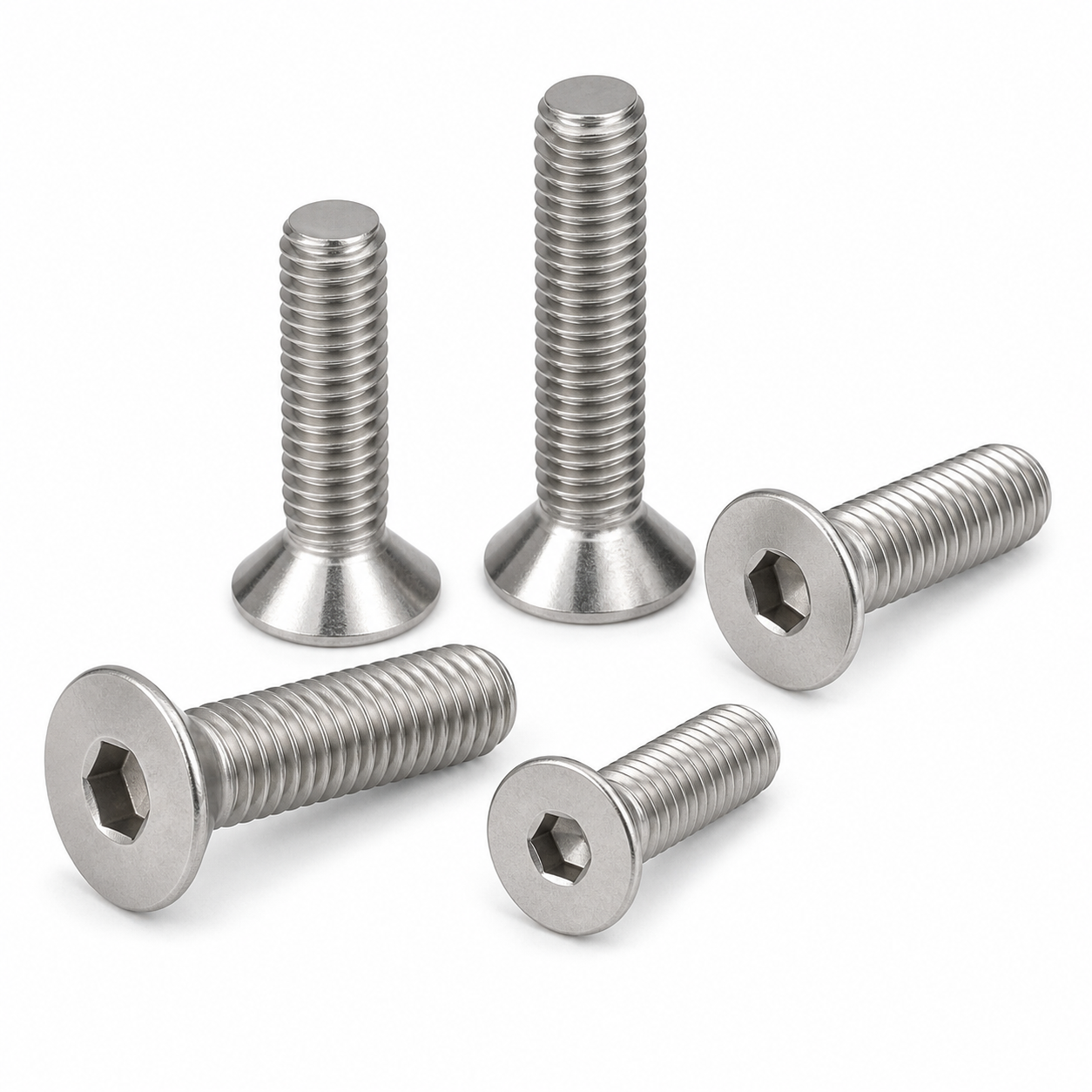
Hex Socket Countersunk Head Screws
DIN 7991 Stainless Steel Countersunk Socket Screws for Flush Machinery & Equipment Assembly
DIN 7991 Hex Socket Countersunk Head Screws combine a 90° flat countersunk head, internal hex drive and machine thread for assemblies requiring a flush or near-flush surface. DIN 7991 remains a widely used purchasing designation; the current corresponding reference is DIN EN ISO 10642:2026 / ISO 10642:2026.
Product Overview
DIN 7991 combines a 90° countersunk head, hex socket and machine thread. It enters an existing tapped hole, nut or threaded insert and is selected where external projection must be minimized, equipment clearance is limited and hex-key installation is preferred.
Correct alignment between the 90° head and mating countersink supports flush seating and intended bearing contact. Because the shallow head also contains the internal socket, current ISO 10642 defines this family with reduced loadability; the head is a critical limiting section.
For quotations, specify DIN 7991 or ISO 10642, diameter, pitch, overall length, material, property requirement, head and socket geometry, full or partial thread, finish, mating thread, quantity and drawing where necessary.
Technical Specifications
90° Countersunk Fit, Hex Socket & Reduced Loadability
Stainless Steel, Steel & Size Options
Thread, Length & OEM Manufacturing
Metric coarse is primary. Metric fine and special metric threads may be supplied by drawing. UNC / UNF products are custom or applicable inch-standard products, not standard DIN 7991 metric products.
Thread coverage and length depend on diameter, applicable standard and requirement. Common lengths are 8–100 mm; extended lengths are qualified by diameter and feasibility.
Provide standard, diameter, pitch, length, material, property requirement, full/partial thread, countersink, finish, quantity and drawing or sample.
Inner bags, boxes, export cartons, wooden pallets, customer labels, part numbers and authorized private-label packaging.
Head, Socket & Dimensional Quality
Inspection may verify diameter, pitch, continuity, overall length, head diameter and height, 90° geometry, socket engagement, material and applicable mechanical requirements. Representative countersink checks can review flushness and bearing contact. Documentation may include MTC, raw-material, dimensional, thread and actually performed mechanical test reports without inventing universal torque or load values.
Applications
Flush internal-hex fastening for accurately countersunk machinery and equipment components.
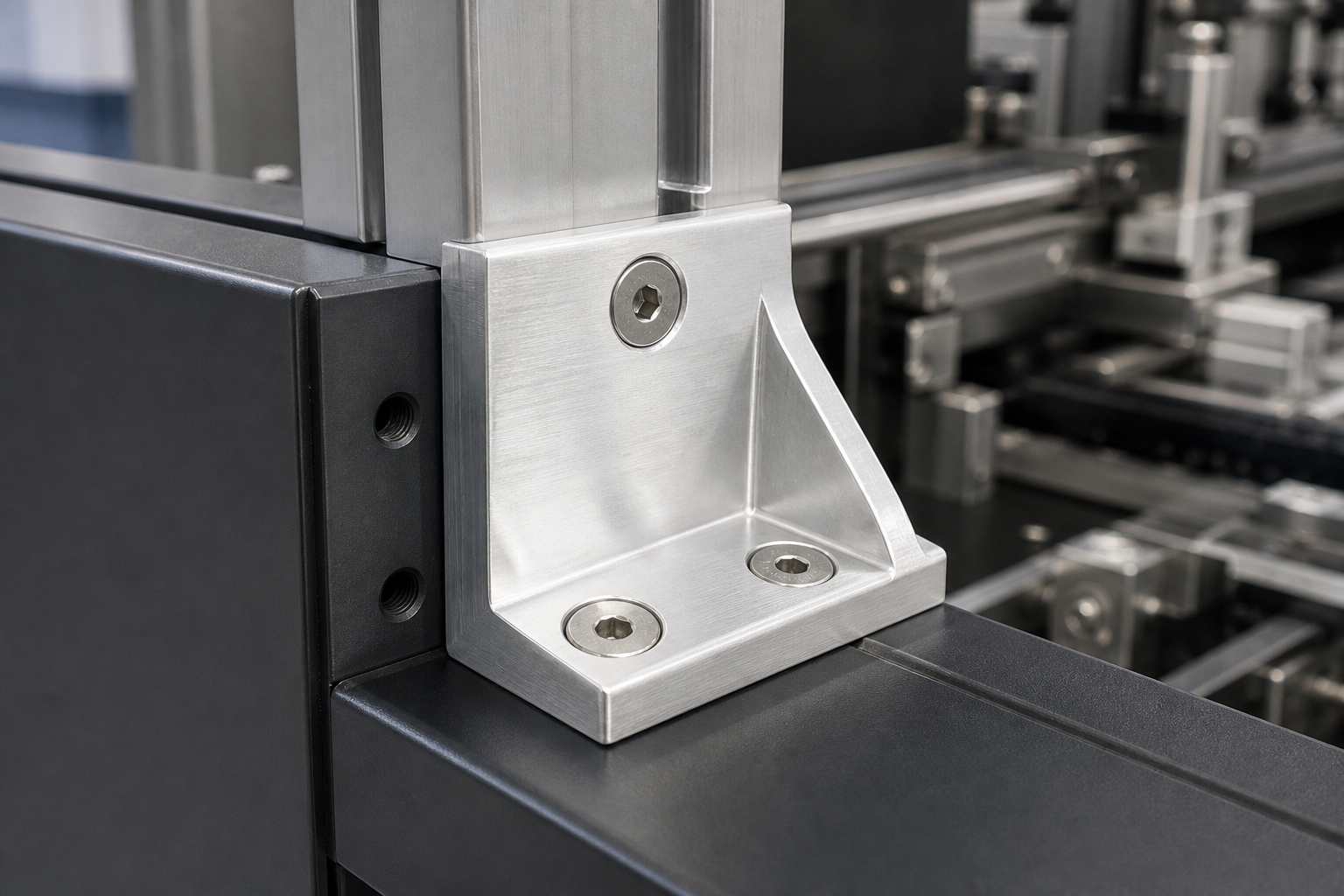
Internal-hex fastening where covers require minimal head projection.
Brackets, guides and frames where head clearance is important.
Jigs and machined components requiring repeatable countersunk seating.
Thicker panels and brackets designed with compatible 90° countersinks.
Drawing-controlled DIN 7991 or ISO 10642 style assemblies.
Frequently Asked Questions
What is DIN 7991?
DIN 7991 is a widely used purchasing designation for 90° Hex Socket Countersunk Head Screws with machine thread. The original DIN standard has been withdrawn, but the designation remains common in purchasing and machinery drawings.
What is the difference between DIN 7991 and ISO 10642?
ISO 10642 is the current international standard family, while DIN 7991 remains the common legacy purchasing designation. Current ISO 10642:2026 covers M2–M20; traditional DIN market references commonly extend M3–M24. Confirm the required standard because dimensions are not automatically interchangeable.
Why does DIN 7991 / ISO 10642 have reduced loadability?
The shallow countersunk head and central hex socket reduce the remaining head cross-section compared with a full-height socket head, making the head a limiting section.
What sizes can VALTOR supply?
Common DIN 7991 market supply is approximately M3–M24 with typical 8–100 mm lengths; longer versions depend on diameter and specification. Strict current ISO 10642:2026 orders use its M2–M20 scope.
Should I use DIN 7991 or DIN 912?
Choose DIN 7991 for a designed 90° countersink and flush surface. DIN 912 uses a taller cylindrical socket head above the surface. Their head geometry and loadability differ, so joint design must be reviewed.
Related Products
Share standard, diameter, pitch, length, material, property requirement, 90° countersink, quantity and drawing with VALTOR.