
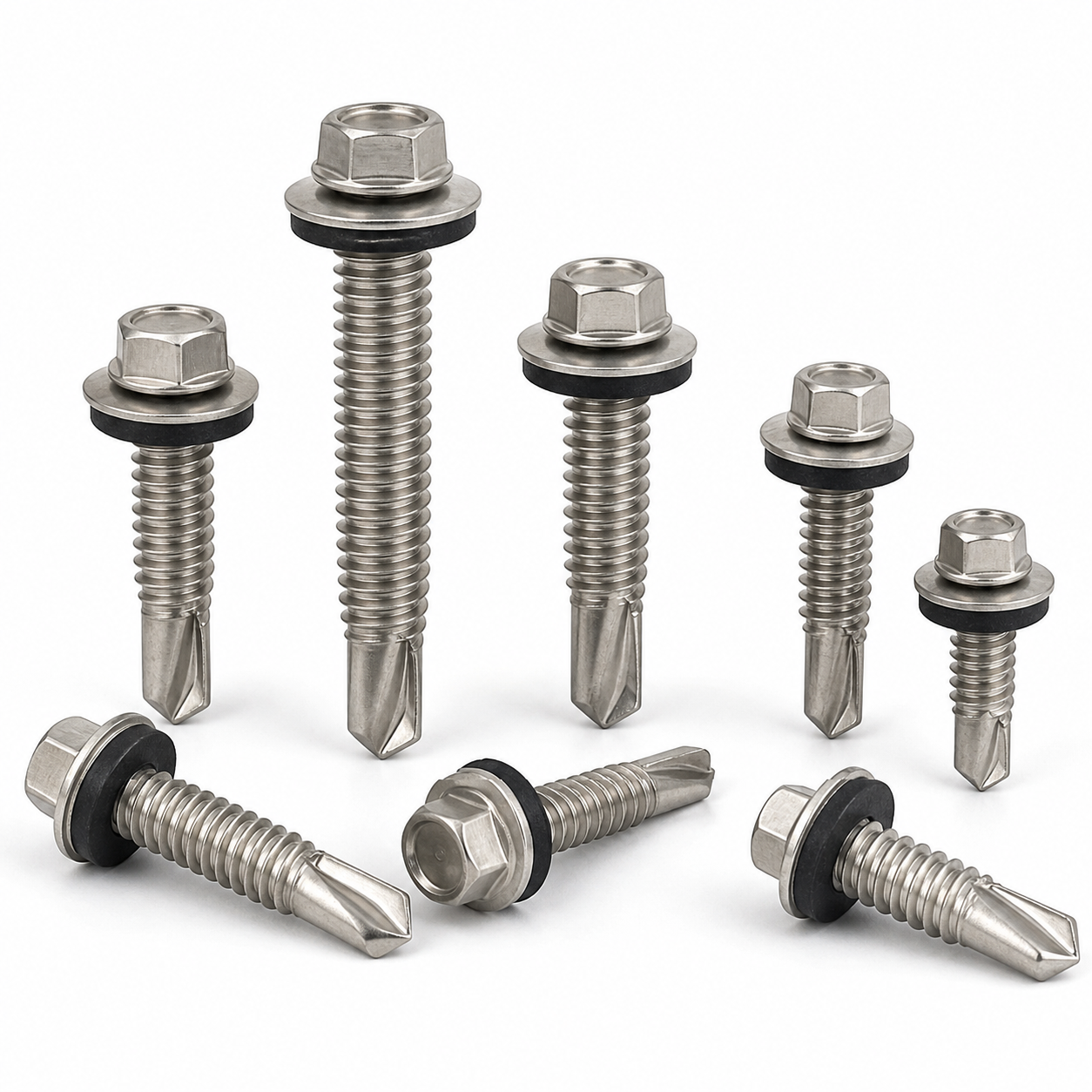
Self Drilling Roofing Screws
Stainless Steel Roofing Screws with Bonded Stainless Steel & EPDM Sealing Washers
Self Drilling Roofing Screws combine an external hex washer head, tapping thread, self-drilling point and bonded sealing washer for fastening compatible metal roof and cladding assemblies. VALTOR primarily supplies 410 stainless steel configurations, with 304 and 316 options where corrosion resistance and drilling requirements are compatible.
Product Overview
The self-drilling point creates the initial opening through a compatible roof sheet and steel support. After the point clears the complete drilling thickness, the tapping thread engages and the head brings the assembly together. Correct function follows DRILL → THREAD → SEAL → CLAMP.
The bonded washer combines a rigid stainless steel backing that distributes head pressure with a compressible EPDM sealing layer around the penetration. Sealing depends on washer selection, roof-sheet condition, perpendicular installation and controlled compression; the product should not be described as permanently waterproof without assembly-specific validation.
410 stainless steel is the primary VALTOR screw material where drill-point hardness and thread-forming performance are important. 304 and 316 provide higher corrosion-resistance options for compatible designs, but do not automatically offer the same drilling capability as hardened 410. Selection must balance drilling performance, corrosion exposure and the actual roof system.
Technical Specifications
Roofing Seal, Washer Compression & Drilling Selection
Stainless Steel & Bonded EPDM Washer Options
Roofing Size, Drill Point & OEM Supply
Common diameters are 4.8, 5.5 and 6.3 mm, with lengths approximately 16–150 mm. Not every diameter is available in every length.
Select point geometry for roof sheet, supporting steel, total thickness and hardness. Stainless backing diameter and EPDM thickness depend on the screw and roof system.
Possible variables include diameter, length, point, thread length, head dimensions, 410/304/316 material, washer OD, EPDM specification, labels and packaging.
Provide screw size and material, roof sheet material and thickness, support material and thickness, total drilling thickness, washer diameter, EPDM requirement, quantity, drawing or sample.
Inner bags, boxes, export cartons, pallets, customer labels, project marking and authorized private-label packaging may be supported.
Installation Quality, Sealing Inspection & Documentation
Inspection can cover screw diameter, thread, length, head and point; stainless backing, EPDM bond, OD, EPDM position and thickness where specified; cutting edges, flutes, symmetry and damage. Representative assembly tests may evaluate drilling, engagement, washer seating, EPDM compression, alignment and sheet deformation. Water penetration, weathering or compression evaluation is mentioned only when requested and actually performed. Documentation may include MTC, raw-material, dimensional, product, washer and performed functional-test reports plus third-party support.
Applications
Bonded-washer fastening for compatible commercial and industrial metal roof systems.

Self-drilling fastening for compatible profiled and flat sheets with bonded EPDM around the penetration.
Panel connections where the drill point matches the complete steel thickness.
Exterior wall and roof cladding requiring a controlled sealed penetration.
Suitable roofing and light-steel systems selected by structural and drilling requirements.
Drawing-based projects with defined material, drilling capacity, washer and environmental requirements.
Frequently Asked Questions
Why do Roofing Screws use Stainless Steel / EPDM Bonded Washers?
The stainless backing distributes head pressure while bonded EPDM creates a compressible interface around the penetration. Sealing depends on washer selection, installation and roof-sheet condition.
How tight should a Roofing Screw with an EPDM washer be installed?
Compress the EPDM enough for continuous contact without excessive extrusion or washer deformation. The correct setting depends on the screw, washer, sheet and support, so no universal torque applies.
What sizes of Roofing Screws can VALTOR supply?
Common diameters are approximately 4.8, 5.5 and 6.3 mm, with commercial lengths generally around 16–150 mm depending on construction, support thickness and drill point.
Should I choose 410, 304 or 316 Stainless Steel Roofing Screws?
410 is commonly selected for drilling performance. 304 and 316 provide higher corrosion-resistance options, with 316 relevant to more demanding coastal or humid exposure. Balance corrosion and drilling requirements.
What information should I provide for a Roofing Screw quotation?
Provide screw size and material, roof sheet and support materials and thicknesses, total drilling thickness, bonded-washer diameter, EPDM requirements, quantity and drawing or sample information.
Related Products
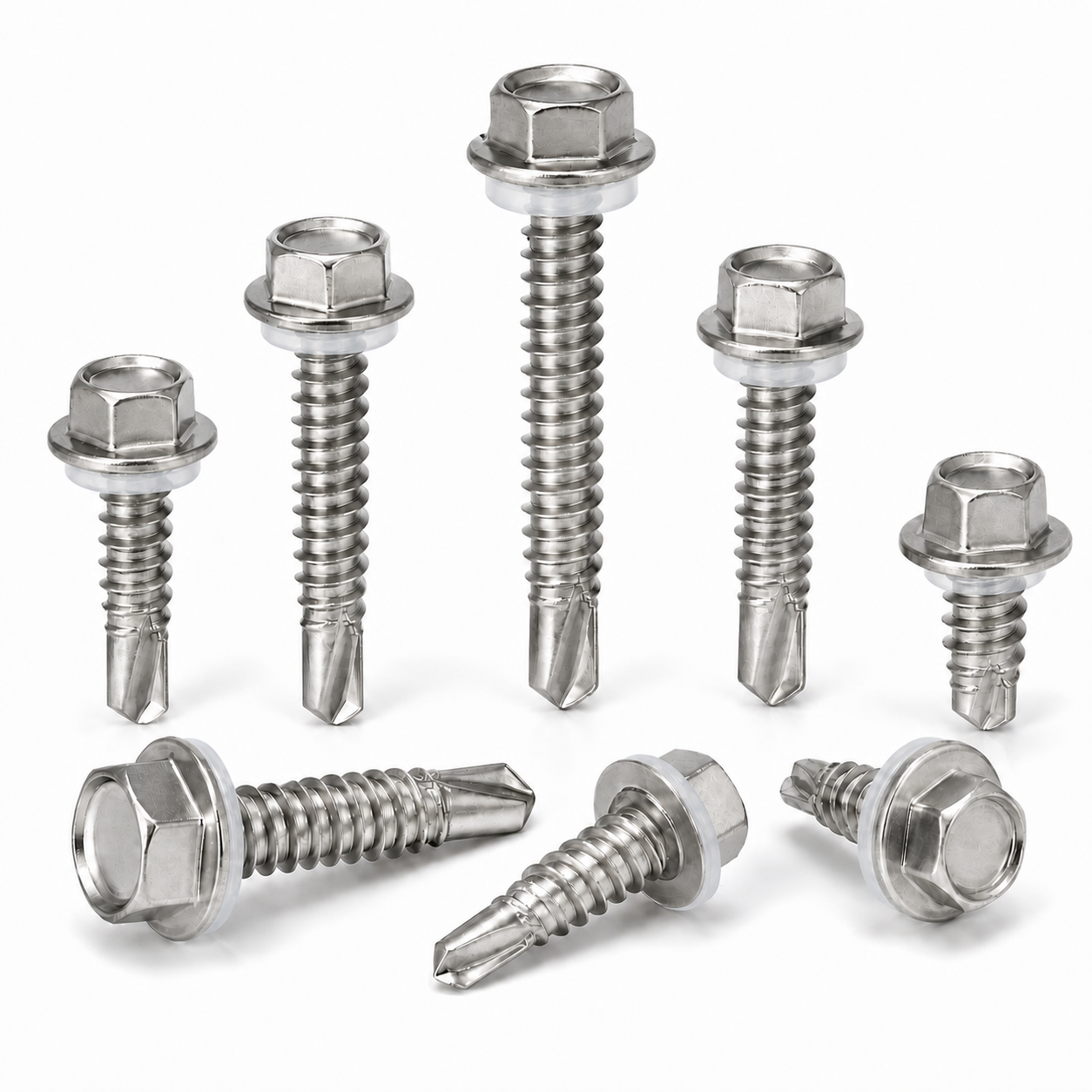
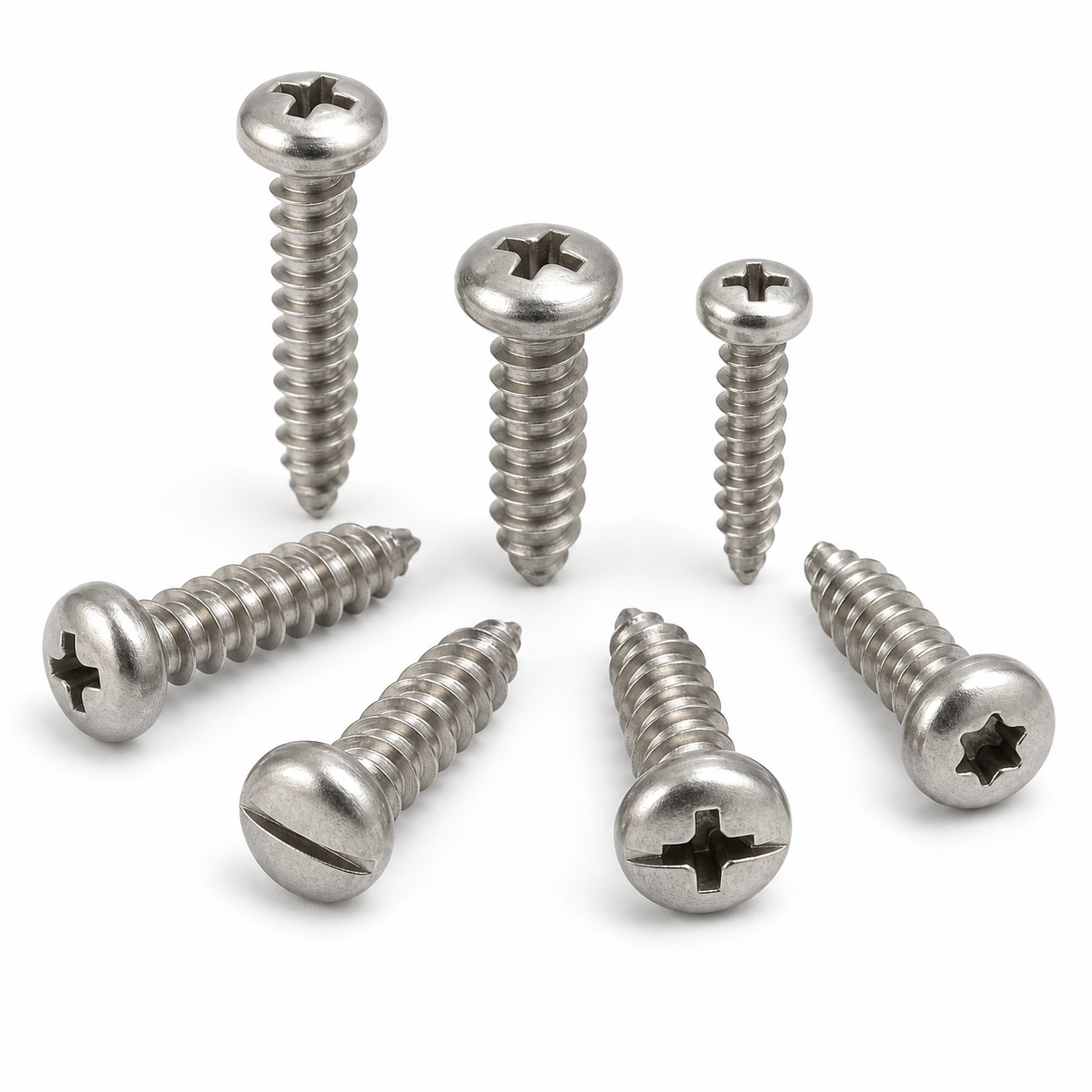
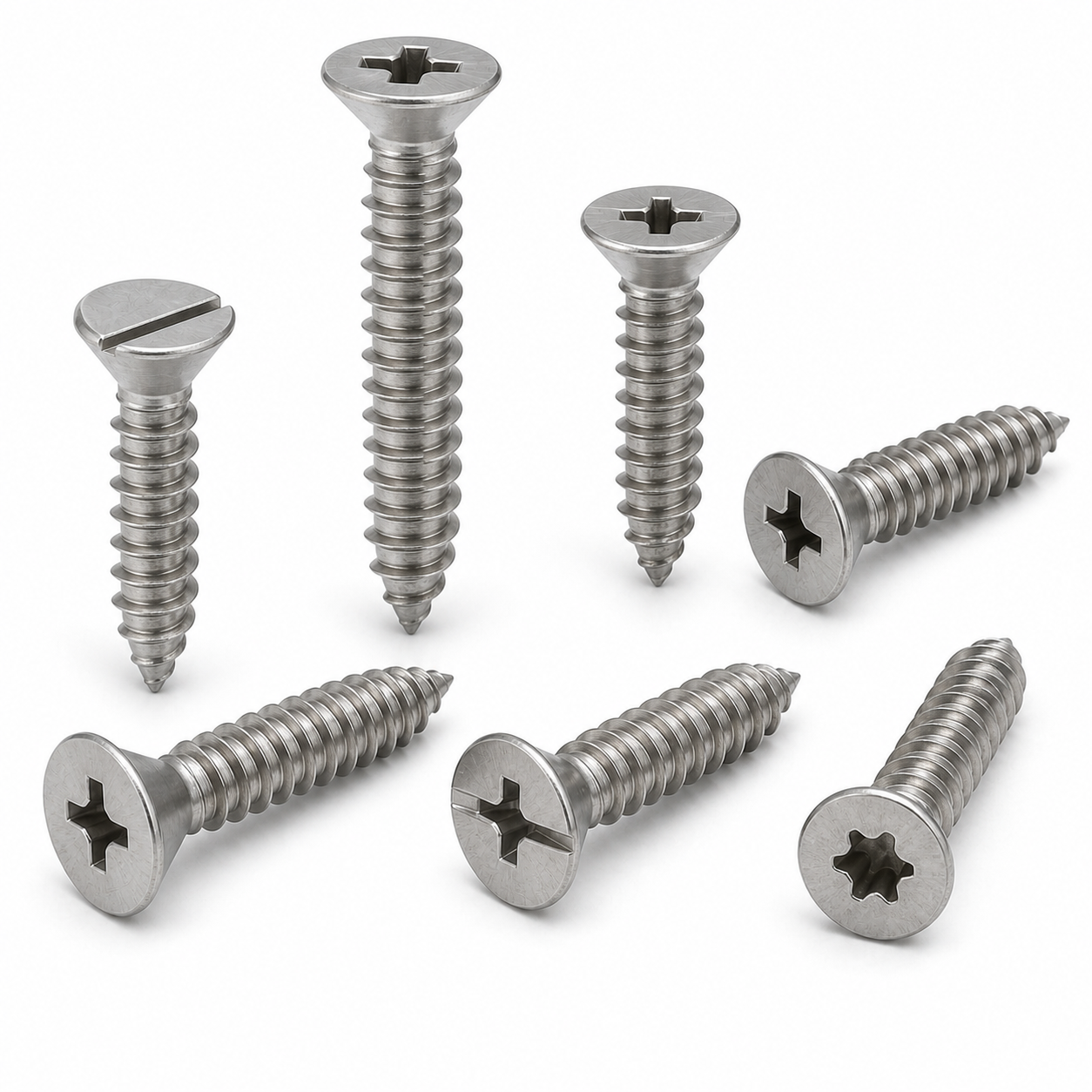
Share the screw size, material, roof sheet and support details, total drilling thickness, bonded-washer diameter, EPDM requirement, quantity and project drawing with VALTOR.