Home/Products/Anchors/Stainless Steel Chemical Anchor Studs

Stainless Steel Chemical Anchor Studs

Resin-Bonded Threaded Studs for Concrete and Structural Fixing

Threaded stainless steel anchoring elements for use with compatible resin systems in prepared concrete holes. Anchorage is created by bonding between the stud, cured resin and base material rather than mechanical expansion pressure.

Type
Chemical Anchor Stud
Anchor System
Resin Bonded Fixing
Base Material
Concrete
Construction
Threaded Stud + Resin System
Materials
304 / A2, 316 / A4 Stainless Steel
Thread Range
M8–M24 Commercial Range
Installation
Drilled Hole + Resin Bonding
Custom Options
Length / Thread / End Profile / Material

Request A Quote

Product Overview

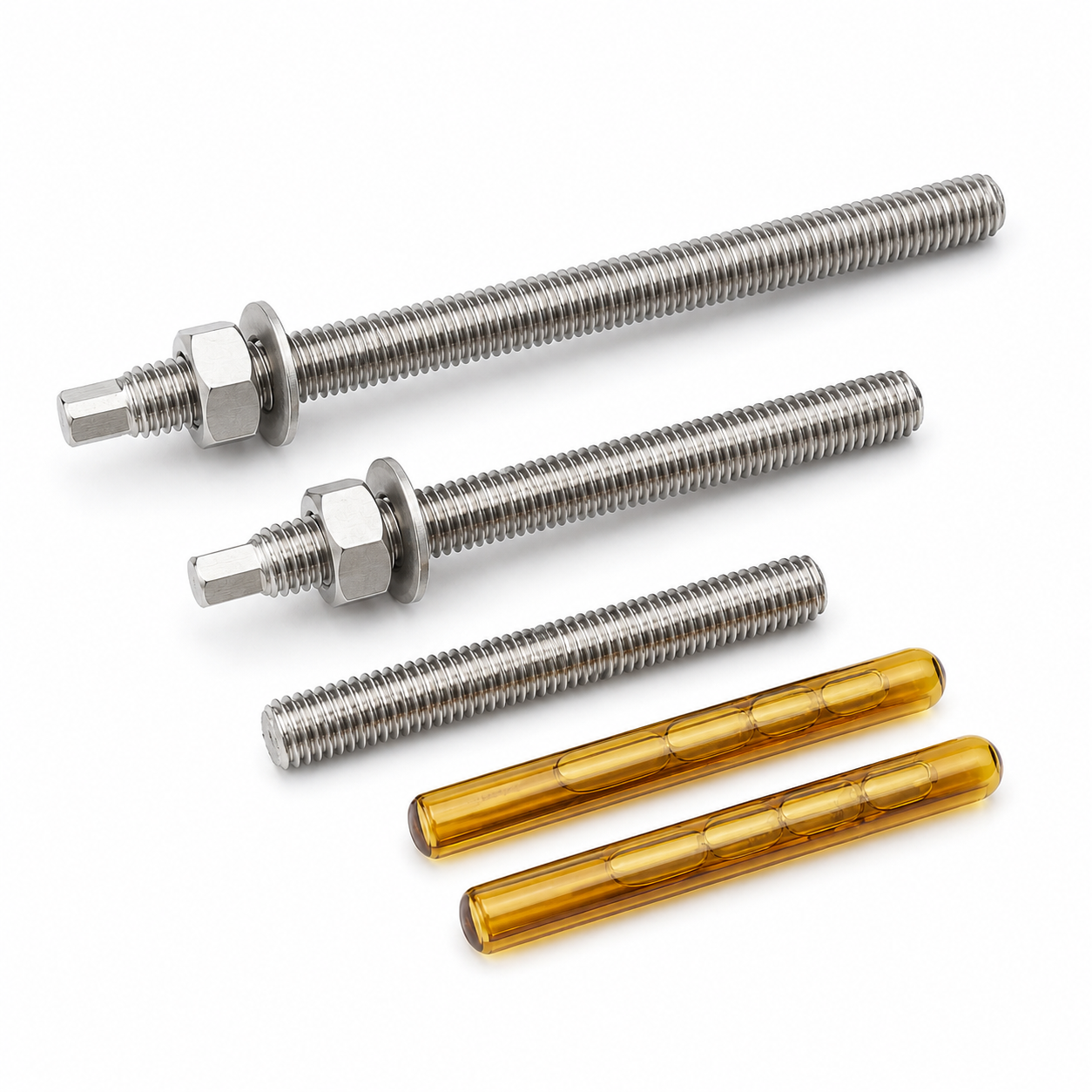
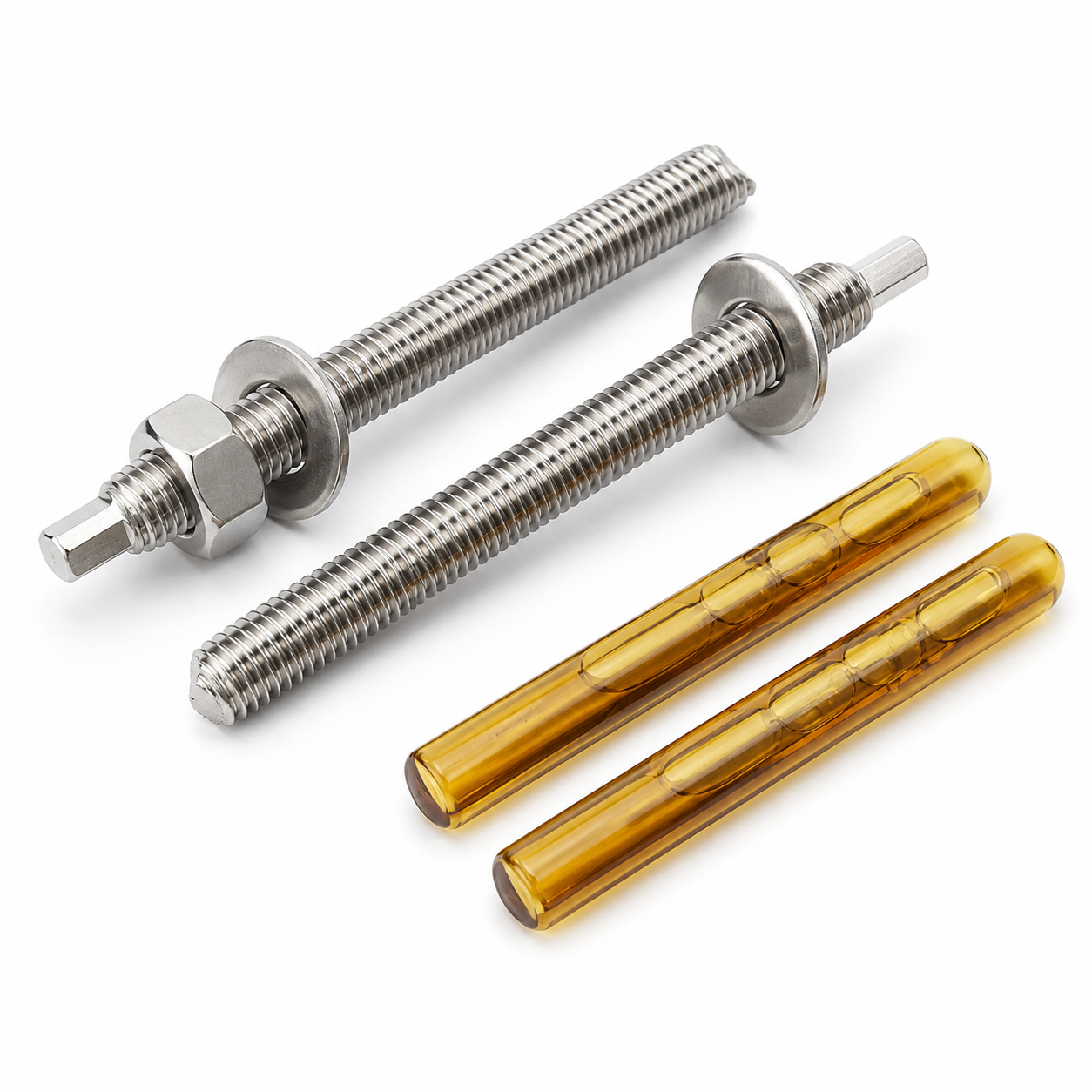
Stainless Steel Chemical Anchor Studs are fully or partially threaded rods supplied with nut and washer, plus a specified insertion-end profile such as a chamfered, oblique chisel, blunt or drawing-based end. They are installed with a compatible epoxy, vinyl ester or hybrid resin anchoring system.

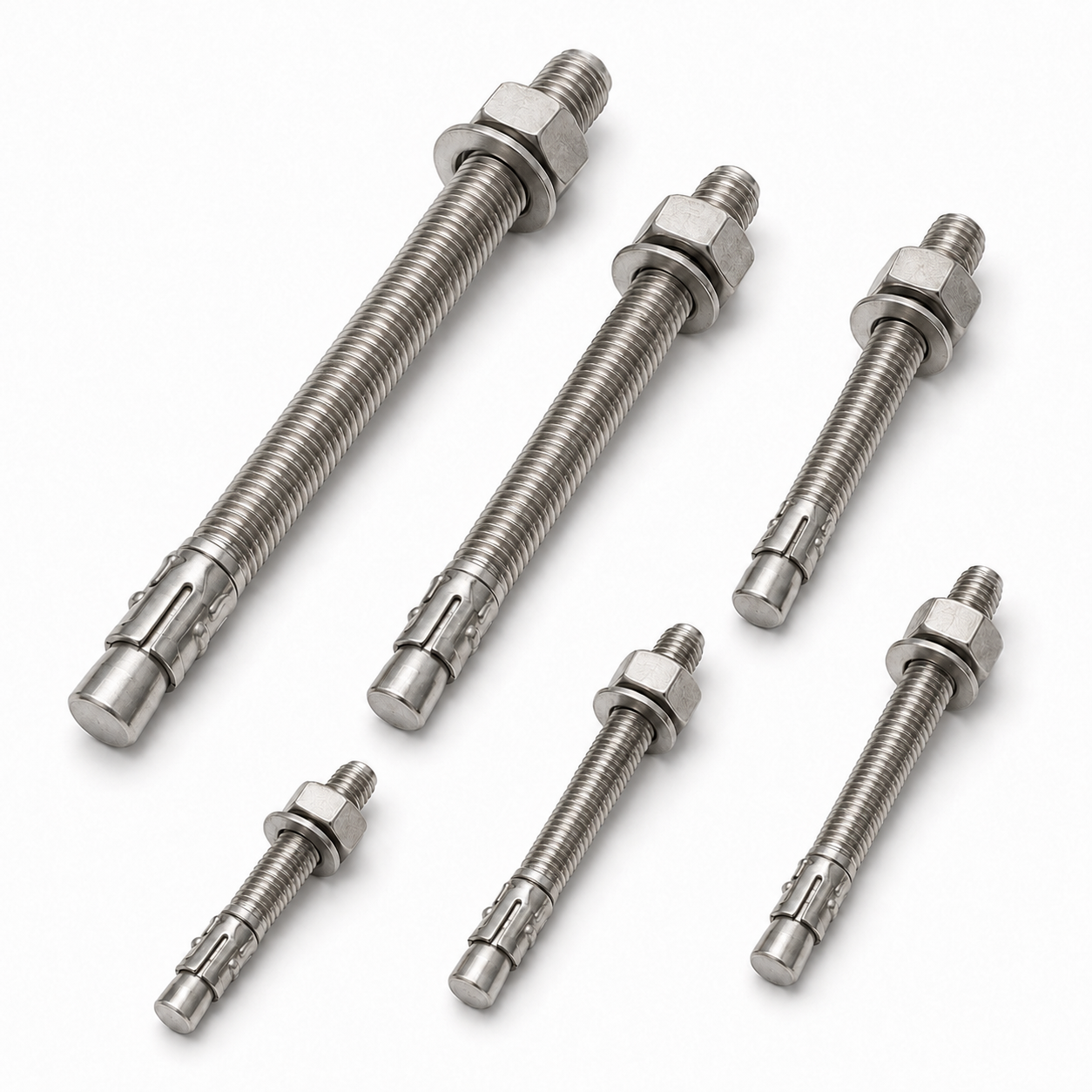
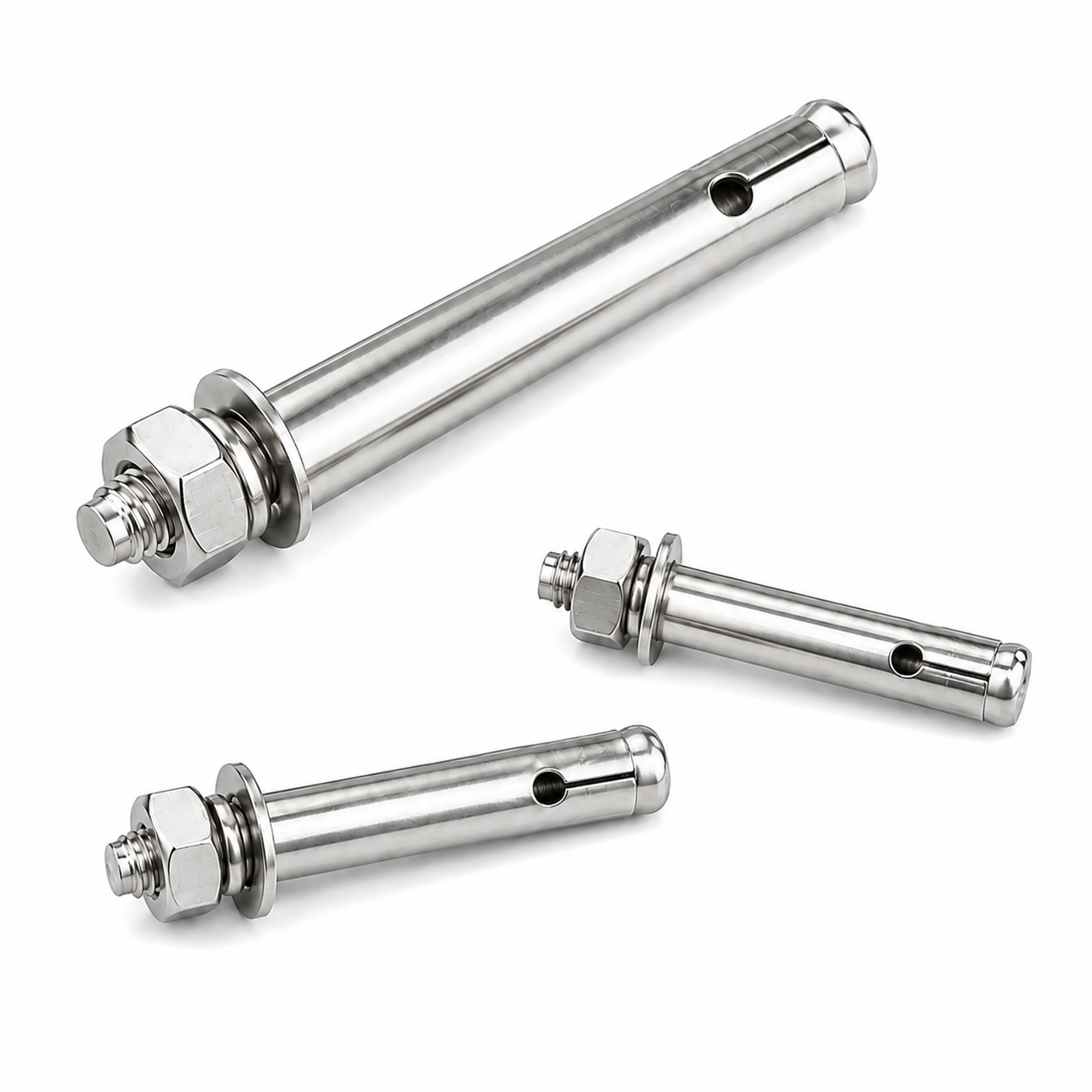
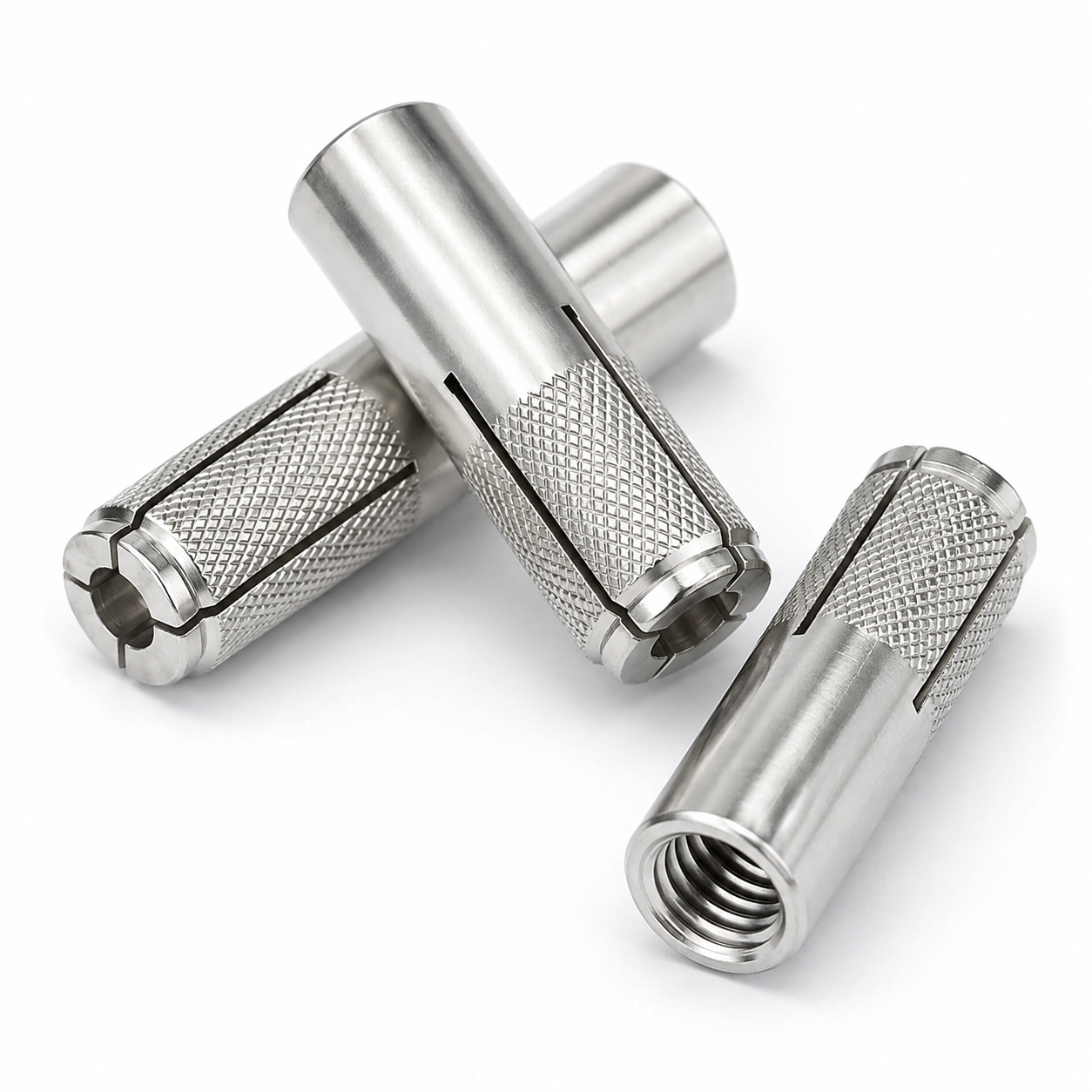
Unlike wedge, sleeve and drop-in anchors, chemical anchor studs do not create fixation through a mechanical expansion clip, sleeve or plug. Bonding develops between the threaded rod, cured resin and prepared hole surface, so the stud, resin, concrete and installation method must be selected as one system.

For quotation, specify thread diameter, overall and thread lengths, required embedment or bonding length, resin system, base material, stainless grade, nut and washer, quantity and project drawing or specification. Studs can be supplied separately for use with customer-selected resin systems; resin availability and compatibility must be confirmed per enquiry.

Technical Specifications

Product
Stainless Steel Chemical Anchor Studs
Alternative Names
Resin Anchor Studs / Adhesive Anchor Rods / Injection Anchor Studs / Chemical Anchor Bolts
Fixing Type
Chemical bonding anchor element
Primary Base Material
Concrete; reinforced concrete where permitted by system design
Other Base Material
Selected solid masonry only where verified for the exact resin system and anchor configuration
Installation
Drill, clean, inject or insert resin, install stud as instructed, allow system-specific curing, then connect fixture
Components
Threaded stud or rod + hex nut + flat washer; resin system selected separately or supplied where confirmed
Resin Compatibility
Epoxy, vinyl ester or hybrid systems according to manufacturer instructions and project requirements
Materials
304 / A2 and 316 / A4 stainless steel; carbon steel where required
Thread
Metric full thread or partial thread according to design
Commercial Range
M8 / M10 / M12 / M16 / M20 / M24; main website focus M8–M20
d / L / Lt
Thread diameter / overall stud length / thread length
hef / l1
Required embedment where applicable / bonding length, determined by the exact system design
d0 / h0
Drill-hole diameter / hole depth from verified resin-system data; no universal values apply
End Profiles
Chamfered, oblique chisel, blunt, threaded both ends or custom profile according to installation method
Typical Applications
Steel structures, base plates, machinery, equipment foundations, structural supports and construction projects
Custom Supply
Special diameter, length, thread, end profile, material, nut, washer and packaging
Inspection / Documentation
MTC or material report, dimensional, thread and material verification, plus third-party support as agreed

Do not transfer load, curing, temperature, hole, embedment or approval data from another resin or anchor system. Structural and safety-critical selection requires verified data for the exact stud, resin, base material and installation configuration.

Resin Bonding, Embedment & Installation Selection

Prepared Hole
Use the system-specified drill diameter and depth in suitable concrete; reinforcement and project constraints must be addressed by the design.
Hole Cleaning
Remove drilling dust using the exact resin manufacturer’s method. Cleanliness can materially affect bonding and installation consistency.
Resin Placement
Inject resin or insert the approved capsule/system so the required annular space can be filled without unsuitable voids.
Stud Insertion
Insert the threaded stud to the required depth, using rotation or the specified setting action where required by the selected system.
Curing
Allow the exact resin to cure under its manufacturer’s temperature, moisture and timing requirements before loading or tightening the fixture.
Final Connection
After verified cure, fit the fixture over the exposed stud and secure it with the specified washer and nut.
Embedment & Bond Length
Bonding behavior depends on hef or l1, stud diameter, resin, hole condition, concrete and design requirement; no universal length is stated.
Mechanical vs Chemical
Mechanical anchors act through expansion against the hole wall; chemical anchor studs rely on resin bonding and are not interchangeable without design verification.
System Compatibility
The stud, nut, washer, resin, base material, installation tool and procedure must be evaluated together.

304 / 316 Stainless Steel & Thread Options

304 / A2 is commonly selected for general construction, industrial installation and suitable outdoor exposure. 316 / A4 is preferred for marine, coastal, infrastructure and more corrosion-sensitive environments. Stainless selection must consider the complete connection and actual exposure.

Commercial thread positioning covers M8, M10, M12, M16, M20 and M24. Full-thread and partial-thread designs plus project-specific lengths may be supplied, but every diameter-by-length combination is not implied to be stocked.

Stud Geometry & OEM Manufacturing

Custom Variables
Thread diameter and pitch, overall length, thread length, end profile, chamfer, drive end, material grade, nut, washer and packaging
End Selection
A chisel or oblique edge may be specified for compatible capsule systems; injection-mortar designs may use other verified profiles.
Supply Basis
Customer drawing, approved sample, resin-system requirement or project specification
RFQ Checklist
Thread size, overall length, embedment or bond length, resin type, base material, stainless grade, quantity and required documentation
Packaging
Inner bags, boxes, export cartons, pallets, customer labels and authorized private label by agreement

Material Control & Quality Documentation

Dimensional Inspection
Thread diameter and pitch, overall and thread lengths, straightness, end geometry, nut and washer fit
Material / Surface
Verify ordered stainless grade, surface condition, burr control and component material consistency
Thread Inspection
Gauge fit, pitch, continuity, damage and assembly engagement with the supplied nut
Documents
MTC, raw material report, dimensional, thread and material verification, and third-party inspection support where agreed
System Testing
Only actual reports from the tested stud, resin, base material and installation configuration are supplied; no generic approval is implied

Applications

Three sizes of stainless steel chemical anchor studs with amber resin capsules on white
01

Steel Base Plates

Resin-bonded fastening points for suitable concrete-mounted steel base plates.

02

Machinery Installation

Selected equipment installations using a verified stud and resin anchoring system.

03

Structural Supports

Specified structural fastening applications using the project-approved resin system.

04

Industrial Equipment Foundations

Anchoring for compatible equipment supports, frames and mounting components.

05

OEM Project Anchoring

Studs supplied by thread size, length, material, end profile and project requirement.

Frequently Asked Questions

What is a Chemical Anchor Stud?

A threaded stud installed into a prepared concrete hole using a compatible resin bonding system.

What is the difference between Chemical Anchors and Expansion Anchors?

Chemical anchor studs rely on cured resin bonding. Expansion anchors use mechanical pressure from a clip, sleeve or plug against the hole wall.

What stainless grades are available?

304 / A2 and 316 / A4 stainless steel options are available according to thread, length and actual project specification.

Does VALTOR supply resin cartridges?

Anchor studs can be supplied separately for use with customer-selected resin systems. Any resin supply and compatibility must be confirmed in the quotation.

Can Chemical Anchor Studs be customized?

Yes. Length, thread, end profile, material, nut, washer and drawing-based production can be quoted.

Need Stainless Steel Chemical Anchor Studs?

Send thread size, stud length, embedment or bonding requirement, resin system, base material, stainless grade, quantity and project specification.

Request A Quote


Scroll to Top