
MATERIALS
Carbon Steel & Alloy Steel Materials
Material, Strength & Finish Options for Fasteners and Industrial Hardware
VALTOR supplies carbon steel and selected alloy steel fasteners for construction, machinery, industrial equipment and project applications.
Material selection should be based on the required mechanical properties, product standard, manufacturing process, heat treatment, surface finish and application environment.
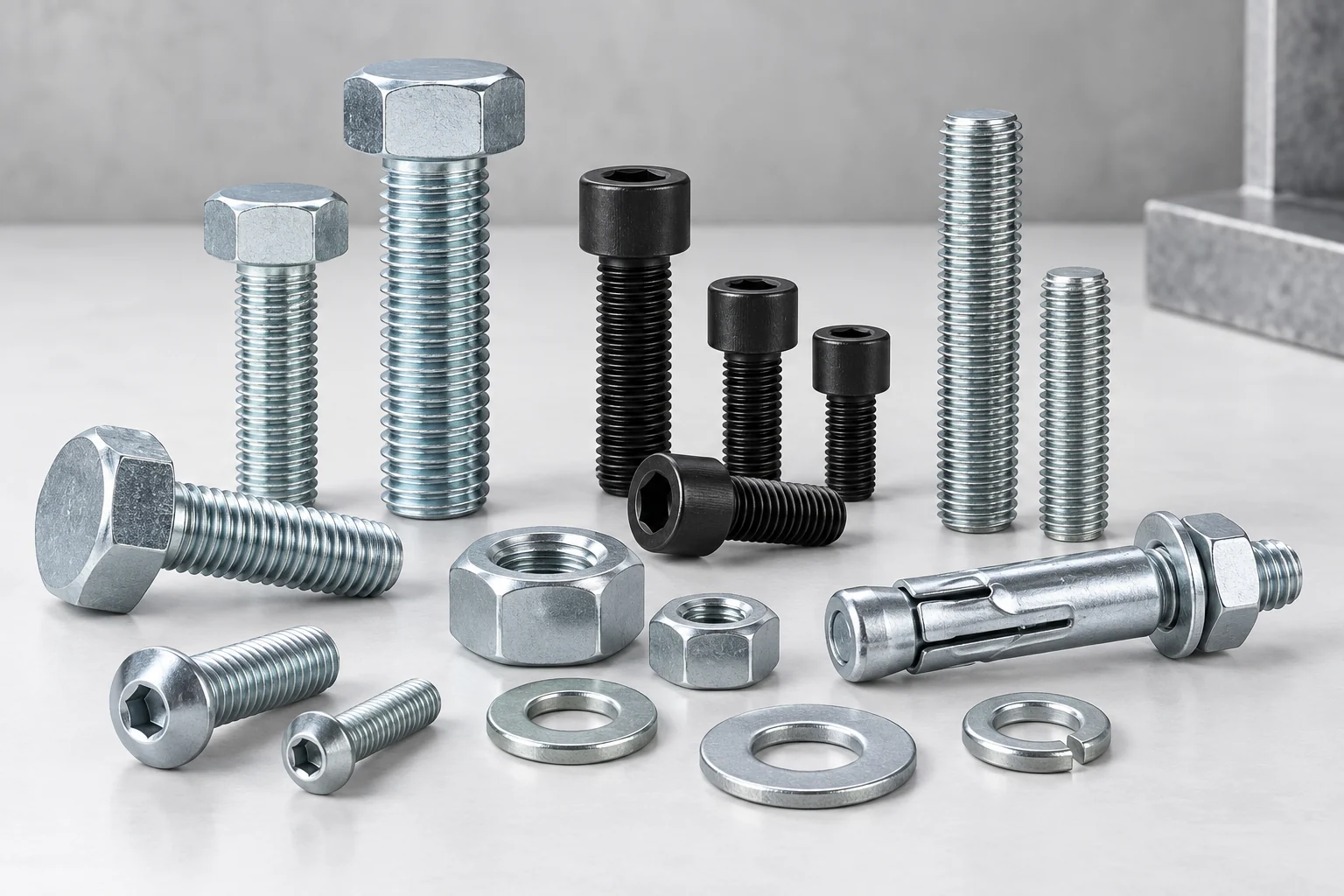
Carbon & Alloy Steel at a Glance
A buyer-oriented comparison of material categories, common uses and specification priorities.
| Material Category | Typical Characteristics | Common Fastener Uses | Key Buyer Consideration |
|---|---|---|---|
| Low Carbon Steel | Good formability and suitability for many cold-formed fasteners. | General bolts, nuts, screws, washers and hardware. | Mechanical requirements and surface protection should be confirmed. |
| Medium Carbon Steel | Higher strength potential after suitable processing and heat treatment. | Selected structural, machinery and higher-strength fasteners. | Required property class and heat treatment must be specified. |
| Alloy Steel | Used where higher strength, hardenability or specific mechanical performance is required. | High-strength bolts, socket screws, studs and industrial fasteners. | Material grade, heat treatment and mechanical property requirements must be reviewed together. |
Material grade and fastener property class are not the same thing. A property class such as 8.8, 10.9 or 12.9 defines mechanical performance requirements, while the actual steel grade and heat-treatment route may vary according to product standard and manufacturing requirements.
Carbon Steel Material Categories
Common sourcing directions for general fasteners, higher-strength products and forming applications.
Low Carbon Steel
Low carbon steel is widely used for general fasteners because of its good cold-forming capability, broad availability and suitability for common surface treatments.
Typical Products- General Bolts
- Nuts
- Machine Screws
- Self-Tapping Screws
- Washers
- General Hardware
SAE / AISI 1008, 1010, 1018 and 1022, depending on product and manufacturing requirements. These designations are not presented as direct equivalents to grades from other national standards.
Medium Carbon Steel
Medium carbon steels may be used where greater strength or hardness is required, often together with controlled heat treatment.
Typical Products- Higher-Strength Bolts
- Studs
- Anchor Components
- Machinery Fasteners
- Custom Industrial Parts
1035, 1045 or comparable materials selected according to the required specification. Heat-treatment requirements depend on the specific product and order.
Steel for Self-Tapping & Forming Fasteners
Selected screw products may require steel grades suitable for forming, case hardening or drilling performance.
Selection Factors- Screw Design
- Thread Form
- Drilling Requirement
- Heat Treatment
- Required Hardness
- Application
Where relevant, grades such as 1022 may be commonly used in fastener manufacturing, but one material is not mandatory for every self-tapping or self-drilling screw.
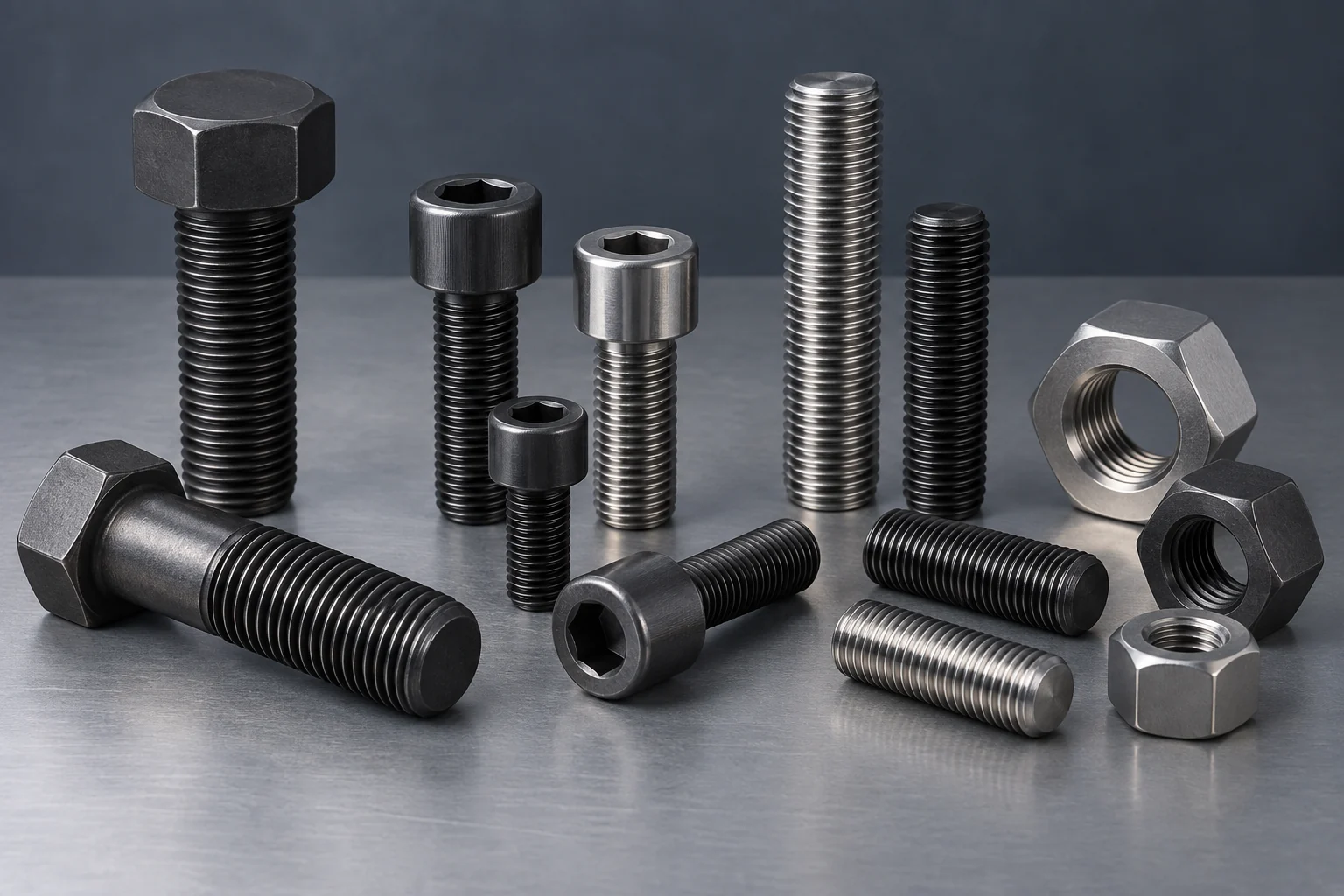
HIGHER-STRENGTH PRODUCTS
Alloy Steel for Higher-Strength Fasteners
Alloy steels are commonly considered where fasteners require higher mechanical performance, improved hardenability or controlled heat-treated properties.
Chromium-Molybdenum Alloy Steel
Chromium-molybdenum alloy steels are commonly used for selected high-strength bolts, socket screws, studs and machinery fasteners.
Market Examples May Include- SCM435
- SCM440
- 42CrMo
- 4140-Type Materials
These designations are not universally interchangeable or exact equivalents. Selection depends on the applicable standard, dimensions, required mechanical properties and customer specification.
High-Strength Fastener Materials
The steel grade and heat-treatment route for high-strength fasteners should be selected according to the required property class, product dimensions and applicable standard.
Typical Product Directions- Hex Bolts
- Socket Head Screws
- Stud Bolts
- Structural Fasteners
- Machinery Fasteners
Project-Specified Alloy Steel
For OEM and project applications, specified carbon or alloy steel grades can be reviewed according to drawing, mechanical-property requirements and sourcing feasibility.
Availability Review- Material Grade
- Product Geometry
- Quantity
- Heat Treatment
- Manufacturing Route
- Material Availability
Understanding Fastener Property Classes
Fastener property classes describe required mechanical performance. They should not be treated as raw-material grade names.
| Property Class | Typical Positioning | Material / Processing Consideration |
|---|---|---|
| 4.6 / 4.8 | General-purpose lower-strength fasteners | Often suitable for standard carbon steel fastener applications depending on the relevant standard. |
| 5.8 / 6.8 | General industrial applications requiring higher mechanical performance | Material and manufacturing route depend on product specification. |
| 8.8 | Common high-strength metric fastener class | Mechanical properties typically require suitable steel selection and controlled processing / heat treatment. |
| 10.9 | Higher-strength industrial and machinery fasteners | Material, heat treatment and dimensional requirements must be controlled according to the applicable standard. |
| 12.9 | High-strength fasteners such as selected socket screws | Suitable alloy steel and controlled heat treatment are normally important to achieving required mechanical properties. |
Property class does not identify one specific steel grade. Actual material selection depends on the product standard, diameter, manufacturing process and required mechanical properties.
Heat Treatment & Mechanical Performance
For higher-strength carbon and alloy steel fasteners, final performance depends on more than raw material alone.
Material Selection
The base steel must be suitable for the required product and mechanical properties.
Heat Treatment
Processes may include controlled hardening and tempering where required by the product specification.
Hardness Control
Hardness requirements should be verified according to the applicable standard or customer specification.
Mechanical Testing
Testing requirements depend on the product, standard and order specification.
Heat treatment is applied where required by the product and specification; it is not claimed for every VALTOR carbon steel product.
Surface Protection for Carbon Steel
Unlike stainless steel, carbon and alloy steel products commonly require surface protection according to the service environment, corrosion requirements and appearance specification.
Coating selection can affect corrosion resistance, dimensions, thread fit and friction characteristics.
Material Selection Also Affects Manufacturing
Steel condition, processing route, geometry and finish requirements should be reviewed together.
Cold Heading
Steel composition and material condition affect forming capability.
Thread Rolling
Material condition and heat-treatment sequence affect thread manufacturing.
Machining
Higher-strength and alloy steels may require different tooling and machining parameters.
Heat Treatment
Required mechanical performance may determine the processing route.
Surface Treatment
Coating compatibility should be considered together with material and thread requirements.
Product Size
Available steel forms and manufacturing methods can vary by diameter, length and component geometry.
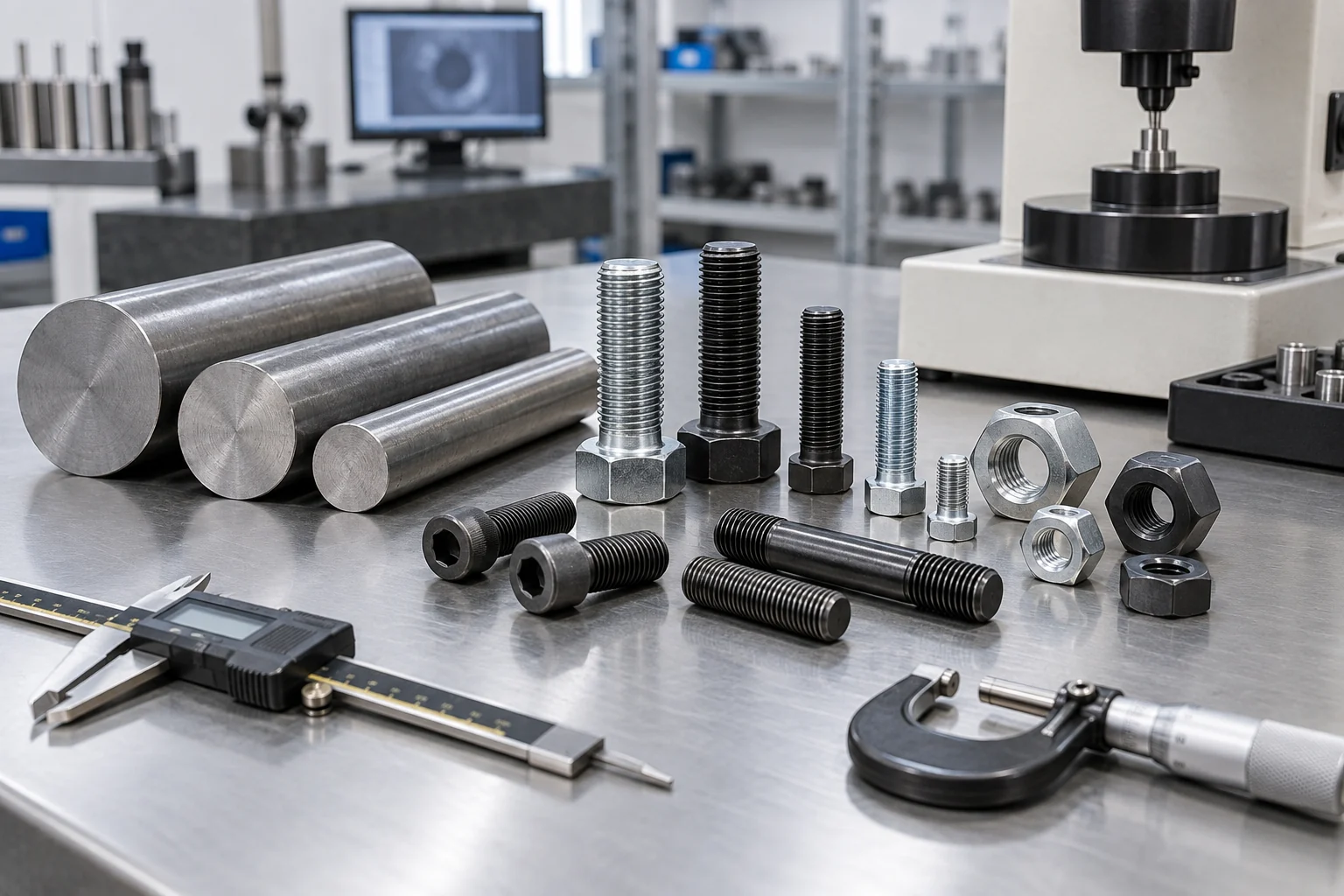
Inspection & Documentation
Inspection and documentation requirements can be arranged according to the applicable product standard and order specification.
Certificates or raw-material documentation where required.
Verification of dimensions and thread requirements.
According to product and order requirements.
Available where specified for suitable projects.
Required documentation and testing should be confirmed before production.
What to Send for a Carbon Steel Fastener Inquiry
Provide the available product, performance and finish requirements for an efficient manufacturing review.
If the exact steel grade has not been specified, provide the required property class, product standard, application and surface finish so a suitable material and manufacturing route can be reviewed.
Need Carbon Steel or High-Strength Fasteners?
Send VALTOR your product specification, drawing, property class, finish and quantity for review.